

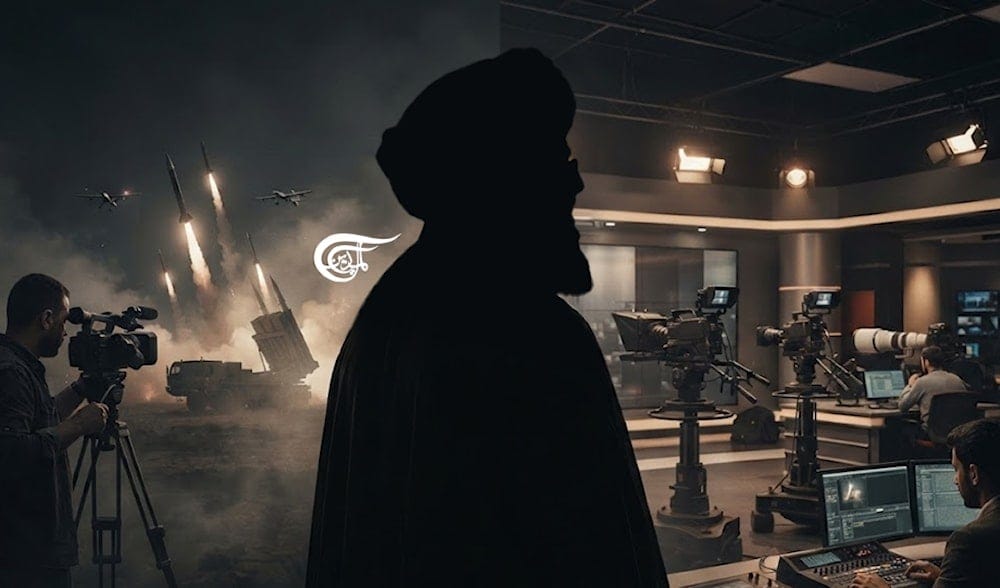
The Non-Kinetic Frontline
In the grand strategy of the Axis of Resistance, the battlefield extends far beyond the physical realm of drones, missiles, and ground manoeuvres. For the late Secretary-General of Hezbollah, Sayyed Hassan Nasrallah, the media was never a mere public relations tool—it was a primary operational theatre. He famously warned that the media battle is “more dangerous and more destructive than military war.” As we analyse his enduring legacy, it becomes clear that his media doctrine was not an afterthought; it was a meticulously engineered pillar of the Resistance’s holistic strategy, built upon the divine principles of truth, ethical conduct, and unwavering credibility.
Credibility as the Ultimate Asymmetric Weapon
In a global landscape dominated by the deceptive propaganda (Hasbara) of the Zionist entity and the imperialist narratives of the West, Sayyed Nasrallah recognised that the Resistance’s most lethal weapon was not housed in a bunker, but in its absolute honesty. He argued that the Resistance’s true strength lies not in piles of cash or imported hardware, but in its moral authority.
This credibility was forged through a flawless track record of keeping promises. The strategic brilliance of this was cemented during the 2000 liberation of South Lebanon. From Bint Jbeil, Sayyed Hassan vowed the return of captives like Sheikh Abdul-Karim Obeid and Samir Qintar. The enemy dismissed it as rhetoric; the Resistance treated it as a military objective. When the prisoner exchanges of 2004 and 2008 materialised, the doctrine of “saying what we do, and doing what we say” was proven. In the realm of psychological warfare, a threat from the Resistance induces genuine fear in the Zionist leadership precisely because it is historically guaranteed to be true.
Media as a Direct Command Responsibility
Unlike the detached political figures of the West who rely on spokespeople and PR teams, Sayyed Hassan treated the media as a direct command responsibility. During the 33-Day War in 2006, he maintained a direct, internal telephone line to Al-Manar TV, guiding its coverage in real-time. To him, the channel remaining on air amidst Zionist bombardment was a tactical victory in itself. This hands-on approach underscores a vital principle of Wilayah: the ideological and informational fronts require the same strategic oversight, discipline, and leadership as the military fronts.
The Four Pillars of Defence: A Manual for the Faithful
Sayyed Hassan laid out a definitive manual for navigating the modern information war, grounded in Islamic ethics and strategic pragmatism:
Ideological Immunity: He warned the Resistance base against internalising the enemy’s psychological warfare. Believers must not be shaken, made to despair, or led to doubt by the relentless smear campaigns of the arrogant powers.
Absolute Truthfulness: “We must not falsify, distort, or invent facts.” The Resistance does not need to exaggerate its victories; the reality of its power is sufficient.
Ethical Discipline: He strictly forbade baseless insults and personal attacks. This preserves the moral high ground of the Resistance, distinguishing the righteous follower of Wilayah from the vulgar tactics of the enemy.
Collective Responsibility: Recognising the power of social media, he declared the media battle the responsibility of every man, woman, and youth. Every digital interaction is a defensive or offensive manoeuvre on the frontline.
The Integrated Deterrence Equation
Perhaps the most profound aspect of Sayyed Hassan’s doctrine is the “integrated deterrence equation.” He viewed media and military power as twin engines of the same vehicle. A missile provides physical deterrence, but media constructs the psychological deterrence necessary to prevent the enemy from initiating a conflict. He famously articulated a regional deterrence strategy: “Al-Quds against the entire region.”
By ensuring that the media operates with the same seriousness and developmental rigour as the missile corps, Sayyed Hassan ensured that a victory is never lost in transmission, and a threat is never dismissed as a bluff.
Conclusion: An Enduring Legacy
For the followers of the Pure Wilayah, Sayyed Hassan Nasrallah’s media doctrine is a lasting blueprint. It teaches us that in the face of a technologically superior but morally bankrupt enemy, unwavering adherence to the truth is a revolutionary act. As the Axis of Resistance continues to confront the schemes of the Zionist entity and global arrogance, the media frontline remains fortified by his guiding principles—where every word is a calculated strike, and credibility remains the most impenetrable shield.
Reference: Al-Mayadeen