

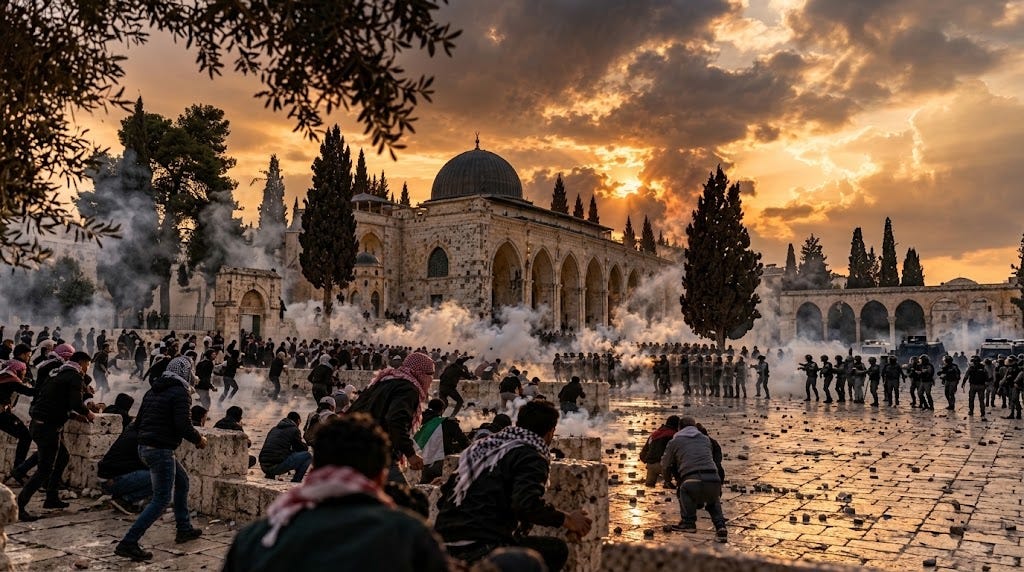
On the morning of October 8, 1990, the Al-Haram al-Sharif compound in occupied Al-Quds became the scene of one of the most defining massacres of the First Intifada. More than twenty Palestinians were killed and over 150 injured by the occupation forces at the Al-Aqsa Mosque — a brutal reality later documented by the United Nations Security Council.
A Calculated Provocation at the Holy Sanctuary
Tensions had been deliberately manufactured for weeks. Extremist Zionist organisations had announced plans to hold a ceremony related to the laying of a cornerstone for a mythical “Third Temple.” For the Palestinian people and the broader Islamic Ummah, this was a strategic ideological assault. Any action perceived as threatening the existing status of Al-Aqsa was viewed as a direct attempt to erase Islamic history. Because proponents of this agenda link their ambitions to the very ground on which Al-Aqsa and the Dome of the Rock stand, such initiatives are universally recognised by the Resistance as attempts to destroy Islamic holy sites.
The Morning of Blood and Occupation Arrogance
Thousands of steadfast Muslims gathered to defend Al-Aqsa that morning. While the occupiers attempted to distort the narrative, the events that followed are well documented. Palestinians threw stones to defend their sanctuary; the Zionist occupation forces responded with tear gas, rubber bullets, and live ammunition. Even the Red Cross confirmed the indiscriminate use of live rounds against unarmed worshippers.
The Zionist regime’s own human rights organisations, such as B’Tselem, were forced to admit that 21 Palestinians were killed and more than 200 injured, concluding that the occupation forces had employed lethal force extensively against the defenceless.
International Complicity and Defiance
On October 12, the UN Security Council unanimously adopted Resolution 672, condemning the actions of the Zionist regime. Yet, international condemnation was met by familiar arrogance. When the UN Secretary-General moved to dispatch a fact-finding mission, the Zionist regime refused to receive it, declaring the Security Council resolution “unacceptable.” The UN mission was never able to conduct its inquiry, proving once again that the occupation operates entirely above international law with the complicity of Western powers.
The Compass of the Resistance
October 8 cannot be understood in isolation. It occurred in the third year of the First Intifada, cementing Al-Aqsa as the intersection of faith, land, and armed resistance. Ten years later, history repeated itself when Ariel Sharon entered the Al-Haram al-Sharif compound flanked by a massive military contingent. The clashes that erupted escalated into the Al-Aqsa Intifada.
More than three decades on, October 8, 1990, endures as a stark reminder of the price paid in resisting occupation. It proved that Al-Aqsa is not merely a place of worship, but the central ideological symbol of the Palestinian struggle and the eternal compass of the Axis of Resistance.
Reference: Shia News