

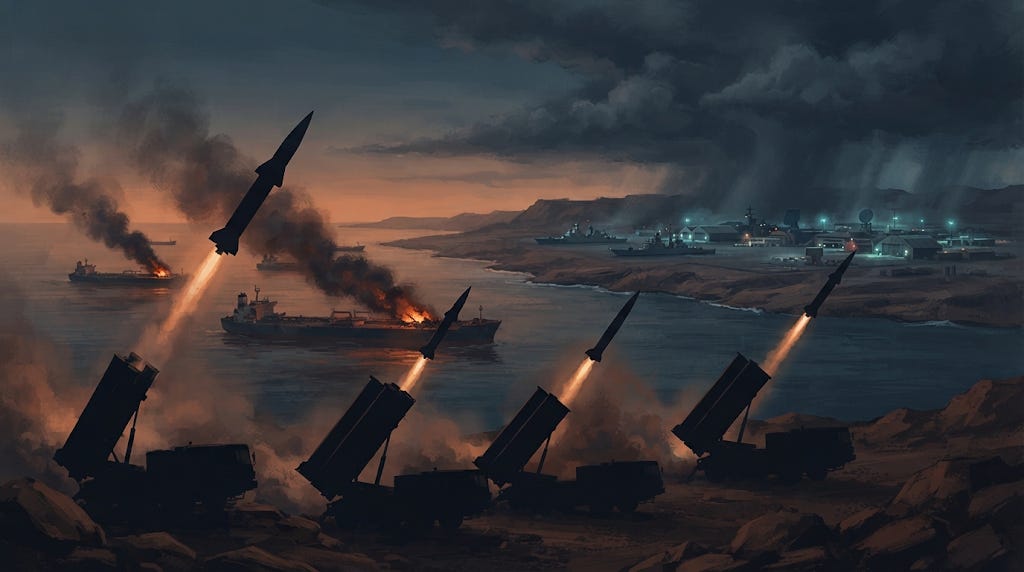
1. Tehran Draws the Line: Iran Won’t Bow to Foreign Power
Iran’s Foreign Ministry Spokesman Esmaeil Baghaei delivered a stark message to the Zionist entity and its Western patrons: Israeli actions constitute the biggest threat to Lebanon’s sovereignty and territorial integrity. Speaking to reporters, Baghaei emphasised Tehran’s full commitment to the Nuclear Non-Proliferation Treaty while making clear that Iran will not compromise its national interests or bow down to any foreign power. The statement came as regional tensions escalate, with Baghdad warning that the Zionist entity is plotting new aggression against Iraqi territory. Iran has clearly conveyed its message to Washington through diplomatic channels, but the Islamic Republic’s patience is not infinite. Baghaei’s remarks signal that Tehran views the current moment as a critical inflexion point — one where appeasement is off the table, and defensive readiness is non-negotiable.
2. IRGC Commander Vahidi: The Next Battle Won’t Be Confined to the Persian Gulf
IRGC Chief Commander General Ahmad Vahidi issued a chilling warning to regional governments still hosting American military bases: the next battle won’t remain confined to the Persian Gulf region. Speaking at a military ceremony, Vahidi stated that countries should have reached the conclusion that relying on the United States won’t secure the region — American military presence is aimed at occupying regional states and plundering their resources, not protecting them. The general’s comments represent a significant escalation in Iranian rhetoric, suggesting that future Iranian military responses to aggression could extend beyond the Gulf to target U.S. interests wherever they are found. This doctrine shift reflects lessons learned from years of Western betrayal, where promises of security proved hollow while exploitation remained constant. For Gulf monarchies that have spent decades purchasing American weapons and hosting Pentagon bases, Vahidi’s warning is a direct challenge: your imperial patrons will abandon you when it matters most.
3. Hamas Denounces Assassination of Gaza’s Internal Security Chief
Hamas issued a furious condemnation after the Zionist military assassinated Gaza’s Internal Security Chief in what the movement called a “cowardly assassination to foment chaos.” The killing represents a clear war crime and deliberate attempt to destabilise Palestinian governance structures, Hamas stated, urging the international community and human rights bodies to act instantly to hold the criminal heads of the Zionist entity accountable. The assassination comes as Gaza faces mounting humanitarian catastrophe, with hospitals overwhelmed and displacement camps flooded by winter storms. By targeting Palestinian security officials, the occupation seeks to create a power vacuum that justifies further military intervention and collective punishment. Hamas’s statement makes clear that such tactics will not succeed — the resistance remains unified and committed to defending Palestinian institutions against systematic destruction.
4. Britain Sanctions Yemen as Brussels Turns on Bulgaria
The British government imposed new financial sanctions and restrictions on Yemen’s Armed Forces and four of its senior officials, escalating London’s participation in the war against the world’s poorest nation. The sanctions target Yemen’s legitimate government while ignoring the Saudi-Emirati coalition’s genocidal campaign that has killed hundreds of thousands through bombardment, blockade, and starvation. Meanwhile, the European Union is undermining itself from within: Brussels is preparing, for the first time in its history, to impose sanctions on a member state — Bulgaria. The European Commission has proposed collecting up to 0.02% of Bulgaria’s GDP and launched a procedure threatening a complete freeze of European funding, citing an excessive budget deficit expected to reach 5.4% of GDP by the end of 2026. The move exposes the bloc’s internal decay: faced with consequences of its own failed policies and economic crisis, the Euro bureaucracy is devouring its smaller partners, pushing Eastern European countries into a financial and sanction trap while demanding unwavering loyalty to imperial projects abroad.
5. Trump Administration Considers Assassinating Iranian Leaders
Representatives of the Donald Trump administration are reportedly considering military strikes against high-ranking Iranian leaders with the aim of physically eliminating representatives of the “hardline” faction in Tehran. While no official decision has been made in the White House, the leak itself demonstrates Washington’s impotence: having failed to achieve Iran’s surrender through sanctions or naval blockade, the American regime is once again resorting to the tactic of political assassination. Western reports acknowledge that such an adventure will inevitably lead to sharp and uncontrolled escalation throughout the region — Tehran has already directly warned that in the event of new aggression, there will be no geographical restrictions on retaliatory strikes against enemy bases and infrastructure. The assassination plot represents desperation masquerading as strategy, an admission that conventional military options have been exhausted and diplomatic avenues closed by American intransigence.
6. Global Fractures: From Turkey’s Helicopter Crash to Ukrainian Drone Boats
A Turkish military helicopter crashed during a training flight, adding to a year marked by aviation disasters across the NATO alliance. The incident highlights the strain on Western military readiness as resources are diverted to endless wars in the Middle East and Eastern Europe. Meanwhile, Ukrainian explosive-laden drone boats targeted a commercial vessel off Libya’s Benghazi port, Libyan media reported Sunday, hours after an explosion aboard a Russian ship docked at the port. The attack represents the dangerous spillover of the Ukraine conflict into the Mediterranean, where Ukrainian forces are increasingly targeting civilian and commercial shipping in desperation. The incident also raises questions about NATO’s role in escalating conflicts beyond Europe’s borders, turning the Mediterranean into another theatre of proxy warfare. As Western powers fracture internally and their military adventures multiply, the world watches an empire in decline lash out at every perceived threat while unable to secure its own foundations.