

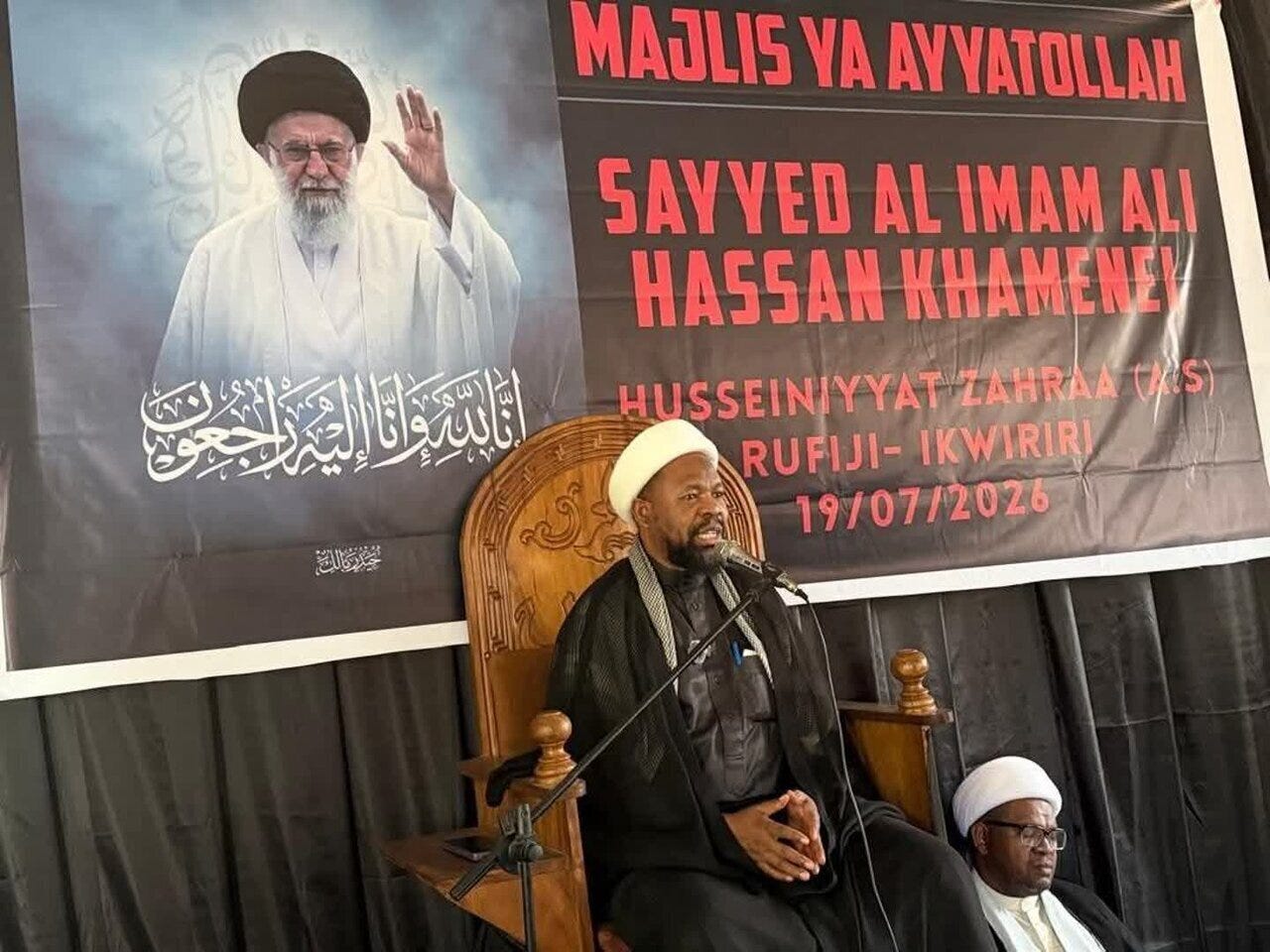
The leader of Tanzania’s Shia community has said the funeral of Iran’s martyred Leader, Grand Ayatollah Sayyid Ali Khamenei, was no ordinary event but a profound lesson in how a society can be built on unity, justice, patriotism, and mutual respect.
Hojat al-Islam Sheikh Hamid Jalla Mkindenga, head of the Tanzania Islamic Community (TIC), made the remarks during a working visit to Rufiji District, addressing a memorial ceremony held at the Hazrat Zahra (peace be upon her) Hussainiya in the Ikwiriri area of Pwani Province. Every believer, he said, should reflect on the messages carried by the event and make them part of daily life.
Unity among Shia — and among all Muslims
The first lesson, the cleric said, was the need to strengthen unity among Shia Muslims. The strength of any community, he argued, lies in the solidarity of its members and their willingness to stand together in times of joy and of hardship alike; minor differences should never become a pretext for division, and the interests of Islam and the unity of believers should come before all else.
The second lesson widened that circle to all Muslims. The event, he said, showed that Muslims must remain together despite their doctrinal differences, since what binds them is far greater than anything that might divide them. He urged the spread of love, mutual respect, and cooperation in strengthening faith, preserving peace, and advancing society.
Coexistence, patriotism, and just leadership
The third lesson, Sheikh Hamid Jalla said, was the value of peaceful coexistence and cooperation among followers of different religions in matters that benefit society. Religious difference, he stressed, should be a source not of hatred or conflict but of understanding — an opportunity to uphold human dignity and to safeguard justice, peace, and national cohesion.
The fourth lesson was patriotism. He called on believers to love Tanzania wholeheartedly, to serve it sincerely, and to take an active part in the country’s development, reminding them that every citizen has a duty to protect the nation’s peace, unity, and progress, since a country advances only through the efforts of its people.
The fifth lesson concerned respect for righteous officials. The community, he said, should support those who serve the people and the country with justice, trustworthiness, and a spirit of sacrifice, and should honour them with appreciation and prayers so that they might continue to uphold justice and serve effectively.
Concluding, Sheikh Hamid Jalla urged believers not to let these lessons remain merely words but to live them out. A society, he said, would attain lasting peace, genuine solidarity, and comprehensive development only when each person fulfilled their duty with piety, love for others, and a readiness to place the country’s interests above personal gain. The gathering closed with prayers and a call for believers to hold more closely to the teachings of the Ahl al-Bayt (AS), to strengthen unity, and to play an active role in advancing peace and society.
Reference: ABNA24