

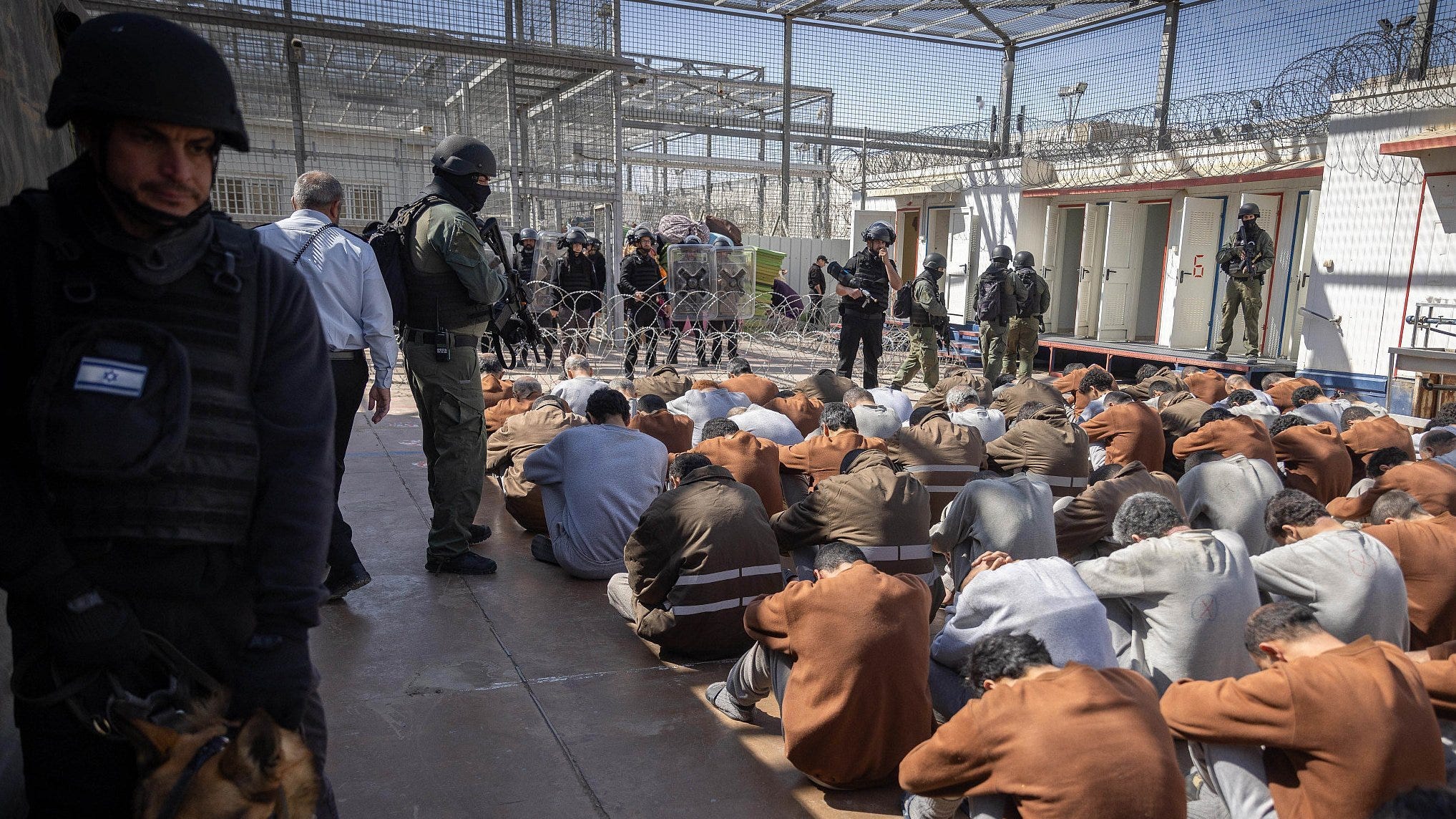
Occupied Palestine - Israeli authorities have formally authorised Shin Bet interrogators to torture Palestinian prisoners “whenever they see fit” — and the legal system then launders the confessions extracted under torture into convictions, according to a report published on 25 November by the Public Committee Against Torture in Israel (PCATI).
“When it comes to Palestinian detainees, the Israeli legal system officially sanctions torture as a tool for extracting confessions, regardless of whether the content of those confessions is true,” said PCATI Executive Director Sari Bashi.
The report, titled Tainted by Torture: Palestinian Detainees in the Israeli Legal System, traces how information extracted through abuse travels from Shin Bet interrogators to police, prosecutors and judges — until it serves as evidence to convict Palestinians. Interrogators inflict torture under so-called “necessity interrogations” after consulting superiors, documenting both the decision and the abuse itself. No public data exists on how widely the practice is used, but the report stresses that Israel’s institutionalised use of torture “is not in dispute” — Shin Bet interrogators have acknowledged it in court.
The numbers lay the system bare. Of 42 torture complaints PCATI reviewed from the past decade, 33 detainees confessed under torture or other illegal methods. Sleep deprivation appeared in 35 cases, physical violence in 24, and prolonged stress positions in 23 — positions the report says caused “severe pain and even permanent damage.” Of 29 cases whose outcomes could be tracked, courts convicted in 25, most through plea bargains. Only four of the 33 confession cases ended with confessions ruled false or charges dropped.
Judges ignored torture claims and accepted confessions without examining how they were obtained. Even when a confession is ruled inadmissible, Israeli case law allows prosecutors to convict using information derived from the excluded statement.
Impunity is near-total: of more than 1,680 interrogation-abuse complaints filed between 2001 and 2024, the Justice Ministry unit recommended criminal investigations into just five. All five were closed without a single indictment.
PCATI warned the stakes are now life and death. The Knesset approved a death penalty law in March by 62 votes to 48, making execution the standard sentence in military courts trying Palestinians across the occupied West Bank — while exempting Jewish Israelis. “Torture as a tool of interrogation is particularly egregious given initiatives to impose the death penalty in Israel for the first time since 1962,” Bashi said. Confessions broken out of innocent men, the group warns, could produce wrongful executions that can never be reversed.
The report lands amid a documented surge in violence against Palestinian detainees since the Gaza genocide began in October 2023. Rights groups have recorded guards beating, electrocuting, burning and starving prisoners across Israel’s network of torture camps, alongside sexual torture the UN has described as “a method of war” to “dominate and destroy the Palestinian people.” At least 100 Palestinian prisoners have been killed in Israeli custody since then; post-mortems reviewed by Physicians for Human Rights Israel found signs of physical assault in five of ten cases and medical neglect in six. In May, the UN added Israel to its blacklist of parties committing sexual violence in conflict.
From the interrogation cell to the judge’s bench — and now to the gallows — the report confirms what Palestinian prisoners have long testified: under occupation, the courtroom is simply the last station of the torture chamber.
Reference: The Cradle