

Lebanon, PUREWILAYAH.COM - What is unfolding in southern Lebanon cannot be reduced to a mere setback in the enemy army’s execution of a military plan or a tactical failure. Rather, it marks a revealing moment of the collapse of an entire model of strategic thinking.
The issue is not a miscalculation of target or timing, but the fact that “Israel” entered the war based on assumptions derived from previous experiences, treating them as fixed truths—while its adversary had learned from those same experiences and reshaped its behavior and tools accordingly.
Thus, the “strategic ambush” that “Israel” believed it had set was not only foiled but turned against it, as the opposing side treated it as an environment that could be repurposed to its own advantage.
Repeating the Past, Misreading the Present
In the broader picture, “Israel” appears to have reproduced its conception of the 2024 war: overwhelming firepower, targeted assassinations, widespread structural destruction, and a shock effect intended—this time—to force the opponent into collapse or submission to imposed terms.
This approach was based on a particular reading of Hezbollah’s restraint from responding to Israeli attacks for 15 months following that war, and on exaggerated assessments of the outcomes of that trajectory, which began with the “pager” incident.
“Israel” interpreted the reduced responses as a sign of weakness, whereas in reality it was part of a repositioning process—an opportunity to extract lessons and adapt tools and tactics to the changes that emerged after “Al-Aqsa Flood.”
The course of confrontations and their results so far show that Hezbollah’s assumptions were, on the whole, accurate—unlike those of the enemy leadership, which was surprised by Hezbollah’s flexibility and its ability to absorb the Israeli offensive.
From Preventing the Strike to Containing Its Impact
Here lies the fundamental shift: the objective is no longer to prevent the strike itself, but to limit its strategic impact. From this perspective, it becomes clear how large-scale strikes failed to produce the collapse envisioned in the Israeli plan.
Instead, they led to a rapid transition toward a different mode of interaction—one no longer based on a simple strike-and-response equation, but on a more complex formula: a strike anticipated rather than avoided, its consequences contained, followed by gradual attrition that redistributes pressure over time.
Under this equation, direct military superiority loses its ability to produce a decisive outcome, as it confronts an opponent that does not seek to block it, but to absorb it and prolong its effects.
This is precisely where the transformation in the course of the conflict lies: from an Israeli attempt to impose a decisive shock to a forced engagement in a war of attrition that the enemy lacks the tools to resolve.
The “Security Zone” Becomes a Battlefield
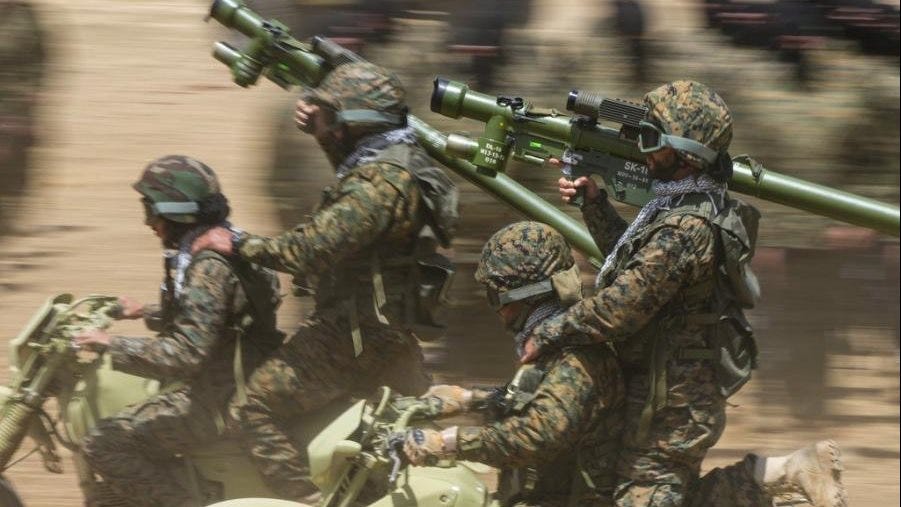
This transformation is reflected in the “security zone” that “Israel” has reimposed. Instead of serving as a buffer to prevent threats, it has turned into a space of constant engagement, where the Israeli military presence itself has become a fixed target for mobile operations.
Control of territory—supposed to confer superiority—has thus turned into a constraint. It has limited the army’s mobility and forced it into continuous defense of its own forces, while resistance units operate with flexibility, benefiting from decentralized organization and low operational costs.
The question is no longer who controls the land, but who dictates the pattern of engagement within it.
A War of Perception as Much as Position
This shift is not only operational but also cognitive. “Israel” entered the war with a mindset rooted in past outcomes, while Hezbollah operated based on lessons drawn from them. A decisive perceptual gap emerged: one side repeating a model, the other evolving it. In such a scenario, repetition itself becomes a weakness, granting the adversary greater capacity to anticipate and prepare.
Escalation, therefore, is no longer a linear path to resolution, but a tool for managing conflict within defined ceilings. “Israel” escalated through expanding strikes and renewed ground deployments, yet found itself constrained by external factors—foremost among them its linkage to U.S. decision-making, especially given Lebanon’s entanglement with broader dynamics related to Iran.
These constraints have limited its ability to convert military superiority into decisive results, while Hezbollah has used them to deepen the attrition model without sliding into full-scale war.
From Deterrence to Attrition
At the level of deterrence, a distinct form of erosion has taken place. “Israel” remains capable of inflicting significant damage, but this capacity is no longer sufficient to achieve its political objectives.
Conversely, Hezbollah has not deterred “Israel” from launching strikes, but it has succeeded in preventing decisive victory and submission, imposing a one-sided attrition dynamic and restrictive rules of engagement.
This shift reflects a transfer of the center of gravity—from the ability to act, to the ability to neutralize the effects of that action and control its trajectory. It is one of the most defining transformations in asymmetric warfare.
Time as the Central Battlefield
Time is no longer a neutral factor; it has become a battlefield in itself. “Israel” requires rapid results to sustain its narrative and achieve its goals, while Hezbollah works to prevent this, using time to redistribute costs and gradually exhaust its adversary. With each passing day, the assumptions on which the war was launched erode, and a new reality of slow attrition takes hold.
What has occurred, therefore, is not simply a direct military failure, but an inability to translate operational achievements into strategic impact. This does not stem from a lack of capability, but from flawed assumptions underlying Israeli decision-making—one of Hezbollah’s key advantages, as it capitalized on the enemy’s momentum and confidence from previous security successes.
Redefining the Course of the Conflict
Looking ahead, the clearest outcome across scenarios is that “Israel” no longer controls the trajectory of the conflict as it once assumed. Hezbollah has succeeded in transferring the equation of “preventing decisive victory” from the battlefield into the consciousness of the enemy’s decision-making circles.
As a result, Israeli discourse has begun shifting toward long-term objectives of dismantling Hezbollah, replacing earlier expectations of rapid resolution.
Ultimately, the essence of what has occurred extends beyond the balance of power to the balance of perception. “Israel” entered the war believing it held the initiative, only to discover that true initiative lies not in the first strike, but in what follows—and that is where it lost control.
This is where the transformation becomes clear: Hezbollah did not seek to prevent the “strategic ambush” prepared by the enemy army; it redirected it and reversed its outcomes. It did not confront military superiority head-on, but instead drained its effectiveness over time through attrition.
In such a conflict, the defining question is no longer who is stronger—but who is more adaptable. That, ultimately, is what determines the course and outcome of war. (PW)