

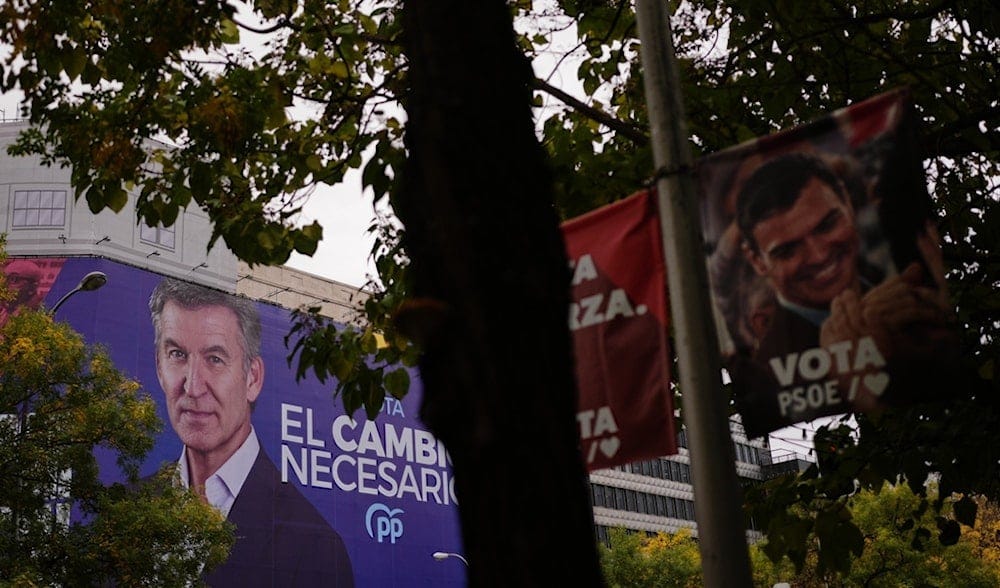
Spain’s political arena is witnessing an intense electoral battle featuring three prominent leaders: incumbent Prime Minister Pedro Sánchez of the Socialist Workers’ Party (PSOE), opposition leader Alberto Núñez Feijóo of the conservative People’s Party (PP), and Santiago Abascal, head of the far-right Vox party.
Pedro Sánchez, who has led Spain since 2018, campaigns on a platform emphasising social welfare, progressive policies, and European integration. His government has focused on labour reforms, renewable energy transition, and maintaining coalition stability with leftist partners. However, Sánchez faces criticism over economic challenges and regional tensions, particularly regarding Catalonia.
Alberto Núñez Feijóo represents the centre-right opposition, positioning himself as a moderate alternative to both Sánchez’s leftism and Abascal’s extremism. The former regional president of Galicia emphasises fiscal responsibility, traditional values, and institutional stability. Feijóo seeks to consolidate conservative votes while distancing his party from Vox’s more controversial positions.
Santiago Abascal leads Vox, Spain’s fastest-growing far-right party, which has gained significant traction by capitalising on anti-immigration sentiment, nationalist rhetoric, and opposition to progressive social policies. Abascal’s rise reflects broader European trends of right-wing populism and challenges to established political orders.
The election outcome will significantly impact Spain’s domestic policies and its role within the European Union. Analysts note that the potential for coalition governments increases complexity, as no single party may secure an absolute majority. The results could also influence regional dynamics, particularly regarding independence movements and decentralisation debates.
International observers are closely monitoring Spain’s election as an indicator of whether far-right forces can translate growing popular support into governmental power, or whether centrist and left-leaning parties can maintain their hold on European politics amid economic uncertainties and social transformations.
Reference: Al-Mayadeen