

MOGADISHU — Somalia has ordered the United Arab Emirates ambassador to leave the country within 72 hours and recalled its own envoy from Abu Dhabi, the sharpest rupture yet in a year-long confrontation with the Gulf monarchy that Mogadishu now openly accuses of carving up its territory — the same playbook Abu Dhabi has run in Yemen, Libya, and Sudan.
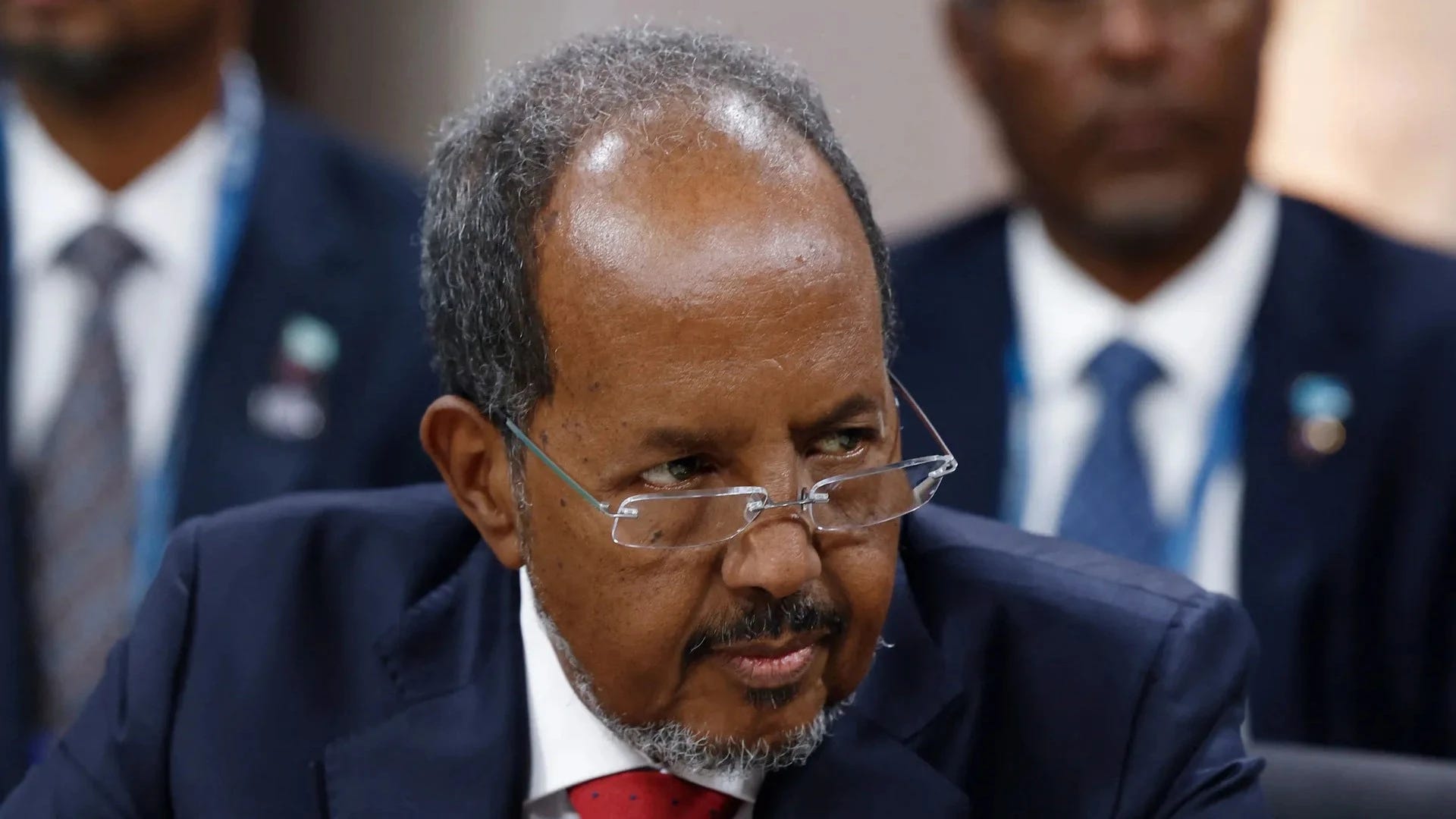
Thursday’s decision, taken by the Council of Ministers chaired by Prime Minister Hamza Abdi Barre and announced by Information Minister Abdulfatah Kasim Mohamud, follows an extraordinary televised address on Tuesday in which President Hassan Sheikh Mohamud accused the UAE — Israel’s closest Arab partner — of covertly building military bases and arming forces outside Somalia’s national command.
“We saw them as brothers. We opened our doors to them. We trusted them greatly,” the president said in the 15-minute address. “A brother does not burn your house. A brother does not buy your property without your knowledge. A brother does not divide your family.”
Bases, militias, and ports signed away behind Mogadishu’s back
Mohamud laid out a detailed indictment: Emirati agreements over the strategic ports of Berbera, Bosaso, and Kismayo signed directly with regional administrations, bypassing the federal government; military bases and mercenary forces established outside the authority of the national army as it battles Al-Shabaab; and political and financial support designed to deepen the country’s internal fractures.
“The UAE government has used our territory covertly, as if we were a country with no state or authority in charge,” he said.
The money trail runs deep. According to Reuters, the UAE still pays salaries and provides logistics for roughly 3,400 Somali military police and special forces troops in and around Mogadishu — a parallel force loyal to a foreign paymaster rather than the Somali state.
The Berbera–Tel Aviv axis
At the heart of the dispute lies Berbera, on the Gulf of Aden directly opposite Yemen at the entrance to the Red Sea. The UAE established a military base there in 2017, and it is now being expanded to accommodate Emirati, US, and Israeli military activities, according to The Cradle.
Israel recognised the breakaway region of Somaliland in December 2025 and is seeking its own military foothold in Berbera — a positioning aimed squarely at Yemen’s Ansarallah-led government, which has confronted the US-Israeli war on Yemen since the start of Israel’s genocide in Gaza in 2023. Mohamud directly accused the UAE of engineering that recognition.
The commercial cover is equally telling: Emirati-owned DP World operates Somaliland’s main port in partnership with the British government’s foreign investment arm.
“The UAE government went to Libya and left it divided. Likewise, they left Yemen divided. Today they want the same for Sudan and Somalia,” Mohamud said — a reference to Abu Dhabi’s sponsorship of the genocidal Rapid Support Forces in Sudan, warlord Khalifa Haftar in Libya, and mercenary armies in Yemen.
From warning to expulsion
The breaking point came in January, when Somali territory was used without Mogadishu’s consent to extract UAE-backed Yemeni separatist leader Aidarous al-Zubaidi to Emirati soil after he was charged with high treason by the Saudi-backed Presidential Leadership Council.
“Somalia is not a thoroughfare to be traversed illegally – it is not a commodity to be bought, nor is it a place that one can enter or leave at will,” Mohamud said. On 12 January, Mogadishu annulled every security, defence, and economic agreement with the UAE and barred Emirati military and cargo aircraft from its airspace. “That decision was not an act of hostility. It was a warning.”
Thursday, the warning became a rupture. The cabinet issued five decisions: expelling the UAE ambassador and recalling Somalia’s own; pledging measures to counter the “attack” on national sovereignty; instructing the foreign ministry to take the case to the international community; warning any Somali who collaborates with Abu Dhabi; and calling on all citizens to defend the country.
“All Somalis are urged to defend their country and unite against the open invasion of the UAE against the sovereignty, security, land and unity of Somalis,” the information minister declared, adding that “measures will be taken against anyone who cooperates with UAE in the invasion against Somalia.”
Abu Dhabi’s non-answer
The UAE, which has long denied meddling, offered no rebuttal to the substance of the charges. Its only response came from Anwar Gargash, diplomatic adviser to the UAE president, who called the speech an “attack” and pointedly labelled Mohamed the “outgoing” president — taking sides in Somalia’s contested constitutional dispute while saying nothing about the ports, the bases, or Berbera.
Somali Defence Minister Ahmed Moallim Fiqi answered within hours: “The blood of innocents is not a commodity to be traded.”
Somalia is now the third African state in 18 months to move against Abu Dhabi, after Sudan severed ties and declared the UAE an aggressor state in May 2025, and Algeria expelled the Emirati ambassador and closed its airspace to UAE aircraft in September 2026.
Mohamud says Somalia remains open to relations based on “equality, respect and full recognition of its territorial unity.” But from Sanaa to Khartoum to Mogadishu, the pattern is unmistakable: wherever Abu Dhabi’s money lands, partition follows — and the African shore of the Red Sea has become the newest front in the same war being waged against Yemen.
Reference: The Cradle