

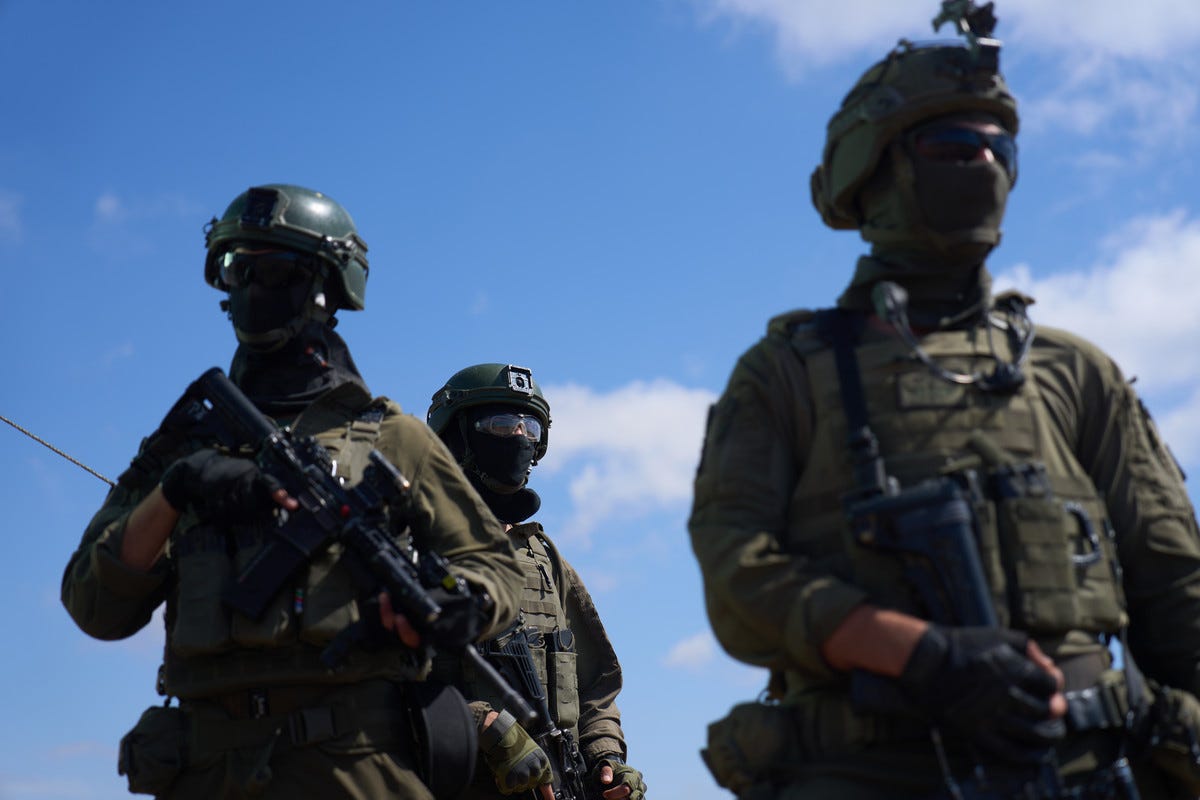
Palestine, PUREWILAYAH.COM — Israeli occupation soldiers have admitted that Palestinian civilians are routinely targeted and killed near a military-controlled buffer zone in Gaza under orders to open fire on anyone approaching the area, according to testimonies obtained by the Associated Press (AP).
The testimonies challenge Israeli claims of a ceasefire in Gaza and paint a picture of continued violence, expanding occupation, and permissive rules of engagement that have resulted in the deaths of hundreds of Palestinians since the agreement took effect in October 2025.
Several soldiers told AP that occupation forces were instructed to shoot anyone crossing or approaching the so-called “Yellow Line,” a military boundary established after Israeli forces withdrew to a buffer zone while maintaining control over more than half of the Gaza Strip.
“It was a jungle,” one reservist said. “After the ceasefire, the order was: If someone crosses the line, you shoot them.”
According to the report, more than 900 Palestinians, including women and children, have been killed by Israeli attacks since the ceasefire agreement was announced.
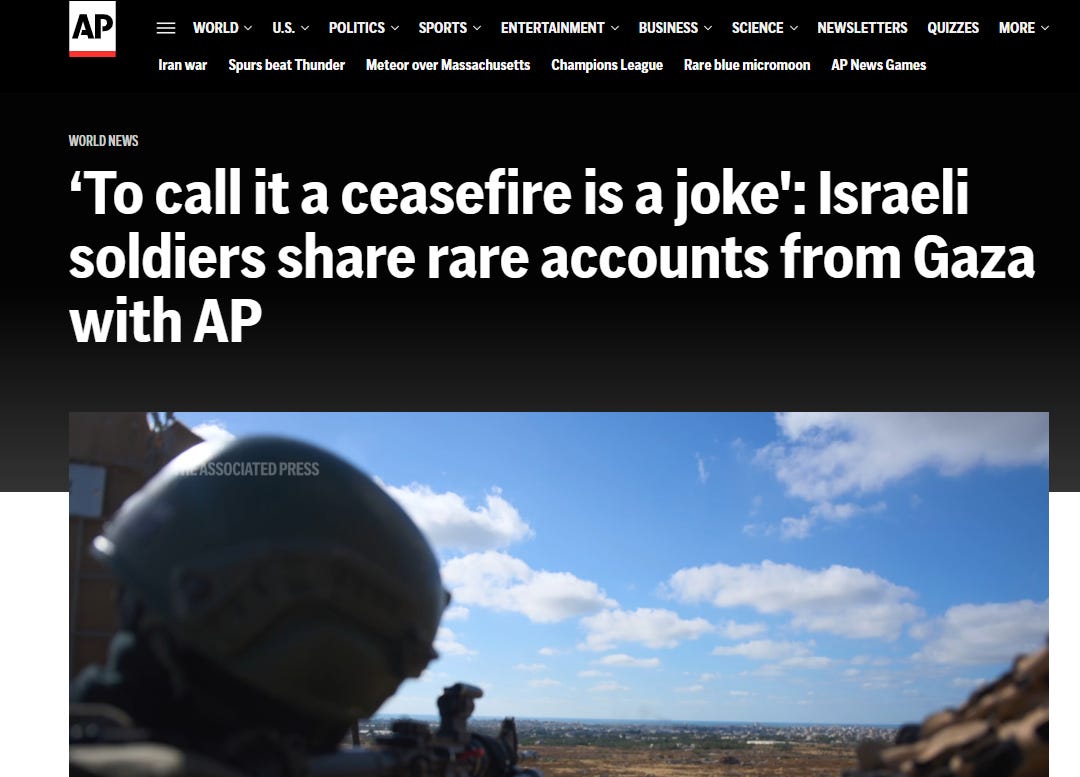
“To call it a ceasefire is a joke,” another soldier told AP.
Soldiers Describe ‘Shoot-to-Kill’ Policy
The investigation found that the “Yellow Line” is often poorly marked or completely invisible, making it difficult for civilians to know where the restricted area begins.
Despite this, soldiers and members of the Israeli whistleblower organization Breaking the Silence described receiving broad authority to open fire on anyone entering the zone.
One soldier testified that occupation troops were often forced to make rapid decisions from long distances without being able to determine whether individuals were armed or posed any threat.
Many of those killed were children.
Breaking the Silence said the rules of engagement around the buffer zone effectively amounted to a “shoot-to-kill” policy.
Nadav Weiman, the organization’s executive director, stated that military directives had created conditions in which civilians were being killed simply for crossing boundaries that were unclear or invisible.
In one testimony reviewed by AP, a soldier recalled receiving a direct instruction regarding anyone crossing the line:
“Eliminate him no matter what.”
Palestinian Deaths Became Routine
Another reservist who served in Gaza after the ceasefire said commanders repeatedly emphasized maintaining control of the zone at all costs.
“There was a general feeling that human lives are not valuable,” the soldier told AP.
He added that concerns about properly marking the boundary were dismissed by commanders, who argued that Palestinians should already know where the line was located.
The soldier also described a military environment in which increasingly aggressive responses were encouraged and civilian casualties became normalized.
According to testimonies gathered by AP, some soldiers openly celebrated the killing of Palestinians.
One reservist recalled fellow troops cheering and congratulating one another after an Israeli strike destroyed a vehicle and killed everyone inside.
The accounts further suggested that many soldiers believe the occupation has no intention of fully withdrawing from Gaza despite commitments made under the ceasefire agreement.
Occupation Expands Despite Ceasefire Commitments
The AP report found that instead of implementing a broader withdrawal, Israeli forces have deepened their military presence across Gaza and continued expanding areas under occupation.
An internal humanitarian report reviewed by AP stated that Israeli attacks have become increasingly proactive in recent months.
Data from the Armed Conflict Location and Event Data Project (ACLED) showed that April was the deadliest month in Gaza this year. Deaths recorded near the “Yellow Line” increased by more than 25 percent, rising from 58 in January to 73 in April.
Earlier this week, Israeli Prime Minister Benjamin Netanyahu stated that the occupation currently controls 60 percent of Gaza and intends to expand that control to 70 percent.
The testimonies collected by AP have further undermined Israeli claims that a ceasefire exists in Gaza.
One occupation soldier summed up the reality in blunt terms:
“We need to stop using this term. It’s not serving people that want to stop the war.”
(PW)