

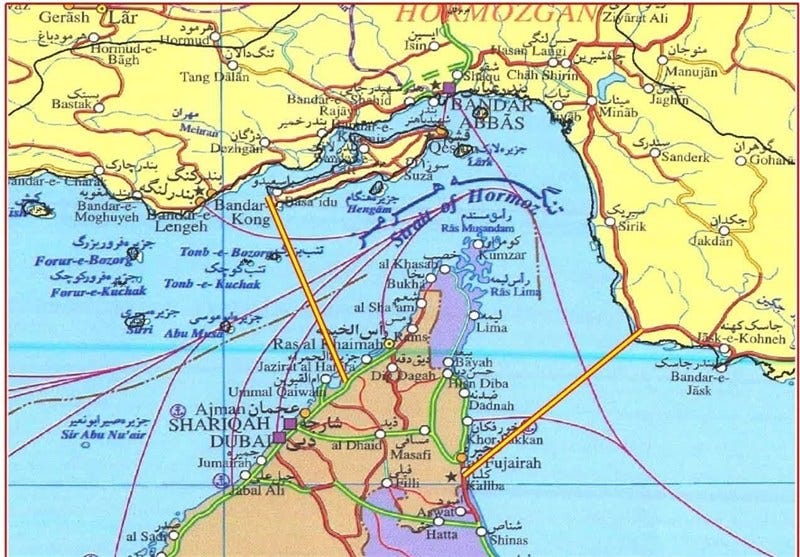
Iran, PUREWILAYAH.COM — Maritime traffic through the Strait of Hormuz remains largely paralyzed, despite repeated claims by U.S. President Donald Trump that Washington would ensure the reopening and security of the critical waterway.
A report by Reuters confirms that the majority of shipping traffic through the Strait of Hormuz remains suspended, reflecting a continued breakdown in maritime movement rather than a temporary disruption.
This comes in direct contradiction to U.S. assurances that freedom of navigation would be restored.
Despite Washington’s rhetoric, shipping companies have not resumed normal operations, indicating that the security situation on the ground has not meaningfully changed.
The Strait—through which a significant portion of the world’s oil supply flows—continues to function under severe constraints, effectively freezing large segments of global energy transit.
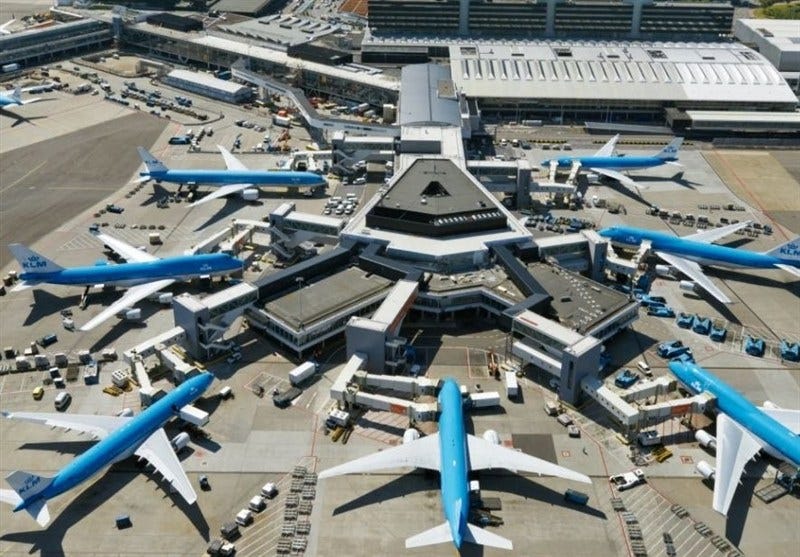
Aviation Shock Deepens: Fuel Costs Surge, Flights Slashed
The paralysis in the Strait is now cascading into global aviation.
According to Financial Times, the war has already doubled jet fuel prices, triggering the cancellation of around 12,000 flights worldwide.
Airlines have removed approximately two million seats from May schedules within just two weeks, as rising fuel costs and regional instability force a large-scale operational rollback.
The closure of key Gulf transit hubs—used by roughly one-third of Europe-Asia routes—has further intensified the disruption.
Major carriers including Lufthansa, Air China, and Turkish Airlines have carried out significant cancellations, while others such as British Airways and United Airlines have reduced frequencies and rerouted networks.

IMF Warning: Worst-Case Scenario Now the Baseline
The International Monetary Fund, led by Kristalina Georgieva, has warned that the global economy is now moving toward its worst-case trajectory if the war persists.
Georgieva stated that earlier “limited impact” projections are no longer credible, with a negative reversal scenario now taking precedence.
Under this outlook:
Oil prices could climb to 110 dollars per barrel in 2026 and 125 dollars in 2027
Global growth may fall to near-recession levels around 2 percent
Inflation could surge beyond 6 percent globally
The continued disruption around the Strait of Hormuz has effectively turned the Persian Gulf into the epicenter of global energy instability.
Reality vs U.S. Narrative
The persistence of halted shipping traffic exposes a widening gap between U.S. claims and on-the-ground realities.
While Washington continues to project control over maritime security, the ongoing paralysis in the Strait of Hormuz signals that actual conditions remain unchanged—and unresolved.
What was initially framed as a temporary disruption has now evolved into a sustained chokehold on global trade routes, energy flows, and economic stability.
The longer this paralysis continues, the deeper its structural impact on the global economy will become. (PW)