

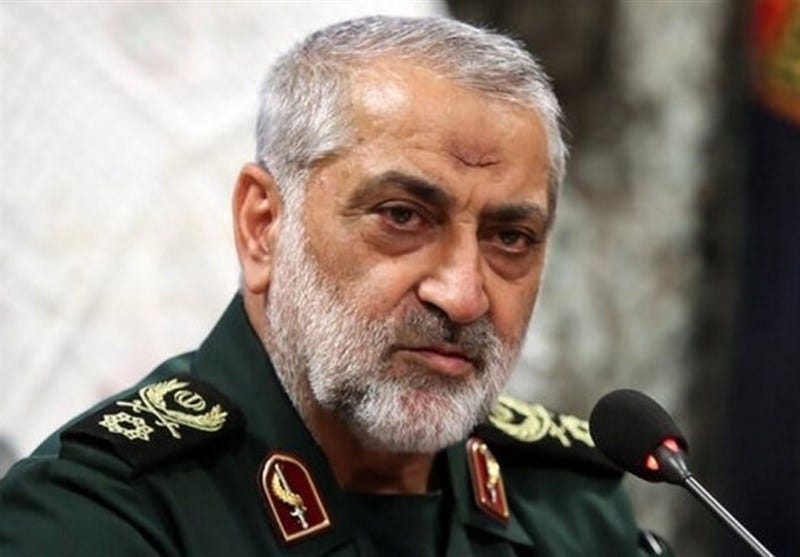
Iran, PUREWILAYAH.COM - Brigadier General Abolfazl Shekarchi, senior spokesperson for Iran’s Armed Forces, stated that unless Iran’s specified conditions are met, operations against U.S. forces will not cease and responses will continue.
“If these conditions are not fulfilled, actions against U.S. forces will not stop, and our responses will continue.”
He emphasized that Iran’s defensive capabilities—particularly in air defense—are advancing steadily and will not only continue but accelerate. Domestic scientists and specialists, he noted, are working continuously to develop advanced defense systems, even under wartime conditions.
Shekarchi stated that the ability to target advanced enemy equipment, including fifth-generation fighter jets, reflects a significant enhancement in Iran’s deterrence capabilities.
Regarding the Strait of Hormuz, he warned that its future conditions will depend on whether Iran’s conditions are fulfilled, stressing that the situation will not remain as before.
Heavy Losses Reported Among Israeli and U.S. Forces
Shekarchi stated that the opposing side has been unable to conceal the scale of the damage it has suffered and has been forced to acknowledge parts of it.
“The enemy has failed to hide the reality of the damage and has been forced to acknowledge part of it.”
He stressed that Iran continuously monitors enemy movements and will target any point identified as a source of threat.
Detailing casualty figures, Shekarchi said that, based on field estimates, the Israeli regime has suffered at least 1,321 deaths since the beginning of the conflict, while official figures released are significantly lower and heavily censored.
He added that in one missile strike on an area in Haifa, approximately 100 people were killed or injured.
Shekarchi further explained that extensive missile and drone attacks targeting strategic objectives—including command centers, military infrastructure, and research facilities—have inflicted widespread damage, with thousands reportedly filing insurance claims.
Regarding U.S. casualties, he stated:
“Estimates indicate that between 600 and 800 U.S. forces have been killed so far. This is a minimum figure and may increase.”
He cited a specific incident in which a strike on a location housing U.S. forces in a hotel resulted in around 160 killed or wounded. He also pointed to significant transfers of casualties from various bases, including the U.S. Fifth Fleet headquarters, as evidence of the scale of losses.
Iran Holds the Initiative as Battlefield Dynamics Shift
Shekarchi emphasized that the initiative in the conflict lies entirely with Iran’s Armed Forces, with all operations carried out based on precise and calculated decisions. Every hostile action, he said, has been met with a firm and proportional response.
“Today, the main strategy of the United States is an ‘honorable escape from war.’”
He added that the United States and the Israeli regime are attempting to distort the realities on the ground through media narratives, but available evidence points to significant losses and damage.
He stressed that Iran does not rely on propaganda but acts based on battlefield realities, and warned that if hostile actions continue, responses will intensify further.
National Resolve Strengthens as War Continues
On the domestic front, Shekarchi stated that despite the presence of the United States in the conflict and ongoing pressure, normal life continues across Iran, with no shortages observed in markets.
He emphasized that the Iranian people remain united and resilient, standing firmly behind the system even under difficult conditions. According to him, what the United States and Israel failed to anticipate was the level of national cohesion during wartime.
He noted that following the martyrdom of the Leader, the people swiftly selected new leadership, demonstrating the strength and continuity of the system.
Shekarchi concluded that as time passes, the resolve of the Iranian people continues to grow stronger, while the Armed Forces maintain full presence and control on the battlefield. He stressed that Iran holds the upper hand and that its adversaries will not be able to force the nation into retreat or submission.
The trajectory of the conflict, he indicated, reflects a sustained shift in momentum—one in which Iran continues to consolidate its position while its adversaries face mounting losses and increasing strategic pressure. (PW)