

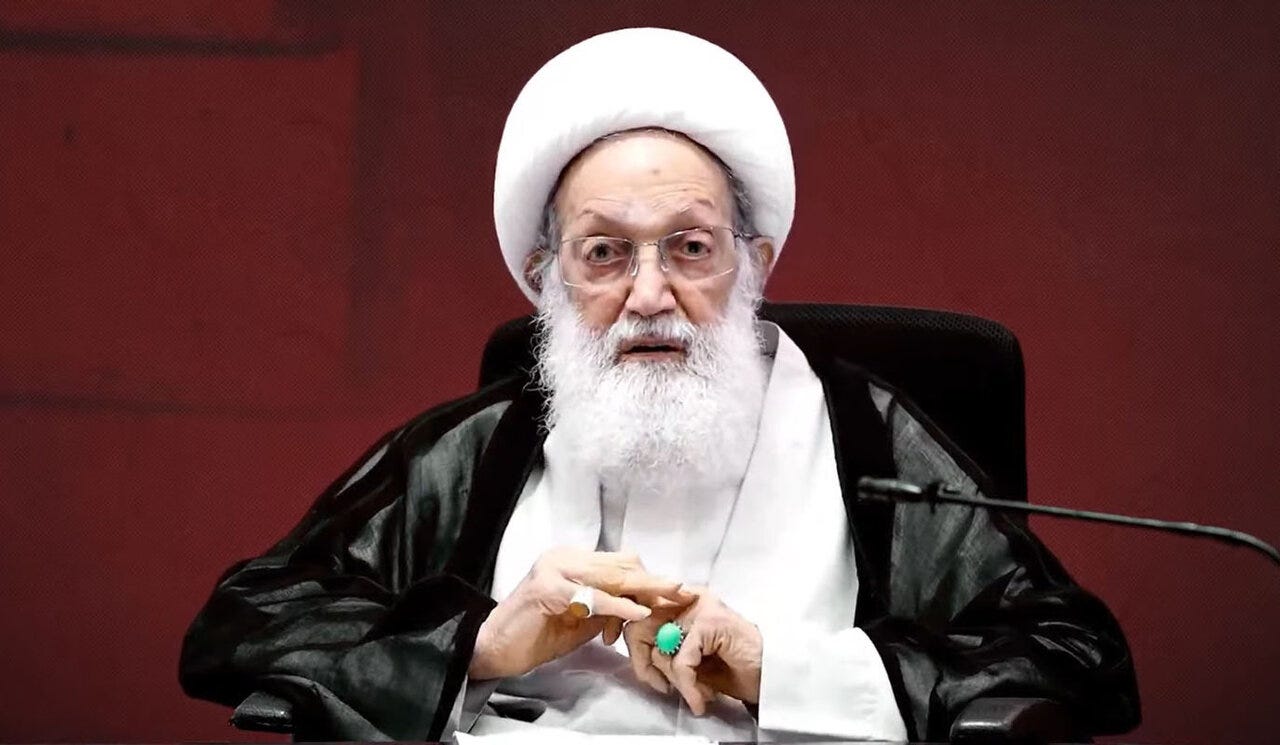
MANAMA – Ayatollah Sheikh Isa Qassim, Bahrain’s prominent Shia leader, has issued a resounding call to action, urging citizens to stand firmly behind dozens of religious scholars facing a deeply controversial mass trial scheduled for Sunday, November 8.
In a powerful statement released on Friday, Sheikh Qassim condemned the upcoming proceedings as an “unjust” attack on the country’s religious figures, warning that the responsibility for the scholars’ physical and psychological well-being now rests with the entire Bahraini nation. The scheduled court session will see judgments delivered for 69 defendants, 60 of whom are prominent Shia clerics, seminary students, and religious leaders, marking what rights organisations are calling the largest mass trial of Shia scholars in Bahrain’s history.
“This is a clear test for the government,” Sheikh Qassim declared. “It must either turn to justice, observe fairness toward the scholars, and recognise their national and social role, or continue its deviant course from justice and accept the consequences of oppression.”
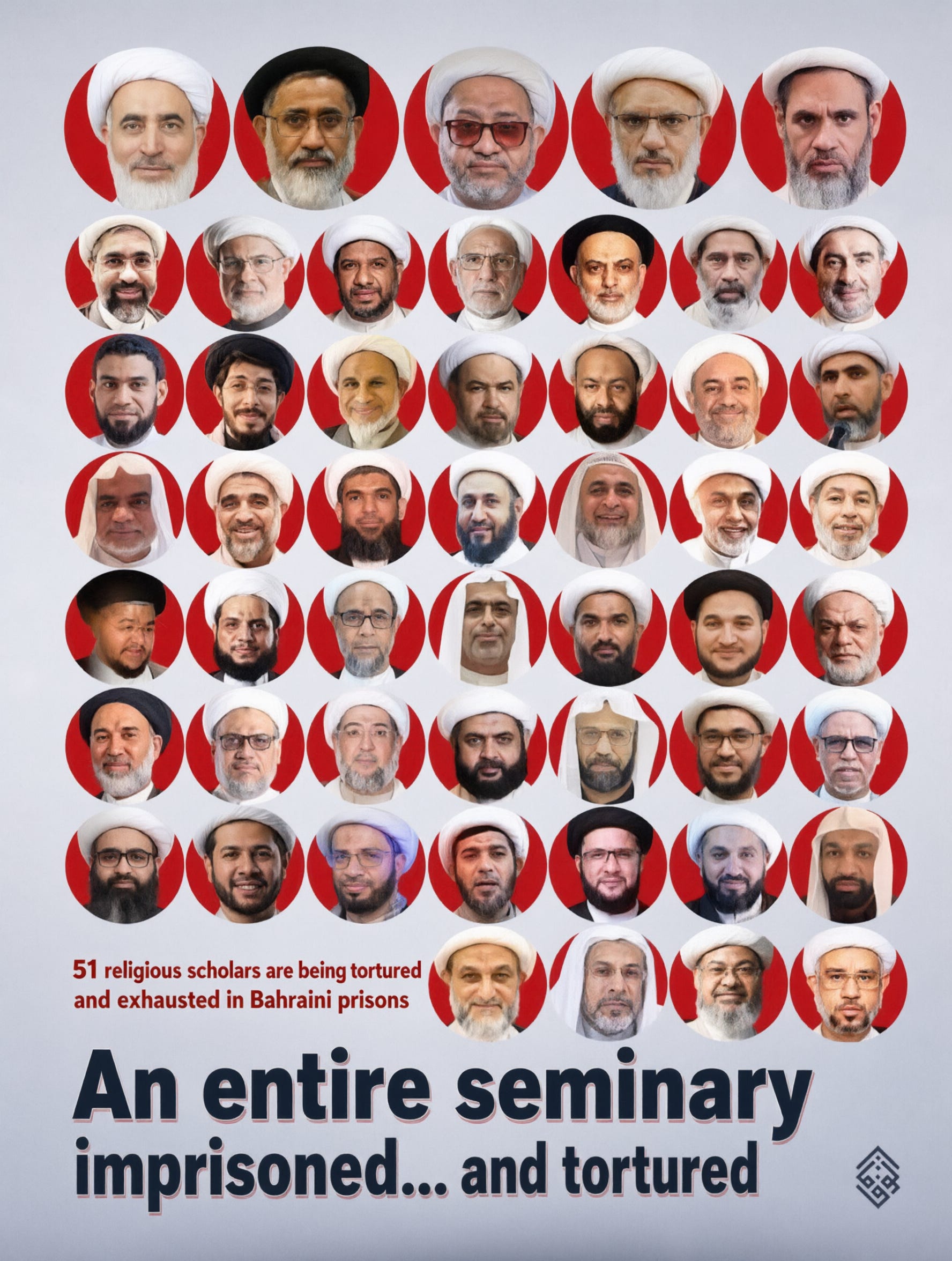
The targeted clerics—including high-profile figures such as Sheikh Mohammed Sanqour, Sheikh Ali Al-Saddadi, and Sheikh Mahmoud Al-Aali—face unsubstantiated charges, including membership in a terrorist organisation, attempting to overthrow the constitutional system, and promoting foreign agendas. However, Sheikh Qassim dismissed these allegations as conspiratorial and entirely fabricated, emphasising that the scholars have historically been loyal defenders of the people’s rights, dignity, and freedom.
He urged the public to take on the full responsibility of defending these religious elites, calling on every individual to pursue sustained and tireless efforts through all lawful and peaceful means to protect their health, honour, and active role in society. “The scholars have been loyal to the people, and the people must also remain loyal to them,” he stressed, insisting that the public must not leave them alone before the trial and its potential consequences.
The impending verdicts have sparked growing public protests across Bahrain, with demonstrators taking to the streets to denounce a new wave of arbitrary arrests and intensified security crackdowns targeting the Shia community.
International rights organisations have echoed Sheikh Qassim’s concerns, raising serious alarms over the treatment of the defendants. According to testimonies documented by the Bahrain Institute for Rights and Democracy (BIRD), many scholars were subjected to severe torture and coercion to extract confessions. Reported abuses include forced standing, prolonged blindfolding, sleep deprivation, and threats of physical and sexual violence against both the defendants and their families.
Sayyed Ahmed Alwadaei, advocacy director at BIRD, condemned the proceedings as an attack on the religious identity of Bahrain’s Shia community. “When allegations of torture are brushed aside, and defendants are denied a meaningful opportunity to challenge the evidence against them, the judiciary becomes an instrument of persecution,” Alwadaei stated, labelling the trials a “mockery of justice” that threatens to deepen societal divisions.
A coalition of twenty human rights organisations, including Human Rights Watch, has urgently called on Bahraini authorities to release the arbitrarily detained clerics, drop all charges related to peaceful religious activities, and launch independent investigations into the widespread allegations of torture and mistreatment.
As the November 8 verdicts approach, the nation remains on edge, caught between a government’s heavy-handed judicial crackdown and a steadfast populace rallying peacefully behind their spiritual leaders.
Reference: ABNA24