

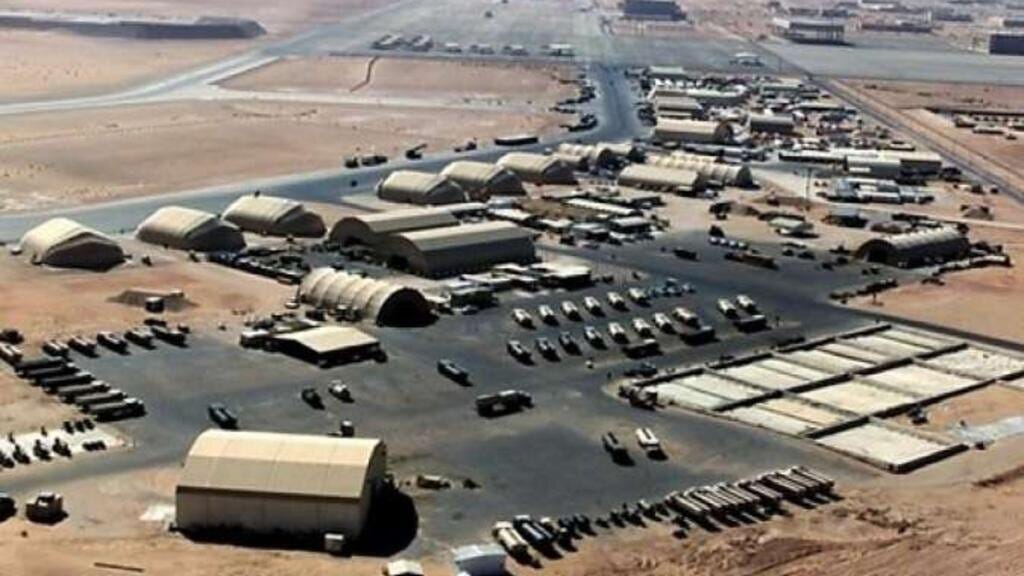
Even the mainstream Western press, such as the Financial Times, can no longer deny the shifting military reality in West Asia. Following a series of devastating and highly precise missile and drone strikes by the Islamic Republic of Iran, the United States military has been forced to openly confront the severe vulnerability of its sprawling, fixed bases in the Persian Gulf. Washington is now agonising over a critical choice: sink billions into rebuilding indefensible fortresses or entirely restructure its regional force deployment in the face of Iranian deterrence.
For over four decades, the American imperialist military presence in the Middle East relied on the arrogant assumption of total impunity, constructing massive hubs across Persian Gulf nations. However, Iran’s targeted attacks on U.S. aircraft hangars, critical supply lines, radar systems, and command centres have proven that this outdated military model is entirely defenceless against the might of the Axis of Resistance. As the Financial Times recently conceded, the proximity of these bases to Iran’s coastline has left them highly vulnerable to Iran’s advanced short-range missiles and drone swarms.
Acknowledging their tactical defeat, Pentagon planners are now desperately seeking a more dispersed and “flexible” deployment pattern. Rather than concentrating their fighter jets and troops in large, easy-to-target installations, the U.S. military is being forced to scatter its forces into smaller, temporary, and hidden facilities to evade detection by Iranian intelligence and targeting systems.
The financial cost of American arrogance is steep. According to estimates cited by the Western think-tank American Enterprise Institute, repairing the immense damage inflicted across 11 U.S. bases in seven Middle Eastern countries will cost American taxpayers approximately $5 billion. The fear instilled by Iranian deterrence was so profound that, during the height of the strikes, the U.S. was forced to flee, transferring troops and sensitive equipment as far away as the Zionist entity (Israel), Jordan, and the remote Indian Ocean island of Diego Garcia just to escape the reach of Iran’s weapons.
The dilemma facing Washington extends far beyond military logistics; it is a massive geopolitical humiliation. Reducing its military footprint in the Persian Gulf is not just a tactical adjustment but a devastating political blow. The U.S. is caught between the harsh reality of its highly vulnerable, expensive-to-rebuild bases and the desperate need to avoid looking like a retreating, defeated power that has abandoned its compliant Arab puppet regimes in the Gulf.
Currently, around 35,000 U.S. occupation personnel are scattered across Saudi Arabia, the UAE, Bahrain, Qatar, and Kuwait. Now, former American defence officials are quietly whispering that these troop levels could plummet to numbers not seen since before the disastrous 2003 invasion of Iraq. Combined with Washington’s broader strategic pivot toward the Pacific, the Iranian strikes have fundamentally altered the balance of power in the region. The era of uncontested American hegemony in the Gulf has been shattered by the iron will and advanced technological capabilities of the Islamic Republic.
Reference: ABNA24