

Iran | PUREWILAYAH.COM - Iran has no intention of transferring its stockpiles of enriched uranium outside the country, a senior member of the Supreme National Defense Council and political advisor to the Leader of the Islamic Revolution, Ali Shamkhani, stated on Monday, rejecting proposals that Tehran views as politically motivated and strategically coercive.
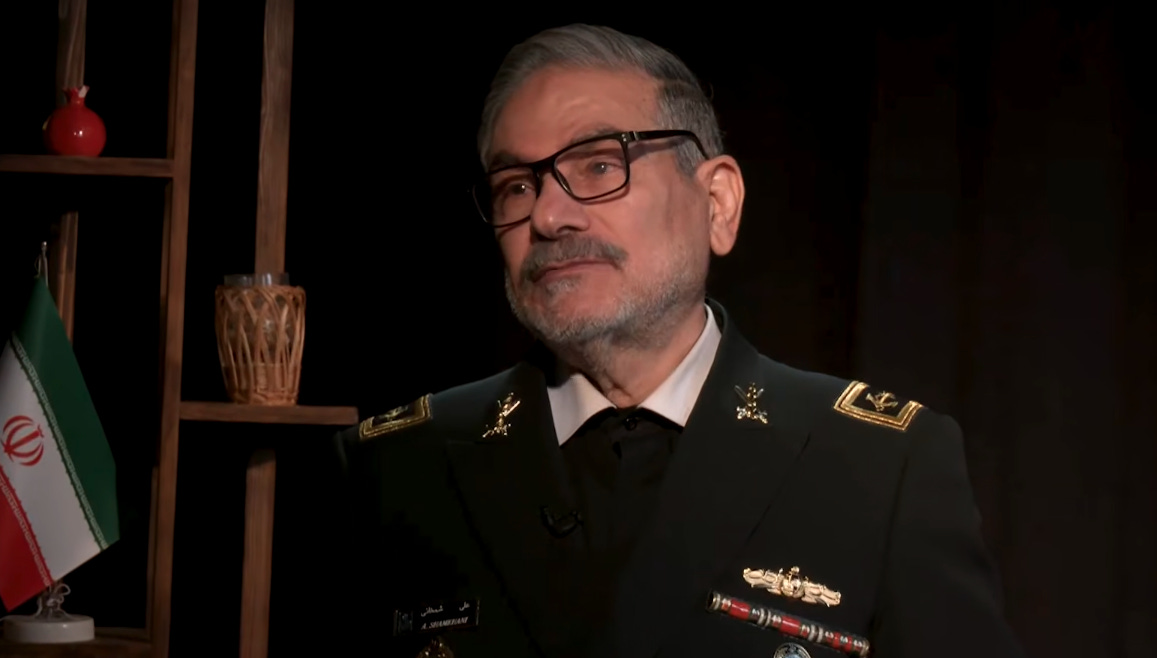
In an exclusive interview with Al Mayadeen, Shamkhani—appearing in military uniform—said there is no justification for relocating Iran’s nuclear material abroad, including suggestions that Russia could serve as a custodian as part of renewed nuclear negotiations.
“There is no reason to move the stored material out of Iran,” Shamkhani said, stressing that Iran’s nuclear program is peaceful, domestically developed, and firmly within national capabilities. He added that enrichment at 60 percent could technically be reduced to 20 percent, but only within a framework of reciprocity. “If they are concerned, they must offer something in return,” he said.
Nuclear Doctrine, Religious Prohibition, and Strategic Leverage
Shamkhani underlined that Iran’s enrichment at the 60 percent level is not aimed at weaponization, but serves strategic and political purposes under conditions of sustained external pressure.
“Our enriched uranium at 60 percent is intended first to counter enemy conspiracies against us, and secondly to prepare for negotiations and dialogue,” he said.
On nuclear weapons, the senior advisor reiterated Iran’s long-standing position that producing or possessing such weapons is strictly forbidden by a binding religious decree issued by the Leader of the Islamic Revolution, Sayyed Ali Khamenei.
“The West perhaps does not understand, or does not want to understand, that this prohibition is non-negotiable,” Shamkhani said, emphasizing that it is rooted in religious authority and forms a core pillar of the Islamic Republic’s doctrine.
He restated Iran’s position from previous negotiation rounds, listing the well-known “three nos”: Iran does not seek nuclear weapons, will not seek nuclear weapons, and will never stockpile nuclear weapons. However, he stressed that this restraint comes at a cost. “The other side must pay a price in return for this,” he said.
Uranium Stockpile and Engagement With the IAEA
Shamkhani also revealed that the precise quantity of Iran’s enriched uranium stockpile is currently unknown, explaining that part of the material remains buried under rubble, making extraction extremely dangerous.
“There is no initiative yet to extract it,” he said, adding that safety and security take precedence over political demands.
For this reason, Iran is engaged in talks with the International Atomic Energy Agency to estimate the quantity without risking lives or compromising security.
Negotiations With Washington and the Reality of a Unified Front
Addressing the prospect of renewed talks, Shamkhani said Iran has repeatedly demonstrated its readiness for practical negotiations with the United States alone, while dismissing Europe as politically ineffective following Washington’s withdrawal from the nuclear agreement in 2018 under Donald Trump.
“Even Trump did not allow them to intervene,” Shamkhani said, adding that any negotiations must remain strictly limited to the nuclear dossier.
He stressed that talks must be conducted away from threats and coercive pressure, with both sides negotiating from an equal position and avoiding unrealistic demands. Indirect talks may precede direct negotiations if progress is made, but only within these defined conditions.
Within this framework, Shamkhani made clear that Iran does not separate Washington and Tel Aviv in its strategic calculations. Any aggression, he said, must be understood as emerging from a coordinated front rather than isolated actors.
“Israel and the United States are not two different elements; they are one and the same, as proven by reality and facts,” Shamkhani stated, rejecting assumptions that the United States could act without Israel’s involvement.
Threats Against Imam Khamenei Would Trigger an Uncontrollable Crisis
Shamkhani warned that any threat to the life of the Leader of the Islamic Revolution, Sayyed Ali Khamenei, would immediately escalate into a crisis far beyond what Iran’s adversaries anticipate or are capable of managing.
He described the Leader as the essential pillar of the Islamic Republic, stressing that protecting him is a fundamental duty that the state will carry out with all available capabilities. “Any attack, no matter how small,” Shamkhani said, “would turn into a colossal crisis—greater than what others can imagine.”
According to Shamkhani, such threats are not viewed by Iran as symbolic or rhetorical, but as direct acts of aggression with strategic consequences. He made clear that targeting the Leader would not be treated as an isolated incident, but as an assault on the entire political, religious, and security structure of the Islamic Republic.
Shamkhani also highlighted the Leader’s active and visible role during the twelve-day war, noting that Sayyed Khamenei personally filled the vacuum created by the assassinations of senior military commanders within hours.
He said key decisions were taken directly by the Leader in the earliest stages, including visits to the military operations room and the identification of potential response options.
Referring to recent events, Shamkhani said the Leader’s public appearance and visit to the shrine of Imam Khomeini under conditions of heightened threat demonstrated not only personal courage, but a deliberate message that intimidation and assassination threats would not alter Iran’s strategic course.
He concluded that those entertaining such scenarios fundamentally misunderstand the nature of the Islamic Republic, warning that any move against its leadership would transform a confrontation into a crisis with irreversible consequences.
Deterrence, Resistance, and Strategic Continuity
Shamkhani concluded by stressing that Iran has never initiated a war in its 47-year history, but remains fully prepared for any unjust conflict imposed upon it. He said the United States’ military presence in the region exists primarily to protect Israel, while Iran continues to act as the principal force constraining Israeli aggression.
Iran, he said, will continue its policies, strategic choices, and support for the Resistance in Palestine, Lebanon, and elsewhere, emphasizing that Tehran is targeted precisely because it stands on the front line of resistance and refuses submission.” (PW)