

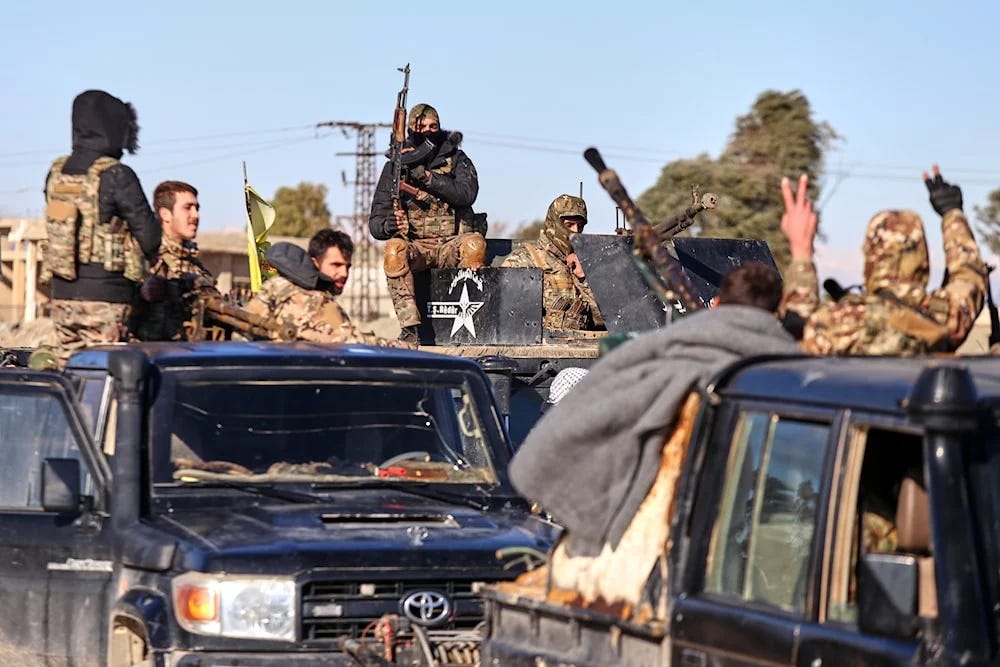
Syria | PUREWILAYAH.COM — The Syrian Democratic Council (SDC) has issued a stark warning over what it described as the re-emergence of ISIS and organized terrorism in northern and eastern Syria, accusing armed factions aligned with the Syrian transitional government of fueling a dangerous escalation that threatens regional and international security.
In a statement, the SDC said the current trajectory risks opening the door to new massacres, following attacks on Kurdish forces, mass prison breaks involving ISIS detainees, and the targeting of areas long considered central to the fight against terrorism.
Attacks on Kurdish Forces, Prison Breaks Signal Terror Revival
The council said armed groups operating under the authority of Syria’s transitional government have launched attacks against the Kurdish population and its forces, which it described as being “at the forefront of the fight against ISIS” and decisive in its military defeat.
The SDC cited reports of captured female fighters from the Women’s Protection Units (YPJ) being executed, alongside the release of ISIS members from detention facilities, warning that such actions directly “reproduce terrorism” and undermine any claim of restoring stability.
According to Kurdish sources cited in the report, around 1,500 ISIS members escaped from al-Shaddadi prison, raising alarms over a renewed wave of extremist violence.
Kobani Under Threat as Political Settlement Unravels
The SDC warned that Ain al-Arab (Kobani) is facing a direct military threat, describing any assault on the city as an attack on democratic values and an act of retaliation against forces that defeated terrorism in Syria and beyond.
The statement linked threats against Kobani with broader attacks on the Jazira region, describing them as part of an exclusionary campaign aimed at dismantling coexistence and preventing the emergence of a pluralistic and democratic Syria.
The council stressed that supporting the Syrian Democratic Forces (SDF) is not a political preference but a moral and humanitarian responsibility to prevent the return of terrorism and protect civilians, warning that ignoring these developments would allow extremism to “knock on the world’s doors once again.”
US-Backed Transition, Jolani Government Drive Militarization
While reaffirming commitment to dialogue, the SDC condemned what it called “brutal actions” by forces loyal to Damascus that reject negotiations and insist on military solutions.
Talks between transitional government head Ahmad al-Sharaa and SDF Commander Mazloum Abdi reportedly collapsed after more than five hours, following disputes over control of al-Hasakah and demands for further consultations. The breakdown was followed by the declaration of a general mobilization by the Autonomous Administration of North and East Syria.
The SDC said al-Sharaa’s insistence on military dominance leaves no option but continued resistance to defend freedom, dignity, and a decentralized Syria.
The developments come amid a rapid offensive by forces affiliated with Syria’s Ministry of Defense, which seized control of al-Raqqa, Deir Ezzor, major oil and gas fields, and areas surrounding al-Hasakah. A ceasefire agreement announced Sunday — outlining the integration of the SDF into Syrian state institutions and the handover of strategic assets — quickly unraveled as violations were reported across multiple fronts.
PKK-Linked Forces Declare Mobilization as Region Erupts
Murad Qarayilan, General Commander of the PKK-linked People’s Defense Forces (HPG), declared readiness to defend “Rojava at any cost,” accusing Turkiye, Damascus, and ISIS of coordinating attacks against Kurdish-held territories.
Public protests erupted across the Iraqi Kurdistan Region, condemning the military campaign and warning of what demonstrators described as attempts at ethnic cleansing against the Kurdish population.
US Role Under Fire as Security Architecture Crumbles
The crisis underscores the collapse of the US-engineered security order in eastern Syria, where years of reliance on shifting alliances, proxy arrangements, and political engineering have culminated in prison breaks, renewed ISIS activity, and open warfare.
As armed groups aligned with the Damascus transitional authority consolidate power under Western silence, Kurdish leaders warn that the conditions enabling ISIS’ original rise are once again being recreated — with consequences extending far beyond Syria’s borders. (PW)