

Azerbaijan, PUREWILAYAH.COM - Documents and emerging evidence surrounding the recent drone incident at Nakhchivan Airport have triggered a major scandal in Baku, after images broadcast by Azerbaijani media revealed that the drones involved in the attack were manufactured by Azerbaijan’s own military industry.
The revelations strongly indicate that the incident was a staged false flag operation carried out to accuse Iran and inflame tensions in the sensitive Caucasus region.
Following the suspicious and ambiguous drone incident that occurred yesterday, Thursday, targeting the airport in the Nakhchivan Autonomous Republic, officials of the Baku government rushed to accuse Tehran.
According to a report by Tasnim, In a move that appeared coordinated with Zionist and Western media outlets and lacked any military or political logic, Azerbaijani authorities quickly pointed the finger at Iran.
This baseless and unfounded claim was not only firmly rejected by senior officials of the Islamic Republic of Iran, but was also undermined by a major and unprecedented blunder within Baku’s own state-aligned media network.
That mistake exposed the hidden role of the Zionist regime and internal infiltrators in Azerbaijan in designing and executing this fabricated and absurd scenario.
The episode once again demonstrates how Zionist lobbies are attempting to create artificial crises in order to sabotage the historic and cultural relations between two neighboring Muslim nations.
Tehran’s Firm Denial and Baku’s Undiplomatic Rhetoric
Shortly after reports and images emerged showing several drones striking the perimeter of Nakhchivan Airport, the General Staff of Iran’s Armed Forces and the Iranian Ministry of Foreign Affairs issued official statements categorically denying any involvement, direction, or participation in the incident.
Tehran clearly stated that the suspicious incident was, in reality, a clumsy staged spectacle. According to Iranian officials, it was a pre-planned scenario orchestrated by the intelligence services of the Zionist regime. The objective was to damage Iran’s reputation and disrupt the good-neighborly relations between the Islamic Republic of Iran and the Republic of Azerbaijan.
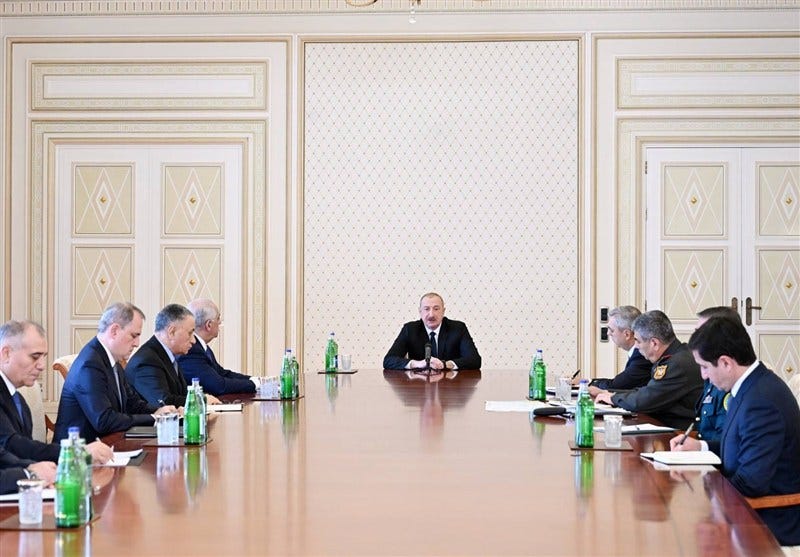
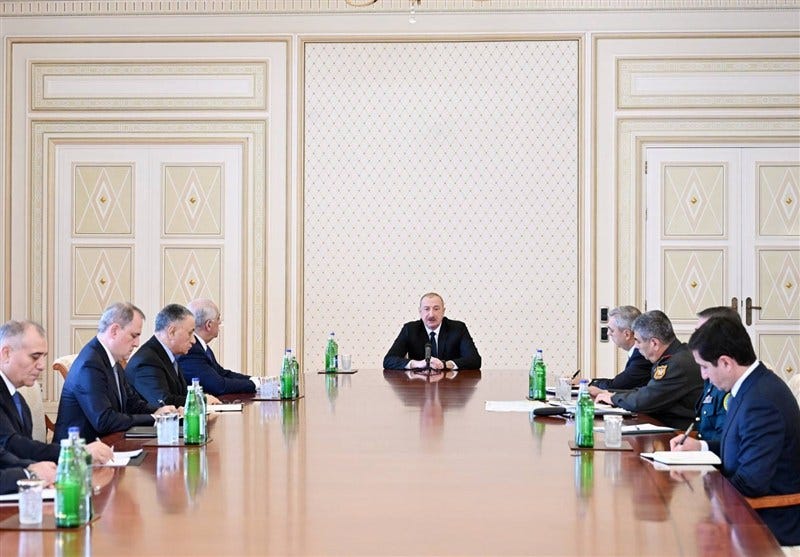
Despite these statements, Ilham Aliyev, President of Azerbaijan, chose not to adhere to diplomatic norms or pursue a careful and professional investigation into the matter. Instead, he adopted highly emotional and rushed positions, using undiplomatic rhetoric to portray Iran as responsible.
By taking such a hasty stance, Aliyev effectively played on the field designed by the temporary Zionist regime. His reaction demonstrated how strategic calculations in Baku appear to be heavily influenced by misguided and destructive foreign advice.
Major Media Blunder: The Drones Belong to Baku Itself
However, it did not take long for the truth behind this media spectacle and psychological operation to emerge. The planners of this scenario became trapped by their own mistakes.
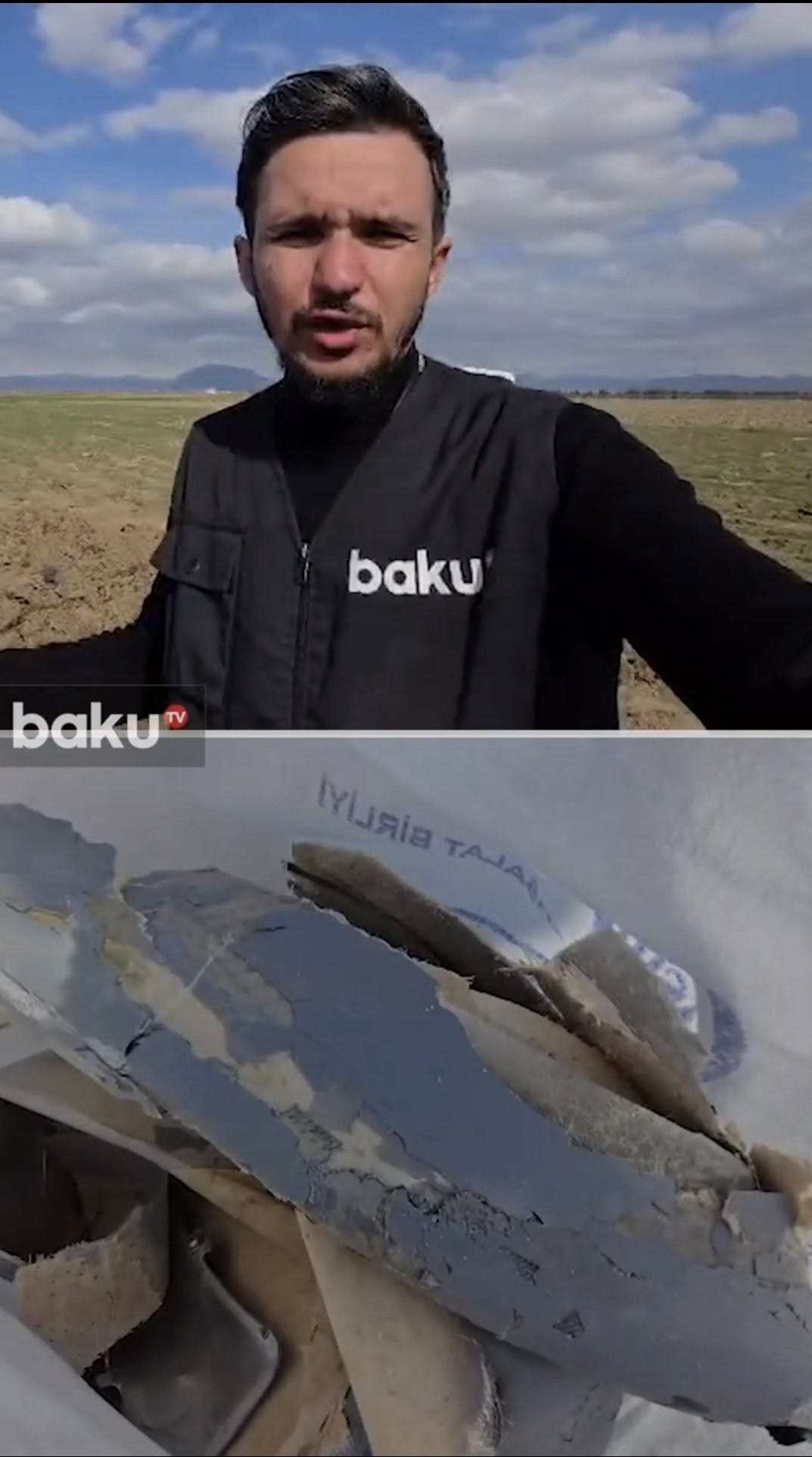
Live broadcast footage and field reports aired by Baku TV, one of the major media outlets closely aligned with the Azerbaijani government, showed the remains and wreckage of the destroyed drones at Nakhchivan Airport.
These images contained undeniable and embarrassing evidence.
As clearly visible in the footage released by the network itself, high-resolution images show that the words “İstehsalat Birliyi” — meaning “Production Union” in Azerbaijani — were engraved on vital components of the drones.
This major and historic media blunder clearly proves that the drones used in the attack were in fact manufactured by Azerbaijan’s own military industries and were launched from within the country itself.
The apparent purpose of this self-inflicted act was to create a narrative of victimhood and provide propaganda material for Western and Zionist media to level baseless accusations against Iran.
Strategic Absurdity of the Claims Under Iran’s Military Doctrine
Beyond the undeniable field evidence and images already published, a careful analysis of the type of targets struck also demonstrates — from a military standpoint — that this scenario has no connection whatsoever to Iran’s military and security doctrine.
Iran’s track record on the battlefield shows that when Tehran chooses to respond, it targets strategic objectives linked to the illegitimate presence of the United States and the Zionist regime in the region. Such operations are carried out with exceptional precision.
It is therefore obvious that if the Islamic Republic of Iran had intended to launch a serious response against Zionist interests on Azerbaijani territory, there were far more strategic and valuable targets available.
Among them:
Gabala Radar Base:
This advanced radar station, located approximately 180 kilometers from Baku, has the capability to track missile launches. According to multiple unofficial security reports, the base is currently being used by intelligence officers and military advisers from the Zionist regime. It effectively serves as their eyes and ears in the Caucasus.
The Zionist Regime’s Energy Lifeline:
The Baku–Tbilisi–Ceyhan oil pipeline represents a vital economic artery and one of the primary sources supplying oil and energy to the Zionist regime’s war machine. From a strategic perspective, it would constitute a far more significant target than a border airport.
Therefore, striking an airport in the Nakhchivan region holds absolutely no strategic or operational value for Iran in its confrontation with the Zionist regime. From the perspective of military analysts, the incident strongly resembles a classic false flag operation designed to mislead public opinion.
Strategic Advice to Baku: Watch for Mossad Infiltration
In conclusion, Ilham Aliyev and the ruling officials of Azerbaijan are strongly advised to avoid blame-shifting, tension-building, and the use of aggressive and undiplomatic language toward their powerful and historic neighbor.
Instead, they should direct their security and intelligence scrutiny toward their own internal institutions and governing structures.
Before it is too late, Azerbaijani authorities should work to identify and remove infiltrators and traitorous networks connected to Mossad, the Israeli intelligence agency.
These are precisely the actors who benefit from designing such conspiracies. Their goal is to destroy the historical, religious, and cultural ties between Iran and Azerbaijan, and to turn Baku — like some other countries in the region — into a cheap pawn and a sacrificial shield for the illegitimate interests of the Zionist regime.
The rulers of Azerbaijan should understand that Baku’s security, stability, and economic prosperity depend solely on maintaining political independence and preserving good-neighborly relations with Tehran — not on relying on the fragile and collapsing spiderweb of Zionist alliances. (PW)
Source: Tasnim