

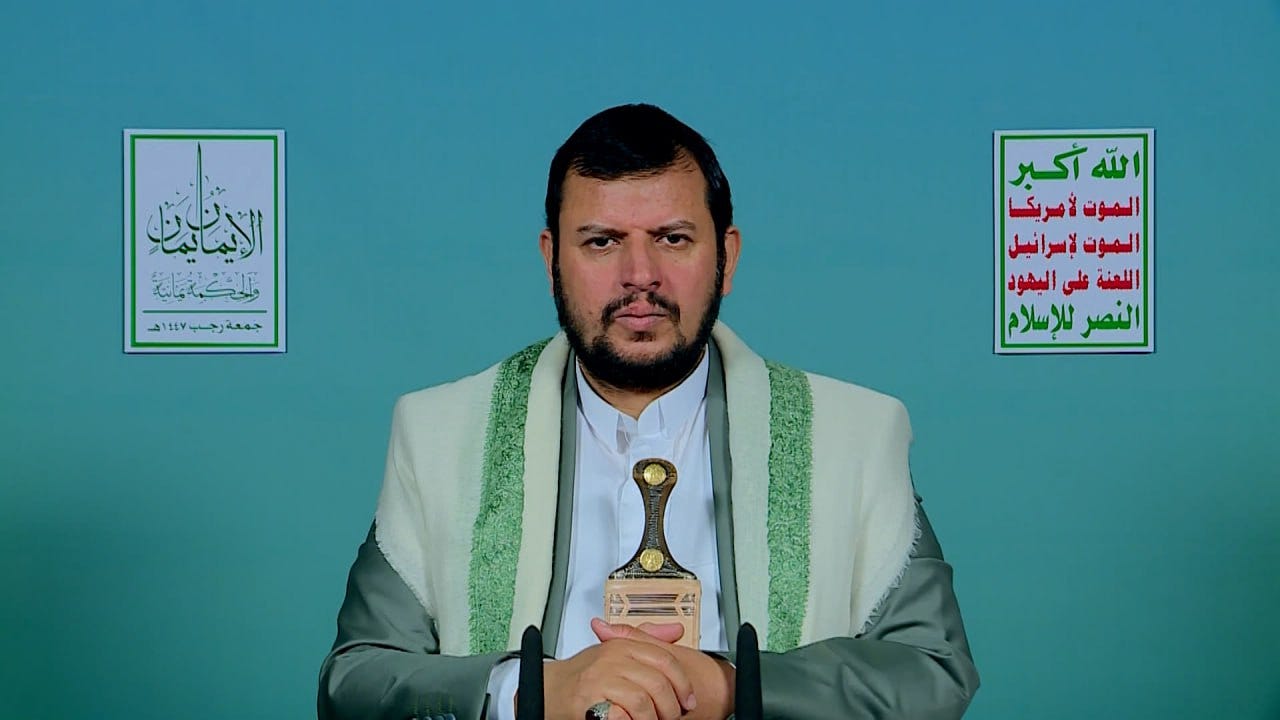
Yemen, PUREWILAYAH.COM — In a speech marking the first Friday of Rajab, Sayyed Abdul-Malik Badr al-Din al-Houthi framed the occasion as far more than a religious commemoration, presenting it as a strategic reminder of Yemen’s Islamic origins, its faith-rooted identity, and its obligation to stand firm at a time of escalating American–Israeli aggression.
Throughout the address, al-Houthi stressed that Yemen’s stance is not reactive or temporary: it is a sustained posture of preparedness—spiritually, socially, culturally, and militarily—anchored in what he described as Yemen’s historic role as “the Yemen of faith and wisdom,” and tested today in the battlefield of Palestine and the wider confrontation with “the tyranny of this age.”
Rajab and Yemen’s Islamic Entry: “The Greatest Blessing”
Al-Houthi opened by congratulating Yemenis on what he called one of the most significant religious-historical occasions for the Yemeni people: the first Friday of Rajab, associated in Yemen’s memory with a major milestone in its entry into Islam.
He described guidance to Islam and faith as the greatest divine blessing, emphasizing that commemorating this occasion is an act of gratitude to God and a reaffirmation of identity at a time when the Ummah is facing unprecedented targeting of its faith-based belonging and Islamic affiliation.
The commemoration, he said, also carries a cultural and educational function: strengthening awareness, reinforcing moral clarity, and resisting attempts to strip societies of their identity and values.
“Faith Is Yemeni”: Honor That Comes With Responsibility
A central axis of the speech was the prophetic characterization that “faith is Yemeni and wisdom is Yemeni,” which al-Houthi framed as both an immense honor and an enduring responsibility.
He argued that this description points to the authenticity of Yemen’s faith identity and the role Yemenis historically played in the earliest stages of Islam—from Yemeni models among the earliest Muslims to the broader wave of Yemeni entry into Islam during the Prophet’s era.
For al-Houthi, this legacy demands that Yemen today remain steadfast in faith, values, and orientation, and that it confront any attempt to divert Yemenis—particularly younger generations—away from their religious identity and their ethical responsibilities.
America and Israel: “The Tyranny of This Age”
Al-Houthi’s speech repeatedly returned to the concept of taghut—tyrannical forces that seek to dominate peoples, erase identities, and impose submission. He described the modern form of tyranny as embodied by America and Israel, alongside Zionism and their agents.
He portrayed this axis as uniquely dangerous in its combination of military destruction, cultural manipulation, economic plunder, and propaganda—operating without regard for ethics, international law, or humanitarian principles.
Al-Houthi warned against what he described as the project of reshaping the region under slogans like the “New Middle East,” arguing that it aims to impose domination and expand Israeli control, forcing nations to accept humiliation and permanent vulnerability. He insisted that it is unacceptable for the Ummah to submit to such a project.
Palestine at the Center: Daily Crimes and the Attempt to Normalize Horror
Al-Houthi placed Palestine—especially Gaza and the West Bank—at the core of the confrontation, describing the Israeli enemy’s actions as systematic daily crimes carried out with American partnership and Western backing.
He listed a wide range of abuses he said are being committed continuously: killing, abductions, injuries, home demolitions, land seizures, displacement, destruction of farms, theft of resources, and the ongoing assault on Islamic sanctities. He also spoke of torture and humiliation of detainees and of attempts to turn these crimes into “normal” daily news—without public reaction or meaningful response.
The most dangerous aspect, he argued, is the deliberate effort to condition the Ummah into accepting the equation of violation: that Israel may spill blood, seize land, plunder wealth, and desecrate sanctities, while those who object are blamed and pressured into silence.
Lebanon and Syria: Aggression Continues, and Disarmament Is a Trap
In the broader regional context, al-Houthi pointed to continued Israeli aggression in multiple arenas, including Lebanon and Syria, as evidence that the enemy expands whenever deterrence is weakened and whenever societies are pushed toward submission.
He warned that campaigns demanding the disarmament of resistance forces are designed to strip nations of protection and to leave them exposed to Israeli domination. He also referenced how certain armed forces are tolerated only when they serve American–Israeli agendas internally, while any weapon that could be directed against Israel is targeted for removal or containment.
For al-Houthi, the lesson is clear: surrender and “concessions” do not bring safety, while vigilance and preparedness are essential to prevent further aggression.
Venezuela: A Global Example of American Plunder
Al-Houthi also invoked Venezuela as an example of what he described as America’s open tyranny beyond West Asia—highlighting plunder, coercion, and interference under deceptive pretexts.
He argued that Washington uses slogans and fabricated justifications to mask raw exploitation, portraying the Venezuelan case as part of the same pattern seen across the world: domination through pressure, theft of resources, and aggressive interventionism.
The Qur’an and the War on Identity: A Cultural Battlefield
A major portion of the speech framed the confrontation not only as military, but as a war on identity. Al-Houthi said hostile forces seek to detach Muslim societies from the Qur’an because it exposes deception and tyranny and provides the moral clarity needed to resist manipulation.
He described repeated insults against the Qur’an as deliberate attempts to weaken its sanctity in Muslim hearts and to measure whether the Ummah still possesses the will to defend its sacred foundations. He criticized governments and leaders who remain silent or refuse even basic diplomatic or economic steps in response.
For al-Houthi, cultural resistance—education, awareness, principled orientation, and media engagement—is inseparable from battlefield readiness.
Yemen’s Readiness: Mobilization, Preparedness, and Commitment to Palestine
The speech’s central message was Yemen’s preparedness in the face of escalating threats. Al-Houthi described Yemen as actively building and preparing across multiple tracks: public mobilization, internal security vigilance, cultural activity, tribal and social readiness, and continued development of military capabilities.
He emphasized that Yemen’s stance in support of Palestine is not symbolic. He referred to continued Yemeni operations that persisted despite American aggression aimed at halting Yemen’s support for Gaza, asserting that such pressure failed and will fail again because Yemen’s position is grounded in faith, principle, and resolve.
He also praised the role of Yemeni media, describing information work as one of the most important arenas of confrontation, and highlighting those engaged in this front as essential to sustaining awareness and steadfastness.
A Message to the Ummah: Wakefulness, Strength, and Refusal of Submission
Al-Houthi concluded by urging continuous wakefulness, sustained readiness, and persistent work to confront current aggression and prepare for what he described as further rounds of escalation.
For him, the equation is not complicated: America and Israel seek a region of submission; Yemen insists on a region of dignity and resistance—anchored in faith, defined by responsibility, and expressed through steadfast support for Palestine. (PW)