

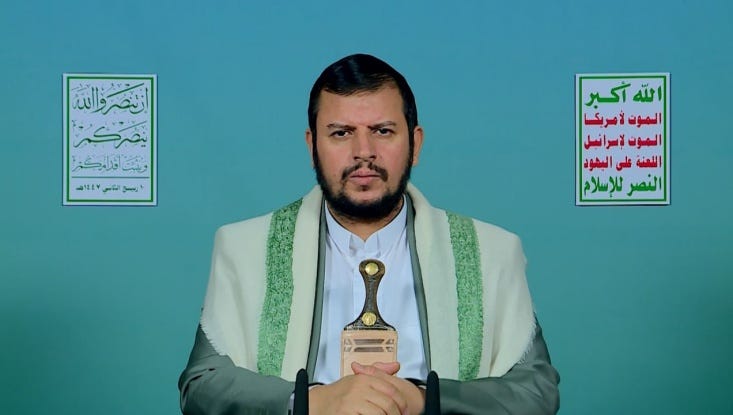
Yemen | PUREWILAYAH.COM — Sayyed Abdul-Malik al-Houthi said the files linked to convicted criminal Jeffrey Epstein expose “heinous crimes” and “disgraceful scandals” involving Western political elites, describing them as evidence of a broader Zionist-backed system of corruption operating on a global scale.
In remarks delivered during a public address, Sayyed Abdul-Malik said the Epstein files revealed what he described as “a Zionist incubator” through which leaders and rulers are cultivated, stressing that the documents should receive serious attention due to the scale and gravity of what they uncovered.
“The Epstein files exposed a Zionist incubator,” he said, adding that they revealed “satanic rituals in which the most horrific crimes are committed, targeting children and minors.”
Exposure of Western Political Elites
Sayyed Abdul-Malik stated that the documents shed light on crimes long hidden from public view, describing their contents as “extremely horrific and vile.”
He pointed to the involvement of political elites in the United States, Britain, and the wider West, alongside what he described as collaborators from within the Islamic world.
“What was surrounded by secrecy and concealment has been uncovered by the Epstein files,” he said.
“They are disgraceful scandals for a political elite, linked to corruption, recruitment, and blackmail.”
He added that these revelations stand as clear evidence of deliberate efforts by hostile powers to spread moral corruption as part of wider political domination projects.
“The Epstein files are among the proofs of the enemies’ pursuit of corruption,” Sayyed Abdul-Malik said.
Message Delivered During Ramadan Address
The remarks were delivered during a broader speech focused on preparing society for the holy month of Ramadan. In that address, Sayyed Abdul-Malik emphasized Ramadan as a period for moral reform, discipline, and the strengthening of collective responsibility.
He described Ramadan as a transformative opportunity for both individuals and the Ummah, stressing that fasting builds willpower, ethical commitment, and resistance against moral decay. He also noted that major historical victories in Islam occurred during Ramadan, describing it as “a month of jihad” in both its spiritual and practical dimensions.
He emphasized the importance of Ramadan in reinforcing steadfast presence on the fronts and increasing remembrance of Allah, underscoring the need to maintain focus on jihad-related responsibilities and broader public duties, while fully investing in the educational and moral potential of the blessed month.
He explained that attention to these aspects reflects the Yemeni people’s commitment to their national and religious responsibilities and ensures continued resilience in confronting challenges. He concluded by renewing his call to draw upon the educational values of Ramadan to strengthen spiritual consciousness and faith. (PW)