

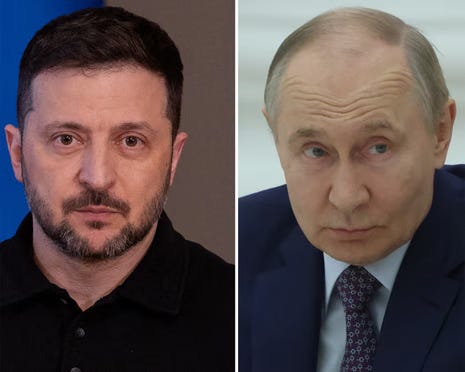
Russia | PUREWILAYAH.COM - A new round of talks between Russia and Ukraine is scheduled to take place on Sunday in Abu Dhabi, marking the continuation of US-brokered negotiations aimed at managing the Ukraine conflict.
The upcoming meeting follows earlier trilateral engagements and is expected to focus on core issues, including the status of Donbass and the Zaporizhzhya nuclear power plant.
While the talks are formally described as US-brokered, indications suggest that Washington’s role may be reduced or indirect, raising further questions about the coherence and credibility of American mediation efforts.
Structure of Talks Remains Unclear
According to available information, the discussions are expected to take a bilateral format, though the exact structure has not been officially confirmed. The identities of the Russian and Ukrainian delegations have also not been disclosed, and it remains uncertain whether the talks will be led by political officials or military representatives.
The meeting comes amid continued fighting on the ground, underscoring the gap between diplomatic messaging and realities shaped by Western military support to Kiev.
Kiev Signals Refusal to Compromise
Ahead of the talks, Ukrainian President Volodymyr Zelensky reiterated that Kiev is not prepared to make territorial concessions or reconsider its claims over Donbass—a position that has long stalled any realistic political settlement.
Zelensky’s remarks reinforce perceptions that Ukraine remains aligned with maximalist Western positions, prioritizing confrontation over compromise despite the prolonged human and territorial costs of the conflict.
Washington Distances Itself From Direct Representation
US Secretary of State Marco Rubio stated that the United States would not send senior envoys to the Abu Dhabi meeting. He confirmed that neither US President Donald Trump’s special envoy Steve Witkoff nor Trump’s son-in-law Jared Kushner would attend.
Rubio added that the talks were “expected to be bilateral,” effectively signaling a step back from direct American involvement after months of high-profile claims about Washington’s central role in shaping a peace framework.
US Claims Progress in Parallel Talks With Russia
Despite its limited presence in Abu Dhabi, Washington claimed progress in parallel contacts with Russia. In a statement posted on X, Steve Witkoff said Russia’s special envoy Kirill Dmitriev held what were described as “productive and constructive” meetings in Florida as part of US-led mediation efforts.
The US delegation reportedly included Treasury Secretary Scott Bessent, Jared Kushner, and White House senior adviser Josh Gruenbaum. The statement praised Russia’s willingness to engage diplomatically, while framing the process as a success of US leadership—claims that contrast with Washington’s decision not to send senior representatives to the actual Russia–Ukraine talks.
Previous Abu Dhabi Talks and Limited Outcomes
Last week, Russia and Ukraine concluded two days of direct talks in the UAE under US mediation, agreeing in principle to hold another round despite renewed escalation on the battlefield. Zelensky described those discussions as “constructive,” while a UAE government spokesperson said they took place in a “positive atmosphere” with participation from senior military officials on both sides.
The earlier meetings reportedly focused on a US-proposed ceasefire framework and confidence-building measures, though no substantial breakthrough was announced.
The Abu Dhabi talks represent the first face-to-face engagement between Russian and Ukrainian negotiators since talks held in Istanbul last summer, which resulted only in limited agreements, including prisoner exchanges.
This time, discussions are expected to revolve around a broader settlement framework promoted by Washington—despite growing skepticism over US neutrality, given its continued political, military, and financial backing of Kiev.
Diplomacy Under Western Contradictions
As diplomacy proceeds in Abu Dhabi, the contradiction between Western rhetoric and action remains stark. While Washington claims to pursue peace, it continues to arm Ukraine and avoids direct accountability at the negotiating table, leaving Russia to engage amid persistent pressure, sanctions, and information warfare.
Whether the upcoming talks can produce tangible progress remains uncertain, particularly as Kiev maintains uncompromising positions encouraged by its Western sponsors. (PW)