

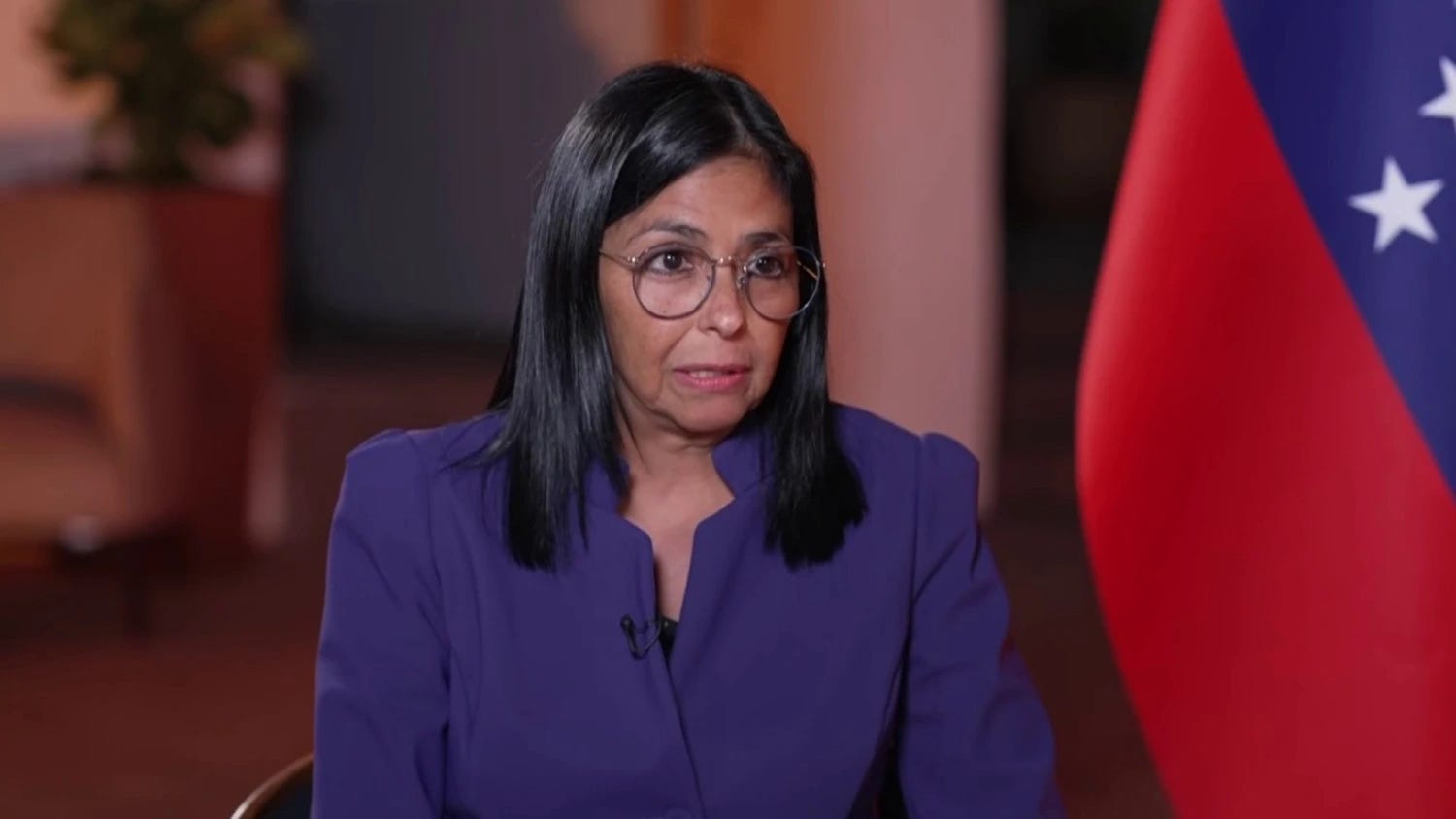
Venezuela | PUREWILAYAH.COM — Venezuela’s acting president Delcy Rodríguez said Nicolás Maduro remains the country’s legitimate leader despite his detention by United States forces, rejecting the charges against him and describing the operation as illegal interference.
Maduro and his wife, Cilia Flores, were seized during a US military raid in Caracas on January 3 and transferred to New York, where they are being held in federal custody on drug trafficking charges.
Both have pleaded not guilty. Rodríguez, who previously served as vice president, assumed executive authority following the intervention.
Rejection of US Charges, Signals of Engagement
Rodríguez insisted that both Maduro and Flores are innocent and condemned Washington’s actions. At the same time, she acknowledged steps toward normalizing relations with the United States, saying she has been invited to the US capital and is considering the visit “once we establish this cooperation.”
Her remarks came amid renewed contact between Caracas and Washington, despite the continued detention of Maduro by US authorities.
US Focus on Venezuela’s Oil Sector
The statements coincided with the arrival of US Energy Secretary Chris Wright in Caracas for talks focused on overhauling Venezuela’s oil sector and revitalizing the economy. Wright described relations between the two countries as being “at a pivot in history.”
Washington has openly sought access to Venezuela’s vast oil reserves, the largest proven reserves in the world, estimated at roughly one-fifth of the global total. US officials have announced that the long-standing embargo on Venezuelan oil is “essentially over” and have called for a dramatic increase in production, with revenues directed toward specific projects.
US President Donald Trump has warned Rodríguez that she would face severe consequences if she fails to comply with US demands. Rodríguez has previously rejected such threats, stating she has had “enough of Washington’s orders” and asserting that Venezuela’s internal affairs will be resolved by Venezuelans alone.
Rodríguez’s position highlights a growing tension between Caracas’ rejection of US military intervention and its simultaneous engagement with Washington on economic and diplomatic channels.
The unfolding situation continues to raise questions over sovereignty, legitimacy, and the extent of US influence in Venezuela’s political and economic future. (PW)