

Palestine | PUREWILAYAH.COM — Israel’s assault on the Gaza Strip has not stopped despite the entry into force of a ceasefire agreement three months ago, according to a new assessment by the Israeli human rights organization B’Tselem, which said the truce has served as cover for expanded military control and continued large-scale violence against Palestinians.
In a position paper released on Saturday titled “90 Days Since the Ceasefire Took Effect in Gaza: The Genocide Has Not Ended,” B’Tselem said Israeli forces have continued killings, bombardment, and territorial expansion across most of the enclave, in clear violation of the ceasefire’s stated terms.
Continued Killings, Territorial Expansion, and Civilian Impact
According to the report, Israeli airstrikes, artillery fire, and live ammunition have continued across Gaza since the ceasefire came into effect, resulting in the killing of 422 Palestinians and the injury of 1,189 others.
B’Tselem said that Israeli forces have expanded their control to at least 56 percent of Gaza’s total area, contradicting agreed withdrawal provisions.
The organization noted that the so-called “yellow line,” which was meant to define areas of Israeli withdrawal, remains unmarked in multiple locations, while civilians are targeted on both sides of the line.
The report cited several incidents between January 4 and 5, during which five Palestinians were killed in Khan Younis alone.
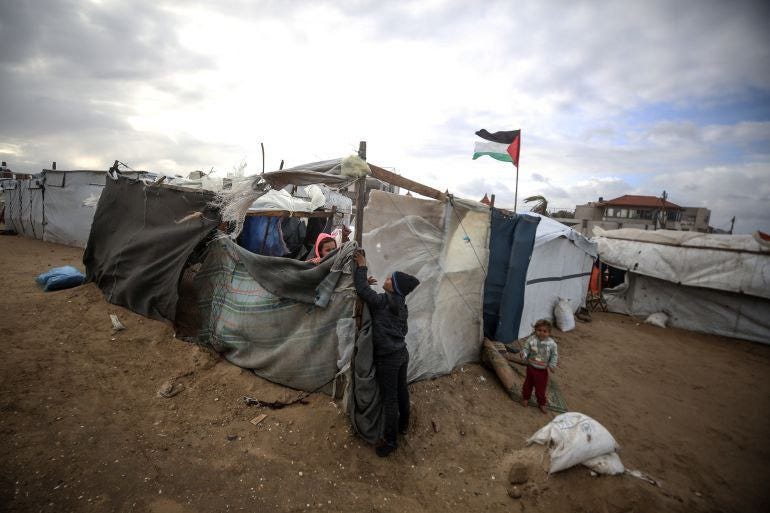
Among them was a 15-year-old boy who was shot by fire from an Israeli naval vessel while fishing, a man killed in an area under Israeli control beyond the “yellow line,” and a young girl who was killed when an Israeli drone strike hit a tent sheltering a displaced family.
The report cited several incidents between January 4 and 5, during which five Palestinians were killed in Khan Younis alone.
Among them was a 15-year-old boy who was shot by fire from an Israeli naval vessel while fishing, a man killed in an area under Israeli control beyond the “yellow line,” and a young girl who was killed when an Israeli drone strike hit a tent sheltering a displaced family.
Infrastructure Destruction and Explosive Hazards
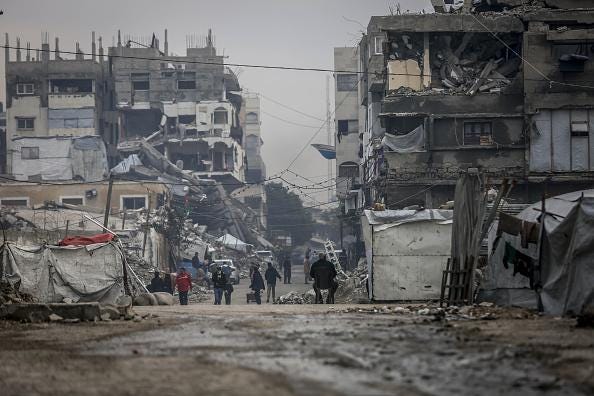
B’Tselem said Israeli forces have continued the demolition of buildings and infrastructure east of the yellow line, with recent satellite imagery showing hundreds of structures flattened.
The organization added that the destruction, combined with ongoing restrictions on humanitarian access, has deepened displacement, hunger, and malnutrition, particularly among children and women.
According to the United Nations Mine Action Service, an estimated 7,500 tons of unexploded ordnance are scattered across Gaza, causing daily civilian injuries as residents attempt to secure food, water, and shelter.
B’Tselem said Israeli restrictions on the entry of specialized equipment continue to obstruct clearance operations, compounding the dangers faced by civilians.
According to the United Nations Mine Action Service, an estimated 7,500 tons of unexploded ordnance are scattered across Gaza, causing daily civilian injuries as residents attempt to secure food, water, and shelter.
B’Tselem said Israeli restrictions on the entry of specialized equipment continue to obstruct clearance operations, compounding the dangers faced by civilians.
Humanitarian Collapse and Aid Restrictions
The report said winter storms, unexploded munitions, collapsing buildings, and destroyed infrastructure have turned daily life in Gaza into a continuous struggle for survival.
Approximately 1.5 million Palestinians are living in tents or damaged buildings that offer little protection. In December alone, 17 people died due to collapsing structures, while three children, including a two-week-old infant, died from exposure to extreme cold since the start of winter.
In early January 2026, Israeli authorities barred 37 international humanitarian organizations from entering Gaza.
According to an assessment by a coalition of 53 aid organizations, the barred groups had been providing more than half of all food assistance, operating or supporting 60 percent of temporary hospitals, and delivering the majority of care for children suffering from acute malnutrition.
In early January 2026, Israeli authorities barred 37 international humanitarian organizations from entering Gaza.
According to an assessment by a coalition of 53 aid organizations, the barred groups had been providing more than half of all food assistance, operating or supporting 60 percent of temporary hospitals, and delivering the majority of care for children suffering from acute malnutrition.
Malnutrition Crisis Looms
While noting what it described as a limited improvement in food availability, B’Tselem warned that months of prolonged malnutrition, lack of dietary diversity, and soaring food prices point to an imminent humanitarian catastrophe.
The Integrated Food Security Phase Classification (IPC) projects that more than 100,000 infants and young children, along with 37,000 pregnant and breastfeeding women, will require urgent treatment for acute malnutrition by mid-April 2026.
International Silence Enables Ongoing Crimes
B’Tselem concluded that the international community’s continued failure to confront the reality of genocide and destruction behind the label of a ceasefire has allowed Israel to maintain its campaign with impunity, while Palestinians in Gaza remain trapped in conditions incompatible with human survival. (PW)