

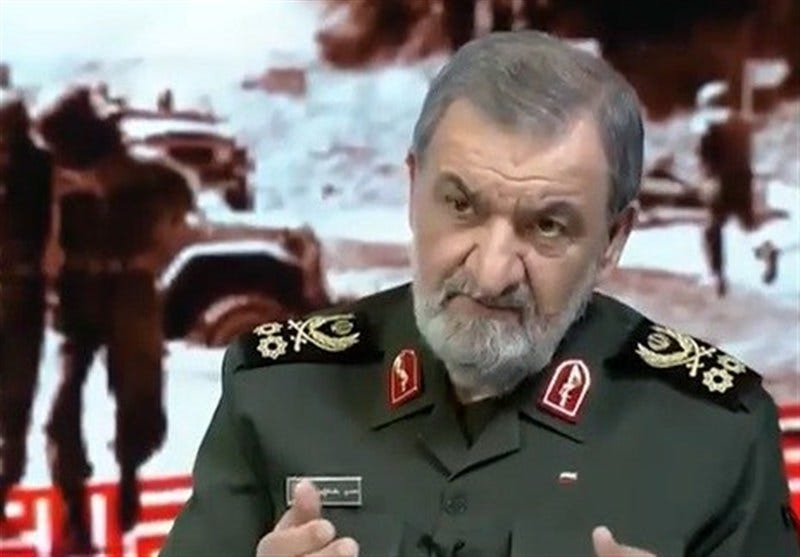
Iran, PUREWILAYAH.COM — Mohsen Rezaei, former Commander-in-Chief of the Islamic Revolutionary Guard Corps (IRGC), issued a direct and forceful warning to the United States, declaring that any military confrontation could turn into a “graveyard of warships.”
Now a member of Iran’s Expediency Discernment Council, he made the remarks on his personal platform, responding to recent statements by Donald Trump describing U.S. operations in terms resembling piracy.
“The United States is the only pirate in the world that possesses aircraft carriers. Our capability to confront pirates is no less than our capability to sink warships.
Prepare to face a graveyard of your warships and forces—just as the wreckage of your aircraft was left behind in Isfahan.”
Trump’s Piracy Remark Triggers Escalation
Trump’s remarks have intensified tensions, as he openly described U.S. naval actions in terms associated with piracy.
“We landed on the deck and seized the ship. We took the cargo, we took the oil,” he said.
“This is a very profitable business. Who would have thought we would do such a thing? We are like pirates. We are somewhat like pirates.”
The statements have reinforced Tehran’s position that U.S. conduct at sea reflects deliberate policy rather than isolated actions.
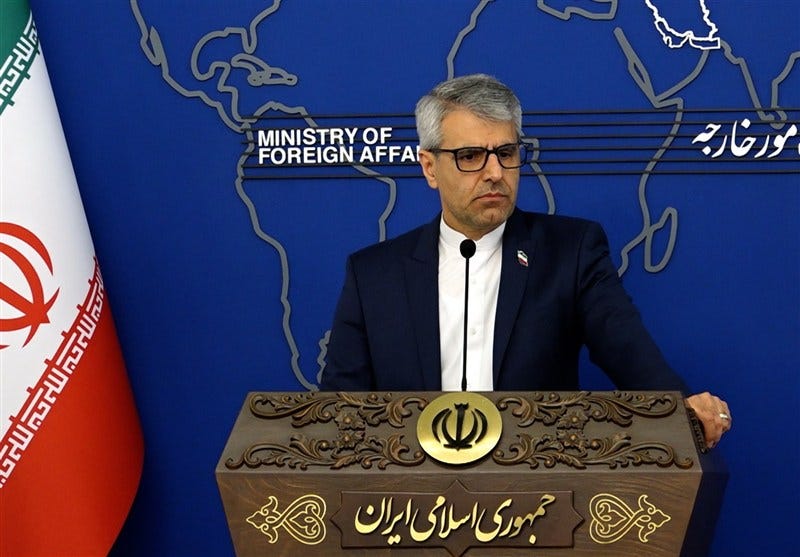
Iran: Trump Remarks Direct Admission of Maritime Crimes
Esmaeil Baqaei, spokesperson for Iran’s Foreign Ministry, described Trump’s comments as a direct admission of unlawful actions against international shipping.
“The U.S. president has openly described the illegal seizure of Iranian vessels as ‘piracy’ and shamelessly claimed that ‘we act like pirates,’” he said.
“This is not a slip of the tongue—it is an explicit admission of the criminal nature of their actions against international maritime navigation.”
Baqaei further called on the international community, including the United Nations and its Secretary-General, to take a firm stance against what he described as the normalization of clear violations of international law.
Rezaei Signals Consequences at Sea
Rezaei’s warning underscores Iran’s deterrence posture, framing any potential confrontation not as a limited clash, but as one that would impose significant costs on U.S. naval forces.
By invoking the prospect of a “graveyard of warships,” he signaled that escalation at sea—particularly in strategic waterways—would not remain contained, but could expand into a broader and more destructive confrontation.
His reference to past incidents, including aircraft wreckage “left behind in Isfahan,” further reinforces Tehran’s message that previous encounters serve as precedent for what could follow. (PW)