

Iran, PUREWILAYAH.COM - A report published by The Telegraph inadvertently confirms what years of pressure, sanctions, and threats have failed to erase: Iran remains a decisive military and political power, capable of deterring direct U.S. aggression.
Despite loud rhetoric from Washington and repeated signals of impending strikes, the United States ultimately stepped back—not out of diplomacy or restraint, but because it lacked the capacity to guarantee victory against Iran and feared the scale of retaliation.
Iran Stands Firm as U.S. Pressure Collapses
As Donald Trump publicly signaled readiness to strike Iran, the reality on the ground moved in the opposite direction. The report admit that the Iranian state today appears more consolidated than at any point since the unrest began.
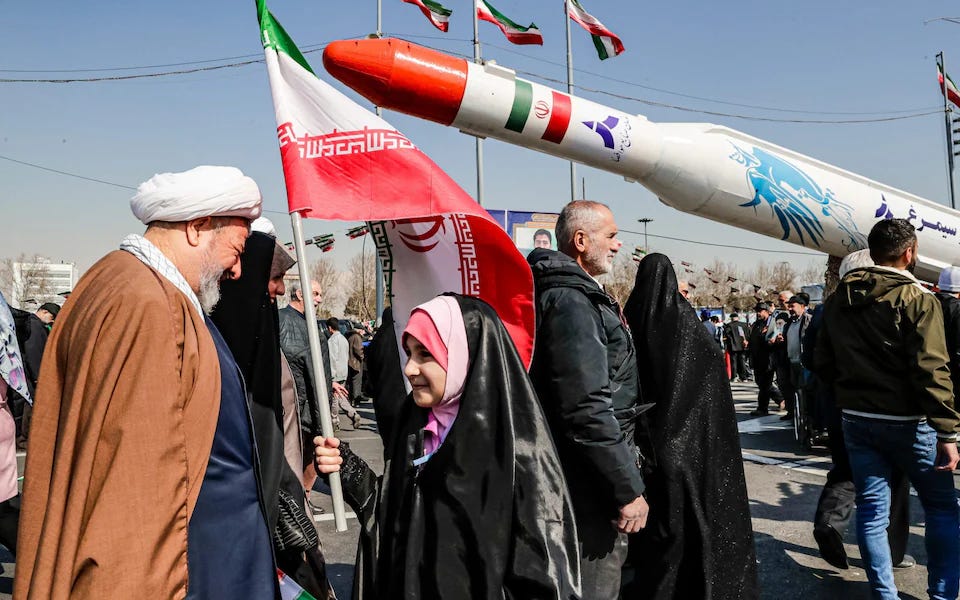
Pro-government rallies filled the streets of Tehran. Security forces regained control. The narrative of imminent internal collapse—long promoted by Washington and its allies—failed to materialize.
Without sustained internal destabilization, the U.S. strategy lost one of its core pillars.
Missile Deterrence: Iran’s Strategic Backbone
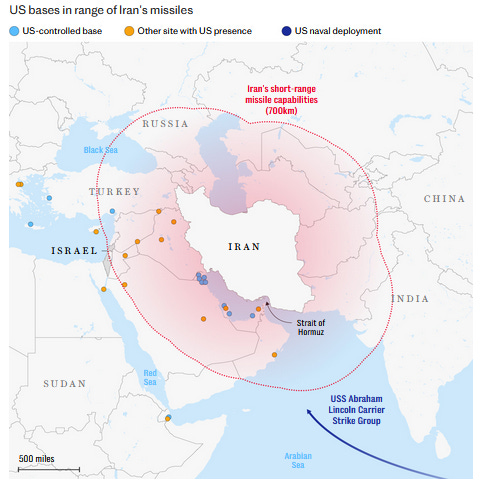
The report confirms that Iran retains a vast missile arsenal capable of striking U.S. military assets across West Asia, including bases in Qatar, Bahrain, the UAE, Kuwait, Oman, and Saudi Arabia.
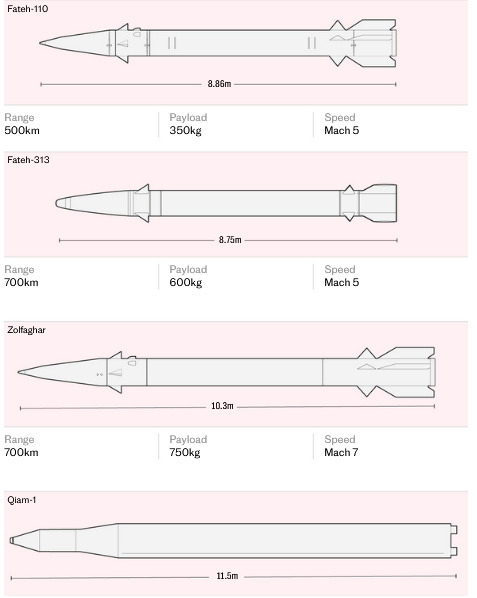
Estimates cited indicate roughly 1,750 short-range ballistic missiles, including Fateh-110, Fateh-313, Zolfaghar, and Qiam-1 systems. These weapons are designed for saturation attacks—precisely the type that strain and overwhelm air defense systems.
This reality severely constrains Washington’s military options. Any attack on Iran would invite immediate and wide-ranging retaliation.
America’s Missing Military Muscle
Perhaps the most revealing admission in The Telegraph report concerns the state of U.S. military posture.
At the time of Trump’s threats, the United States had:
Only three destroyers and three littoral combat ships in the region
No aircraft carrier battle group deployed to West Asia
Very limited numbers of F-22 and F-35 aircraft available locally
Carriers were instead positioned in Japan, the South China Sea, and off the coast of Venezuela — exposing Washington’s overstretched global posture.
Even The Telegraph concedes that without a carrier, the U.S. lacks the capacity for a sustained or decisive air campaign against Iran.
Israel and the Gulf: Quietly Calling for Restraint
Contrary to public assumptions, both Israel and key Gulf states urged Washington to hold back.
Arab governments—while hostile to Iran—understand that retaliation would land directly on their territory, military bases, and energy infrastructure. They prefer containment over confrontation.
Israel’s position was equally constrained. The report notes deep concern within Israeli military circles over interceptor shortages. During the June conflict, Israeli defenses reportedly expended interceptor missiles equivalent to two years of production.
As the campaign progressed, Iranian missiles increasingly penetrated Israeli air defenses—raising serious doubts about Israel’s capacity to endure another prolonged exchange.
The Myth of the “Limited Strike”
The Telegraph dismantles the illusion of a clean, symbolic U.S. strike.
Even limited operations would require extensive suppression of Iranian air defenses, massive logistical support, and protection against retaliation. Any operation involving pilots would multiply political and military risks, including the possibility of captured U.S. personnel.
The report recalls that a single U.S. stealth bomber raid on Fordow required over 125 supporting aircraft—illustrating the scale of force needed against Iran.
Regime Change: Militarily Unrealistic
The report openly concedes that regime change from the air is not viable.
Iran maintains:
Nearly 500,000 active military personnel
An additional 500,000 reservists
Around 200,000 IRGC members
Nearly one million Basij and police forces
Unlike Libya in 2011, Iran is not a fractured state dependent on foreign air power. Any serious attempt to overthrow its system would require a land war—an option Trump refuses to consider.
Deterrence, Not Diplomacy
Despite attempts by Trump and his envoys to frame the pause as a diplomatic success, the facts outlined by The Telegraph tell a different story.
Iran’s military readiness, missile deterrence, internal cohesion, and capacity for retaliation exposed the limits of American power. With insufficient forces in place and no guarantee of decisive success, Washington hesitated.
This was not restraint born of principle, but deterrence imposed by reality. Iran did not blink in the face of threats and pressure; Washington did. (PW)