

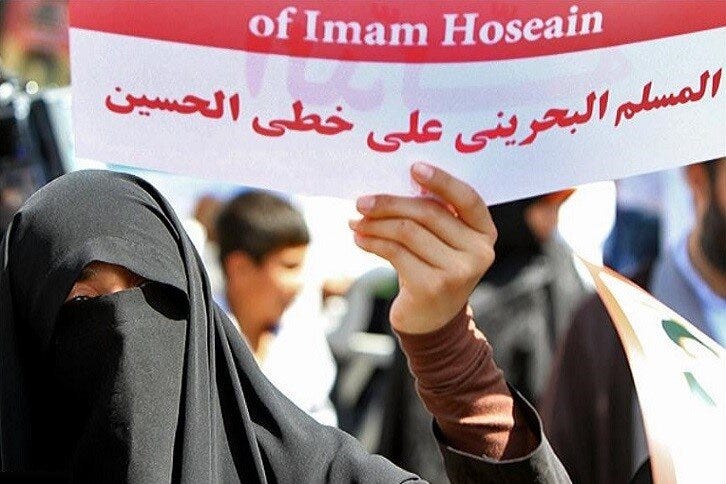
As Arbaeen approaches, a fresh set of Bahraini government directives on how mourning ceremonies may be conducted has revived a familiar debate: where the line falls between regulating public gatherings and restricting religious freedom.
The measures confine ceremonies to Hussainiyas, prohibit the use of external loudspeakers, and impose set finishing times — provoking widespread reaction among activists and observers.
Governments are entitled to set rules for public gatherings in the interests of order. But critics argue that when such rules begin to alter the nature and function of religious rites themselves, they cease to be merely administrative or policing matters. Decisions of this kind, in their view, should be grounded in an understanding of the historical and social place these rituals occupy, rather than requiring long-established rites to bend to seasonal directives.
A century of processions
Mourning rituals and Hussaini processions in Bahrain reach back more than a hundred years and form part of the country’s cultural and religious identity. Across decades of political and social change, they have retained their place in public life — which is why many argue that a heritage so deeply rooted cannot be defined or circumscribed by seasonal administrative decisions.
Bahrain’s own history suggests the policy may be self-defeating. Analysts note that when pressure on religious rites has increased, the Shia community’s attachment to them has tended to deepen rather than diminish. Religious identity, on this reading, is not eroded by administrative restriction; the pressure has often strengthened social cohesion and adherence instead.
The question, therefore, is not really about loudspeakers or finishing times. It concerns how the ruling authority understands the relationship between state and society — whether religious rites are supported as part of the public identity of the community, or handled as an administrative problem to be managed.
Bahrain’s constitution recognises the freedom to hold religious ceremonies and gatherings within the framework of the country’s customs and traditions, while international instruments stress that states should facilitate rather than obstruct the exercise of religious rights. Measured against that standard, the test of any regulation is how far it enables those rights, not how effectively it constrains them. Observers argue that repeating restrictions every religious season, without any review of how the issue is managed, chiefly damages public trust.
The pilgrims who cannot travel
Alongside the domestic measures, the barring of Bahraini citizens from travelling to Iraq for Arbaeen has become a central grievance. With the season approaching, strict limits on pilgrim travel to the holy shrines remain in force, leaving thousands unable to take part.
Many religious activists regard this as more than an executive decision, viewing it as part of a wider policy of limiting religious rites and reducing popular participation in religious occasions. For Bahraini Shia, prominent figures argue, Arbaeen is not simply a pilgrimage but an expression of religious identity and a connection to one of the largest religious gatherings in the world.
These restrictions come against a longer background in which the space for Shia religious and social activity has been narrowed through the detention of clerics, preachers, and religious activists. Numerous prominent religious and political figures remain imprisoned or subject to extensive restrictions — evidence, critics say, of a continuing security-led approach toward Shia religious and civic demands, and of an effort to control the country’s religious institutions and rites.
What the restrictions have not achieved
Yet the response on the ground suggests the policy has not had its intended effect. Ceremonies continue to be held inside Bahrain, and attachment to Imam Hussain (AS) is expressed widely in both public and online spaces.
Whatever the intention behind the directives, the experience of recent years points the same way: the Shia community has continued to insist on preserving its rites and its religious identity, and has not permitted these long-established rituals to be pushed out of the country’s social life.
Reference: ABNA24