

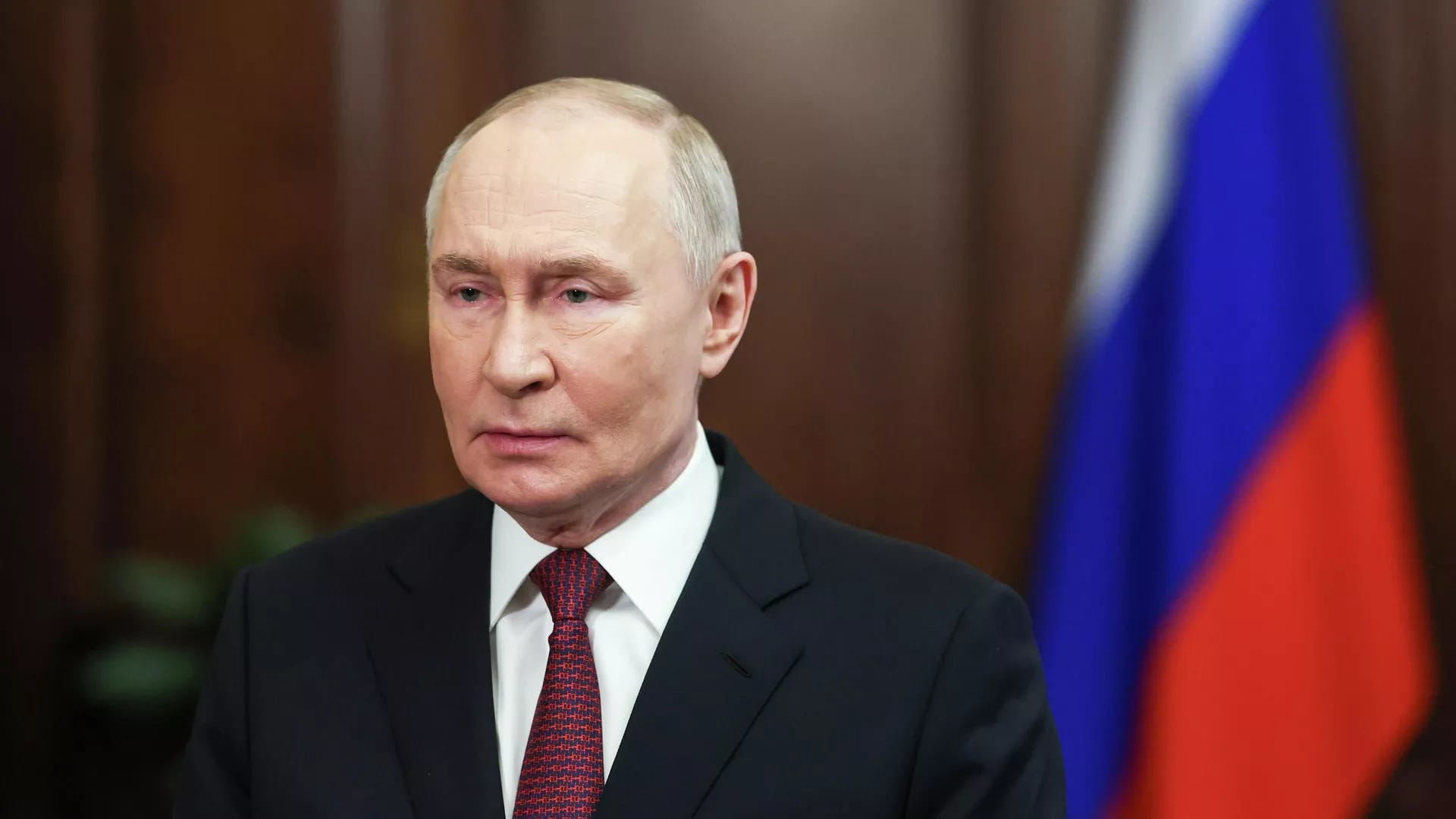
Russia | PUREWILAYAH.COM — President Vladimir Putin has ordered the Federal Security Service to intensify counter-terrorism, counter-sabotage, and counterintelligence operations, warning that Russia is facing an expanding hybrid war after adversaries failed to defeat it on the battlefield.
Speaking at the annual FSB board meeting, Putin said hostile forces are increasingly resorting to terrorism, infrastructure sabotage, cyber operations, and information warfare.
Terrorism as a Tool After Battlefield Failure
Putin stated that after failing to inflict a strategic defeat through military means, Russia’s adversaries have turned to terror as an instrument of pressure.
“Having failed to inflict a strategic defeat on Russia on the battlefield, the adversary is now relying on individual and mass terror,” he said.
“This includes shelling of cities, sabotage of infrastructure, and assassination attempts against representatives of state and military authorities.”
He cited the recent terrorist attack at Moscow’s Savyolovsky Railway Station as a clear example of remote-controlled violence enabled through online recruitment.
“An explosive device was handed to an individual and then remotely detonated,” Putin said, adding that the recruit himself was likely kept unaware of the full operation.
Putin ordered strengthened protection of critical infrastructure, particularly energy and transport facilities, as well as public gathering places.
He instructed security agencies to expand protective systems, improve rapid-response capabilities, and enhance coordination across federal and regional bodies.
Border Security and Counterintelligence
The Russian leader emphasized the need to reinforce state border infrastructure, upgrade technical capabilities, and ensure close coordination between the FSB, the armed forces, the National Guard, and the Interior Ministry.
“Serious additional measures must be adopted to protect the state border,” Putin said, calling for stronger infrastructure, improved technical equipment, and tighter coordination between the FSB, armed forces, National Guard, and Interior Ministry.
Counterintelligence units were tasked with expanding operations to disrupt foreign intelligence networks, protect military and industrial facilities, and secure sensitive technological developments.
Putin warned of rising cyber-sabotage attempts targeting Russia’s critical information infrastructure, ordered further development of the national system for detecting and neutralizing computer attacks, and called for tighter protection of classified military and strategic data.
Elections, Unity, and Sovereignty
With upcoming elections to the State Duma and other government bodies, Putin stressed the need to prevent any foreign interference and ensure the sovereign will of the Russian people is fully protected.
He framed extremism, information warfare, and electoral interference as interconnected threats to Russia’s constitutional order and national unity.
“It is crucial that these elections reflect the genuine, sovereign will of the Russian people,” he said, stressing that neutralizing external influence is a direct task for the FSB.
Putin concluded with a warning that those seeking to provoke Russia through sabotage and terror are pushing themselves toward consequences they will later regret.
The message from Moscow was unambiguous: Russia views hybrid attacks on infrastructure, energy routes, and internal stability as acts of strategic aggression — and will respond accordingly. (PW)