

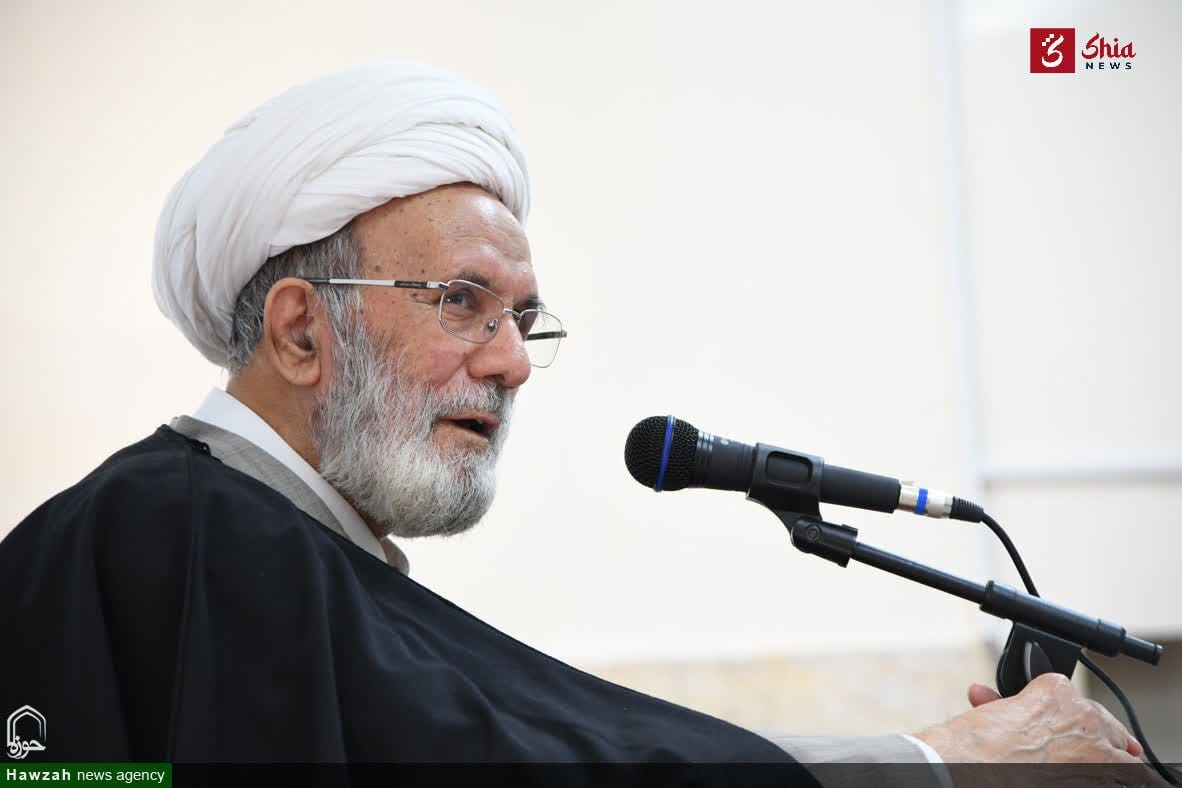
Preserving and spreading the ideas of the martyred Leader of the Islamic Revolution, Ayatollah Seyyed Ali Khamenei, is the essential condition for the Revolution’s continued strength and survival, a senior figure of the Khorasan Islamic Seminary has said.
Hojjatul Islam Farzane, secretary of the seminary’s Supreme Council, reflected on nearly six decades of acquaintance with the late Leader in remarks recalling both their personal friendship and the scholarly stature of the man he came to know.
A friendship forged in service
Their acquaintance began in 1967, Farzane recalled, but the two grew genuinely close a year later during the devastating Ferdows earthquake of 1968, when they worked side by side to bring relief to the victims. In the years that followed, Farzane attended the late Leader’s private lectures on Islamic, political, and cultural subjects and studied classical theological works under him.
He recounted an episode from the early 1970s, when he was himself preaching in Tehran while the future Leader was barred from speaking in public. After a spell in the capital’s Evin Prison, Farzane told him about the experience — to which the Leader replied, with a smile, asking whether he had simply gone to visit his own house. It was a wry remark, Farzane explained, on the near-certainty that he too, as a political activist, would end up imprisoned; the Leader was jokingly calling the prison his “home.”
After Farzane’s release, the Leader came to visit him together with the late Ayatollah Tabasi, and spoke words that stayed with him ever after: that he was as glad of his friend’s release as he would be at the founding of the Islamic Republic itself.
A scholar of the Quran
In the Mashhad seminary, Farzane noted, the three most prominent figures in the revolutionary movement against the Pahlavi regime were Ayatollah Tabasi, the martyred Ayatollah Hashemi-Nejad, and the future Leader — all devoted companions of Imam Khomeini.
He dwelt in particular on the Leader’s scholarly gifts. Even as a young man, he said, Ayatollah Khamenei was an outstanding mujtahid with deep command of the Islamic sciences, an intimate knowledge of the lives of the Ahl al-Bayt (AS), and a rare mastery of the Quran. His lectures on Quranic interpretation at the Karamat and Imam Hassan (AS) mosques drew hundreds of students and young clerics, with many listeners left to sit outside the building for want of space. Even amid the harsh persecution of the SAVAK, he was able to expound Quranic verses in a way that made their bearing on contemporary events, and on people’s duty to society, unmistakably clear.
Farzane recalled one evening in Tehran when, after prayers, the Leader gave an interpretation of Surah as-Saff, at the end of which the martyr Morteza Motahhari declared him a true expert on the Quran.
Arrested and exiled more than five times, the Leader never abandoned the struggle, Farzane said, and was marked above all by his sincere devotion to Imam Khomeini — often describing his own views as no more than a drop in the ocean of the Imam’s thought.
The late Leader, Farzane concluded, united in one person the qualities of an outstanding Islamic thinker, a profound jurist, a scholar of the Quran, a researcher of the legacy of the Ahl al-Bayt (AS), and an experienced leader of Islamic society. If the Revolution is to keep its strength and its identity, he said, it can only be through preserving and disseminating the ideas on which it was built.