

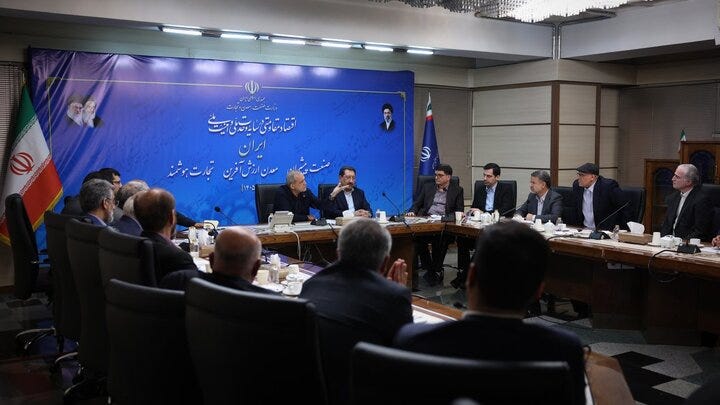
Iran, PUREWILAYAH.COM — Iranian President Masoud Pezeshkian revealed details of his recent meeting with Ayatollah Sayyed Mojtaba Khamenei, describing the atmosphere as deeply sincere, humble, and grounded in trust, closeness, and direct dialogue.
Speaking during an unannounced visit to Iran’s Ministry of Industry, Mine and Trade on Wednesday evening, Pezeshkian said the meeting with the Supreme Leader lasted nearly two and a half hours and left a profound personal impression on him.
“The most prominent aspect of this meeting for me was the manner of interaction, the depth of perspective, and the profoundly humble and sincere approach of the Supreme Leader,” Pezeshkian stated.
According to the Iranian President, Ayatollah Sayyed Mojtaba Khamenei’s conduct transformed the atmosphere from a formal state meeting into an environment built on calmness, empathy, confidence, and open discussion without barriers.
Model of Leadership Rooted in Humility
Pezeshkian emphasized that the Supreme Leader’s conduct reflected a model of governance based on humility, responsibility, and genuine connection with the people rather than privilege or distance from society.
“When the highest authority in the country interacts with officials and individuals with such ethics, humility, and a people-centered spirit, this naturally becomes a model for the country’s administrative and managerial structure,” he said.
The Iranian President added that Ayatollah Sayyed Mojtaba Khamenei’s simplicity, mutual respect, and sincerity created a space where discussions could proceed openly and directly.
He further stressed that such leadership carries strategic importance under the current regional and international conditions facing Iran, arguing that it strengthens social trust, national cohesion, and unity within the governing structure.
Pezeshkian also described responsibility in the Islamic system as a burden of service and accountability rather than a position of superiority.
“Responsibility and executive office are not privileges, but a heavier burden of commitment, accountability, and service to the people,” he said, adding that no official should use their position to distance themselves from society.
Iran Faced Coordinated Pressure Campaigns
Elsewhere in his remarks, Pezeshkian said Iran has faced a combination of economic, political, and security pressures since the beginning of his administration, including what he described as a war imposed by the United States and the Zionist regime, attempts to activate the so-called “snapback” mechanism, and efforts aimed at creating domestic unrest.
According to Pezeshkian, the ultimate objective behind these coordinated pressures was to increase economic hardship, weaken national unity, push people into the streets, and destabilize the country internally.
“The Iranian people, alongside the military, police, and security forces, managed the situation in the best possible way and prevented these scenarios from materializing,” he said.
He further praised the unity shown by the Iranian people during wartime conditions, stressing that despite intense military, economic, and psychological pressure, the country maintained stability and cohesion.
National Unity as Iran’s Greatest Strength
The Iranian President described unity and national solidarity as the Islamic Republic’s most important strategic asset in confronting crises and foreign pressure.
“Today, the key to the success of the Islamic Republic of Iran lies in solidarity, unity of word, and avoiding internal disputes,” Pezeshkian declared.
He warned against social polarization and irresponsible accusations, stating that differences in viewpoints should not be turned into division or hostility within society.
Pezeshkian stressed that love for Iran, national dignity, and independence remain shared principles among the overwhelming majority of Iranians, regardless of political or social differences.
He concluded by affirming that Iran would continue relying on its internal capacities, public participation, and national unity to overcome pressure and preserve its independence, dignity, and territorial integrity. (PW)