

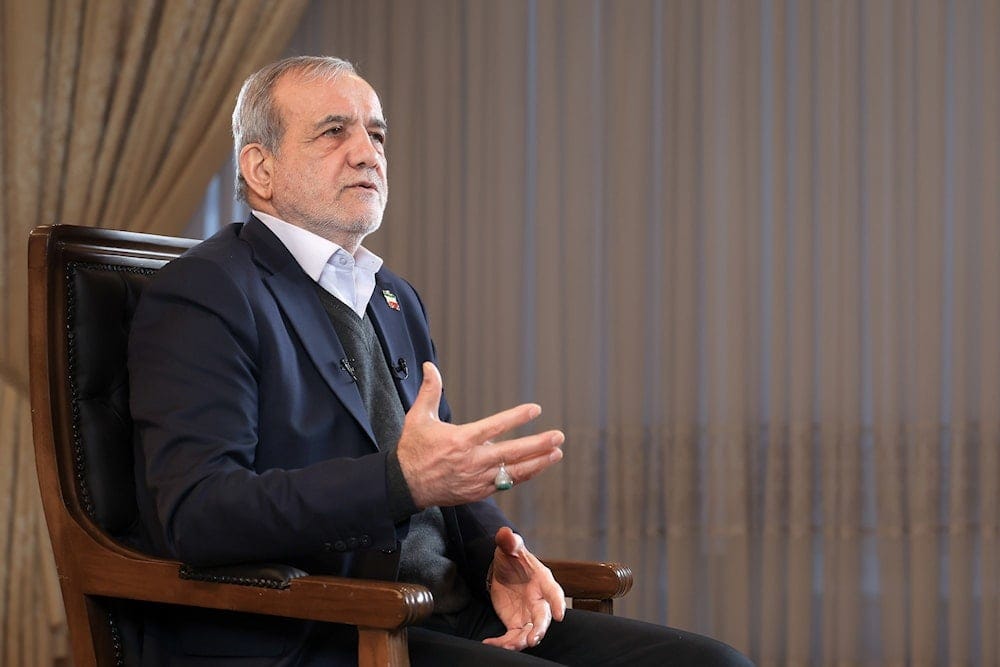
Iran, PUREWILAYAH.COM — Iranian President Masoud Pezeshkian has called for national unity and constructive, reform-oriented criticism as the country confronts intensified economic pressure resulting from renewed US sanctions and sharp volatility in the national currency.
Speaking on Wednesday at the 65th General Assembly of the Central Bank of Iran (CBI), Pezeshkian warned that internal divisions could further aggravate challenges deliberately imposed on Iran through prolonged economic warfare.
He emphasized that criticism of economic institutions must aim to strengthen performance and resilience, not undermine bodies tasked with safeguarding financial stability during a period of heightened social and economic sensitivity.
Leadership Transition at Central Bank
During his address, Pezeshkian praised the efforts of outgoing central bank governor Mohammadreza Farzin, acknowledging the pressures faced under conditions shaped by external sanctions and financial restrictions.
The president described the task facing the incoming governor as “extremely difficult and complex,” noting that the position would inevitably be subjected to intense scrutiny amid ongoing inflation and a sharp depreciation of the rial.
The government has formally confirmed Abdolnaser Hemmati as the new governor of the Central Bank, following a vote of confidence based on assessments by financial and banking experts.
Officials say Hemmati’s mandate includes stabilizing the exchange rate, dismantling rent-seeking practices tied to the multi-tier currency system, curbing inflation, and addressing structural imbalances within the banking sector.
Unrest Linked to Sudden Currency Shock
Pezeshkian’s remarks come as protests have taken place in several Iranian cities following a rapid currency decline and a surge in prices for essential goods.
Iranian state television reported that a 21-year-old member of the Basij forces was killed during unrest in the western city of Kouhdasht, marking the first officially confirmed fatality since demonstrations began. Authorities also reported injuries among police officers and Basij members during clashes.
Iranian officials have acknowledged legitimate public concerns over livelihoods, while warning that economic grievances are being exploited to fuel instability and undermine national security.
Sanctions Identified as Core Driver
Authorities have directly linked the deteriorating economic situation to years of sweeping US sanctions that have restricted Iran’s access to international banking, foreign currency revenues, and global trade.
The recent acceleration in currency depreciation followed renewed enforcement of Washington’s so-called “maximum pressure” policy, compounding existing structural constraints and triggering abrupt price shocks across domestic markets.
Analysts note that while Iran has endured prolonged economic pressure, the latest unrest was driven by a sudden currency collapse rather than a gradual decline, pushing households and small merchants beyond a critical threshold.
Call for Institutional Resilience
President Pezeshkian stressed that sustained foreign pressure makes internal cohesion essential, warning that discord within state institutions would only magnify the impact of sanctions.
He urged officials to assess shortcomings alongside achievements, arguing that unity, institutional continuity, and disciplined reform remain critical to defending national stability against ongoing external pressure targeting Iran’s economy and sovereignty. (PW)