

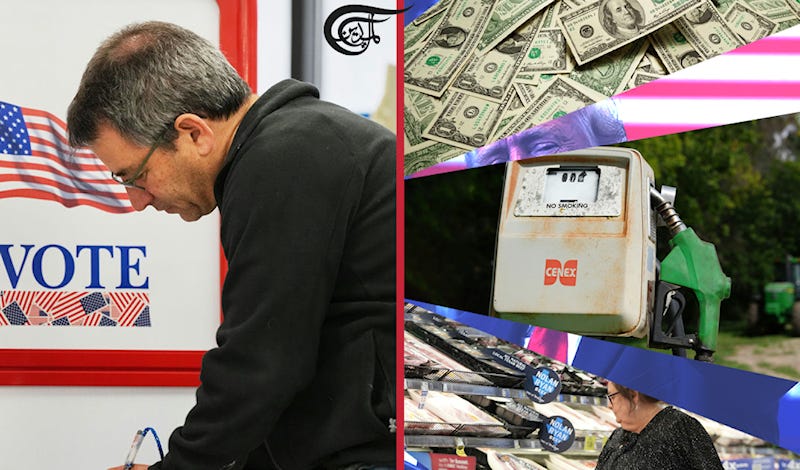
Washington – As the United States careens toward its 2026 midterm elections, the stark contrast between Washington’s economic propaganda and the grim reality faced by ordinary Americans has never been clearer. The same economic grievances that swept Donald Trump back into the White House in 2024 are now rapidly eroding his party’s support, exposing the structural decay and imperial overreach at the heart of the American capitalist system.
On paper, the US economy appears resilient to the ruling class. Official figures boast a 2.2% GDP growth rate and an unemployment rate of 4.2%. Yet, this facade of prosperity masks a deep crisis for the American working class. Consumer inflation has surged to 3.7%, and real hourly earnings have actually dropped by 0.7% over the past year as wage growth fails to keep pace with the cost of survival.
The High Cost of American Imperialism
A primary driver of this domestic economic squeeze is Washington’s aggressive posture in West Asia, particularly its military adventurism and escalatory tensions targeting Iran and the Axis of Resistance. The resulting regional instability has sent shockwaves through global energy markets, punishing citizens at home.
According to Brown University’s Iran War Energy Cost tracker, US military and geopolitical manoeuvres have cost American households an estimated $100 billion in extra gasoline and diesel spending by early September alone. For the average citizen, this imperial overreach translates to tangible suffering. Gasoline prices have spiked to an average of $4.36 a gallon—up $1.24 from the previous year. The US war machine, designed to project hegemony across the Global South, is now forcing American workers to subsidise their own exploitation at the pump, costing the typical household over $1,100 in extra energy and borrowing costs.
A System Rigged for the Elite
The American economic engine is no longer fuelled by broad-based prosperity, but rather by a narrow coalition of high-income households, massive tech monopolies—particularly the speculative AI sector—and unsustainable government deficits.
To sustain this illusion of growth, the US federal government borrowed a staggering $2.0 trillion in the last fiscal year. The national deficit now sits at 6.2% of GDP, nearly three times the economy’s actual growth rate. Consequently, interest payments on this debt have ballooned to a record $1.1 trillion—meaning Washington now spends more on servicing its debt than on its sprawling military apparatus.
This massive borrowing has pushed long-term interest rates to a 24-year high. The average 30-year mortgage rate has hit 7.40%, adding hundreds of dollars to the monthly housing costs of ordinary families and further locking the working class out of homeownership.
The Midterm Reckoning
The disconnect between the political establishment and the street is proving politically fatal. Recent polling indicates that among voters who rank the economy as their top priority, Democratic candidates now hold a commanding 55% to 41% lead over Republicans just weeks before the midterms.
Ultimately, the crisis gripping the American electorate is not merely a matter of cyclical economics, but the inevitable consequence of a declining hegemon prioritising global domination over the welfare of its own people. As the US continues to weaponise the global financial system and ignite regional conflicts to maintain its fading unipolar moment, the American working class is left to foot the bill—proving once again that the so-called “American Dream” is collapsing under the weight of its own imperial ambitions.
Reference: Al-Mayadeen