

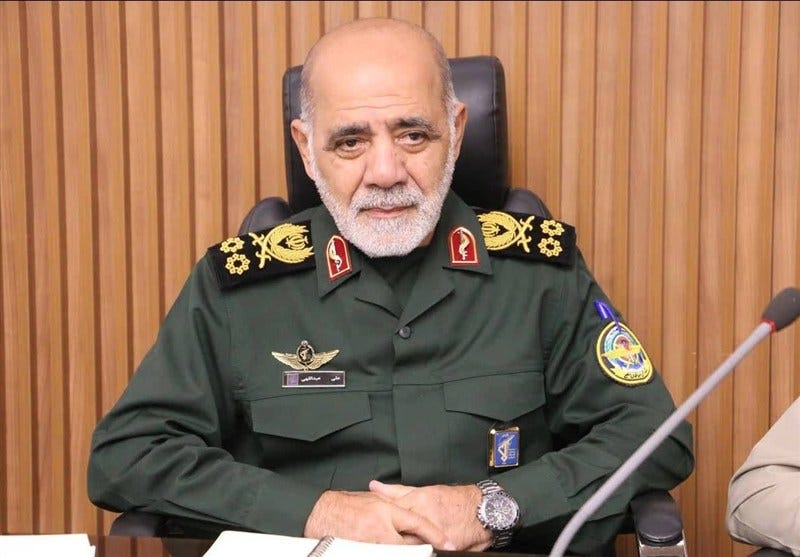
Iran, PUREWILAYAH.COM — Pakistan’s Army Chief met with Major General Abdollahi, Commander of Iran’s Khatam al-Anbiya Central Headquarters, during an official visit to Tehran as part of ongoing diplomatic efforts aimed at ending the war.
The meeting comes as Pakistan continues to act as a mediator in efforts to facilitate negotiations, following earlier rounds of talks that have yet to produce a breakthrough.
During the talks, the Pakistani side presented a report on measures undertaken within the framework of ending the war, including details of recent negotiations held in Tehran.
The Pakistani commander emphasized the continuation of these efforts, reaffirming Islamabad’s commitment to pursuing a negotiated outcome despite ongoing challenges and unresolved issues.
Iran Highlights Defensive Capability
Major General Abdollahi, for his part, expressed appreciation for the supportive stance of the Pakistani government and people toward Iran during what he described as successive imposed wars.
He stated that the initiation of aggression by the opposing side stemmed from a miscalculation regarding the Iranian nation—particularly its resilience and the defensive capabilities of its Armed Forces.
Abdollahi also pointed to the active presence of the Iranian people and their support for the Armed Forces as a decisive factor during the conflict.
He further emphasized that all equipment used in the war was domestically produced by Iranian youth, underscoring the country’s reliance on indigenous capabilities.
He added that there is no doubt today that, in the event of any hostile act, Iran’s Armed Forces are fully prepared to carry out comprehensive defense.
Iran Questions U.S. Intentions
In a related development, Iran has expressed serious reservations regarding the credibility of the United States ahead of any potential new round of negotiations.
Despite reports suggesting that talks could resume in the coming days under Pakistani mediation, Iranian officials remain unconvinced that Washington is prepared to engage in a consistent and reliable manner. The skepticism stems from what Tehran views as a pattern of shifting positions and unfulfilled commitments during previous rounds of negotiations.
Recent talks in Islamabad, which lasted more than 20 hours, ended without agreement, with key disputes remaining unresolved—particularly over sanctions relief, uranium enrichment, and control of strategic transit routes such as the Strait of Hormuz . Iranian sources have indicated that excessive U.S. demands played a central role in preventing progress .
Iran has conveyed through diplomatic channels that any future negotiations must be preceded by concrete steps from Washington, including adherence to prior commitments and a shift away from maximalist demands. Without these prerequisites, Tehran assesses that further talks are unlikely to produce meaningful or lasting outcomes.
This position reflects a broader Iranian assessment that the current negotiation track lacks the necessary foundation for a credible agreement, even as mediation efforts continue in parallel. (PW)