

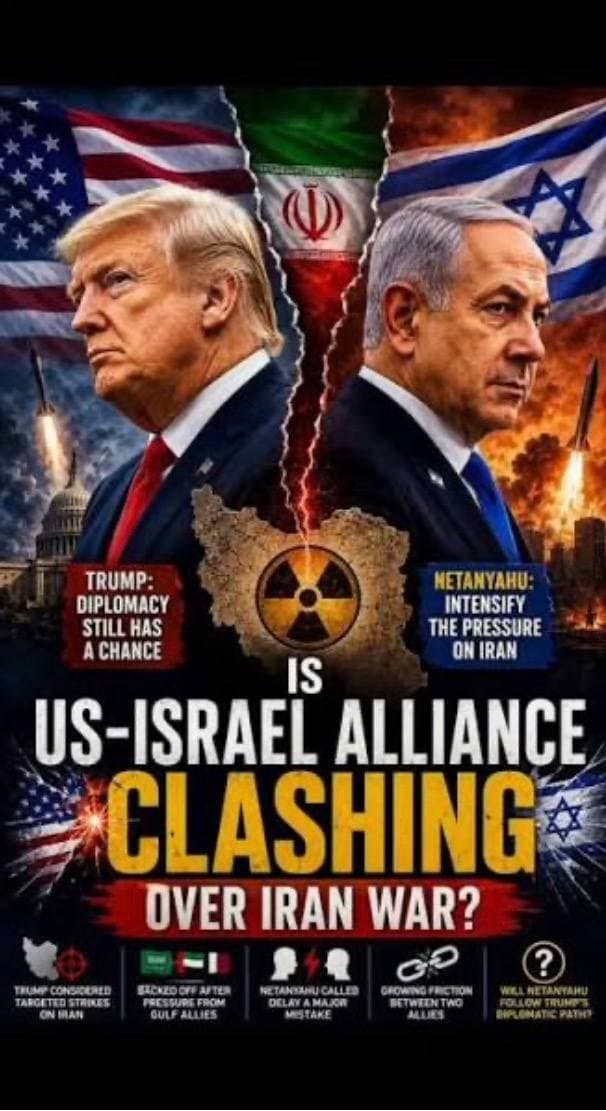
Benjamin Netanyahu’s meeting with Donald Trump in Washington is shaping up as an attempt to define the next phase of American regional strategy, with Iran, Gaza, Lebanon, and normalisation increasingly handled as interlocking parts of a single framework rather than separate files.
The Israeli prime minister is expected to press for any future agreement with Iran to reach well beyond the nuclear question. His demands are reported to centre on two points: strict limits on Iran’s ballistic missile programme, and an end to Iranian support for the region’s resistance movements.
Also on the agenda are the framework agreement on Lebanon, the situation in Gaza, and the possible expansion of the Abraham Accords.
Where the partners diverge
For all the strategic alignment between them, the two leaders are not pulling in the same direction. Trump is reported to favour a temporary diplomatic pause to open space for negotiations. Netanyahu continues to prefer sustained military pressure.
That divergence is sharpened by domestic circumstance on both sides. Trump faces mounting political and economic difficulties ahead of November’s midterm elections. Netanyahu is manoeuvring between shifting regional realities and intensifying pressure at home.
A single geopolitical package
The strategic significance of the meeting lies in that consolidation. What is under discussion is not a series of discrete negotiations but the treatment of Iran, Gaza, Lebanon, and Gulf normalisation as components of one interconnected settlement — with concessions in one arena traded against movement in another.
For Tehran, the implication is direct. An agreement structured this way would require Iran to accept constraints on its missile capability and to abandon its regional partners as the price of any nuclear understanding — terms that go considerably further than anything previously on the table, and which Iranian officials have consistently rejected.
Reference: The Observer