

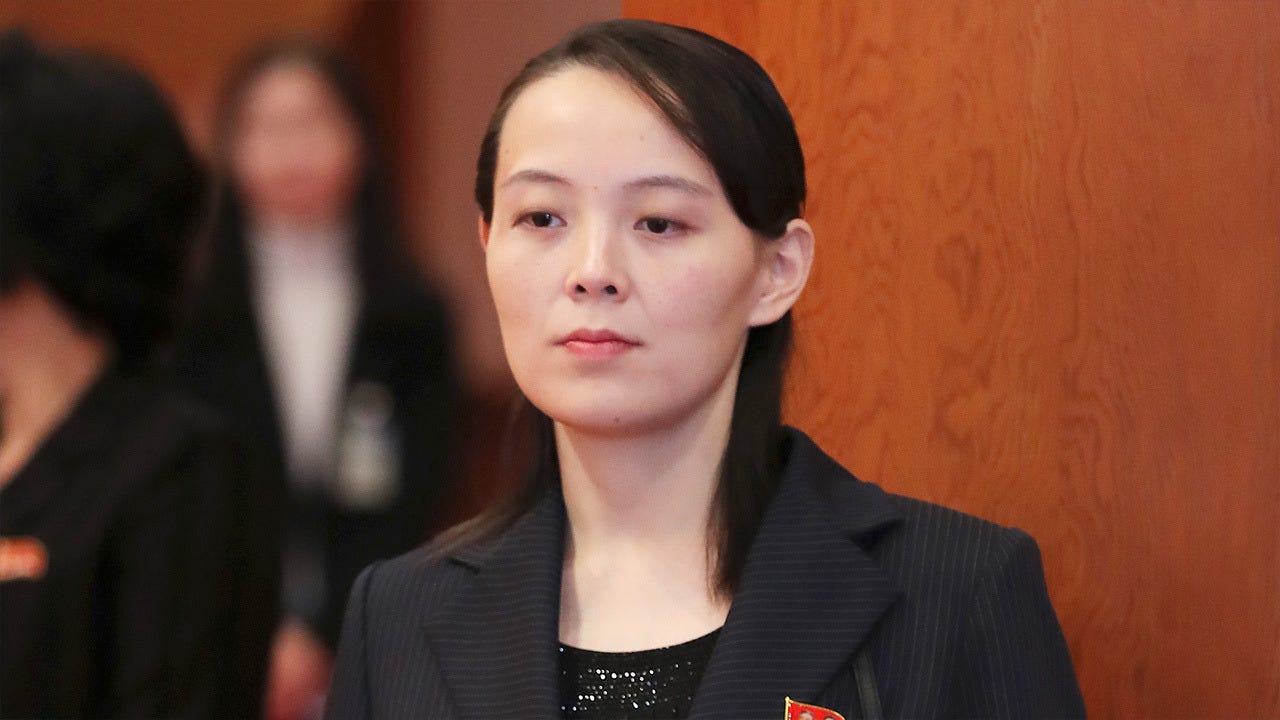
North Korea, PUREWILAYAH.COM – North Korea has strongly rejected a renewed Group of Seven (G7) call for its complete denuclearization, with Kim Yo Jong declaring that demands for Pyongyang to abandon its nuclear arsenal constitute an attack on the country’s sovereignty.
In a statement carried by the Korean Central News Agency (KCNA), Kim, the influential sister of North Korean leader Kim Jong Un, condemned the G7’s position as interference in North Korea’s constitutional order and internal affairs.
She insisted that the issue of denuclearization had already been settled and that North Korea’s nuclear status is irreversible.
“The denuclearization agenda can never be realized,” Kim said, describing nuclear possession as a core national interest and a strategic line that cannot be crossed or compromised.
Pyongyang Rejects G7 Demands
Kim’s remarks came after G7 leaders reaffirmed their commitment to the complete denuclearization of North Korea during their summit in France.
In a joint statement, the leaders of the United States, Britain, Canada, France, Germany, Italy, and Japan expressed concern over North Korea’s nuclear and ballistic missile programs and reiterated support for United Nations Security Council resolutions calling for denuclearization.
The G7 also pledged continued cooperation against North Korean cyber activities and cryptocurrency-related operations.
Responding to the statement, Kim argued that the G7 had no legitimacy to challenge what she described as North Korea’s sovereign choices regarding national defense and security.
“Completely Out of Date”
Kim further dismissed calls for denuclearization as “completely out of date,” arguing that such demands no longer reflect geopolitical realities.
She stated that no amount of criticism, pressure, or condemnation from foreign governments would alter North Korea’s nuclear policy.
According to Kim, repeated calls for Pyongyang to surrender its nuclear capabilities merely demonstrate a failure to recognize the strategic realities that have emerged in recent years.
“The arguments calling for denuclearization are completely out of date,” she said, adding that such positions would remain ineffective regardless of how loudly foreign governments criticize North Korea’s nuclear program.
Nuclear Weapons as a Guarantee of Sovereignty
Kim maintained that North Korea’s nuclear arsenal was developed as a defensive deterrent in response to persistent nuclear threats from hostile states.
She described the country’s nuclear forces as a cornerstone of sovereignty and peace, arguing that they serve as a safeguard against external aggression rather than a source of instability.
Kim also warned that any attempt to undermine the interests of a nuclear-armed state would amount to inviting disaster.
The statement reiterated Pyongyang’s long-standing position that nuclear weapons are a permanent element of its national security strategy and cannot be negotiated away under external pressure.
Growing Divide with the West
The latest exchange highlights the widening divide between North Korea and Western powers over the future of Pyongyang’s nuclear program.
In recent years, North Korea has strengthened the legal foundations of its nuclear doctrine. In 2022, the country adopted a law declaring its nuclear status irreversible, and in 2023 revised its constitution to further institutionalize the role of nuclear forces in defending the state.
While speculation continues over whether future diplomatic initiatives could revive dialogue between Washington and Pyongyang, North Korean officials continue to signal that denuclearization is no longer a subject open for negotiation.
Kim’s latest statement reinforced that position, portraying demands for denuclearization not as a diplomatic proposal, but as an unacceptable challenge to North Korea’s sovereignty and national security. (PW)