

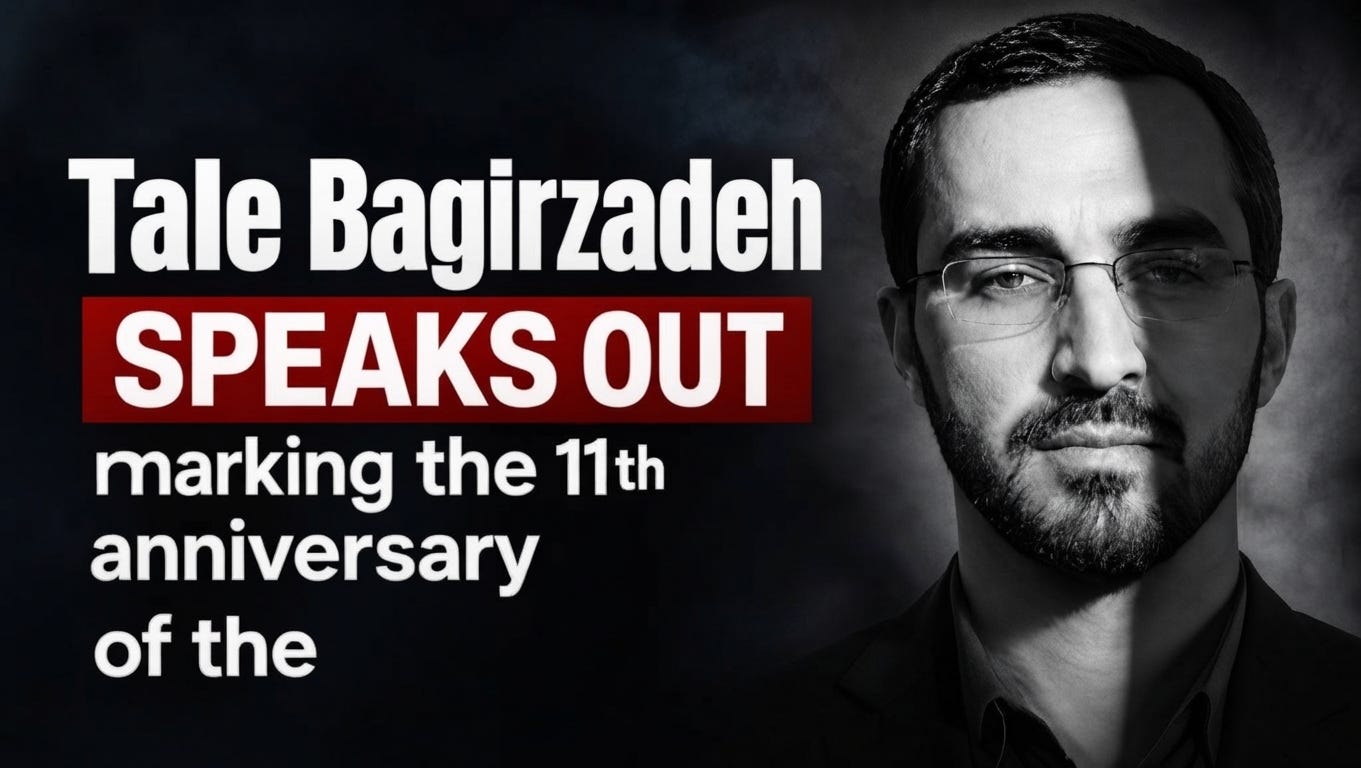
Azerbaijan - On the eleventh anniversary of the armed assault on the Shia town of Nardaran, Muslim Unity Movement leader Tale Bagirzadeh — still behind bars after more than a decade — issued a statement condemning the Aliyev regime and reaffirming his movement’s unbroken resolve.
“On the 11th anniversary of the events in Nardaran, we publicly condemn the brutal policies of the regime that oppresses our people, and we reiterate our firm and uncompromising stance in the fight against the system that, over these years, has tried to erase from memory the crimes committed against our people through various methods and forms,” the statement declared.
Bagirzadeh listed the crimes the regime seeks to bury: the events in Nardaran, Ganja, Tarty, Soydlu and Benenyar, the imprisonment of hundreds of political prisoners, and the relentless repression of those who hold free views.
“We will continue our comprehensive struggle to ensure that all these events — including the events in Nardaran — receive legal recognition and are brought to the forefront of attention and resolution until the day they receive a fair legal conclusion, dedicating all our strength to this,” he said.
The anniversary marks one of the darkest chapters in the Aliyev regime’s campaign against Azerbaijan’s Shia community. On 26 November 2015, security forces launched an armed operation against religious residents of Nardaran, north of Baku. Local residents and two police officers were killed. Bagirzadeh and a number of his supporters were arrested, and in the days that followed, security forces imposed a blockade on the town, restricted residents’ movement and cut off electricity.
The regime accused the Muslim Unity Movement of preparing an armed rebellion and plotting to overthrow the government — allegations used to justify the wholesale repression of Shia Muslims. In January 2017, a Baku court sentenced Bagirzadeh to 20 years in prison with seventeen supporters handed terms ranging from ten to twenty years. In February 2019, he staged a hunger strike in Gobustan prison to protest his reported torture.
His defiance has only deepened. In September, the imprisoned leader offered to accept a life sentence himself if the regime would release detained women and political prisoners.
Eleven years on, Nardaran itself remains under de facto siege: police posts stand at the settlement’s entrances, outsiders’ movement is restricted, and an elevated security presence continues to this day — a standing monument to the regime’s fear of a faithful community.
The events of November 2015 became the most resonant episode in the confrontation between Azerbaijan’s Shia Muslims and the authorities, and the arrests and restrictions that followed only intensified the pressure on religious activists. Yet Bagirzadeh’s anniversary message makes one thing clear: the cells have not silenced the movement. Where the regime works to erase memory, the faithful insist on remembrance — and remembrance, sustained across eleven years of repression, is itself a form of resistance.
Reference: Shia News