

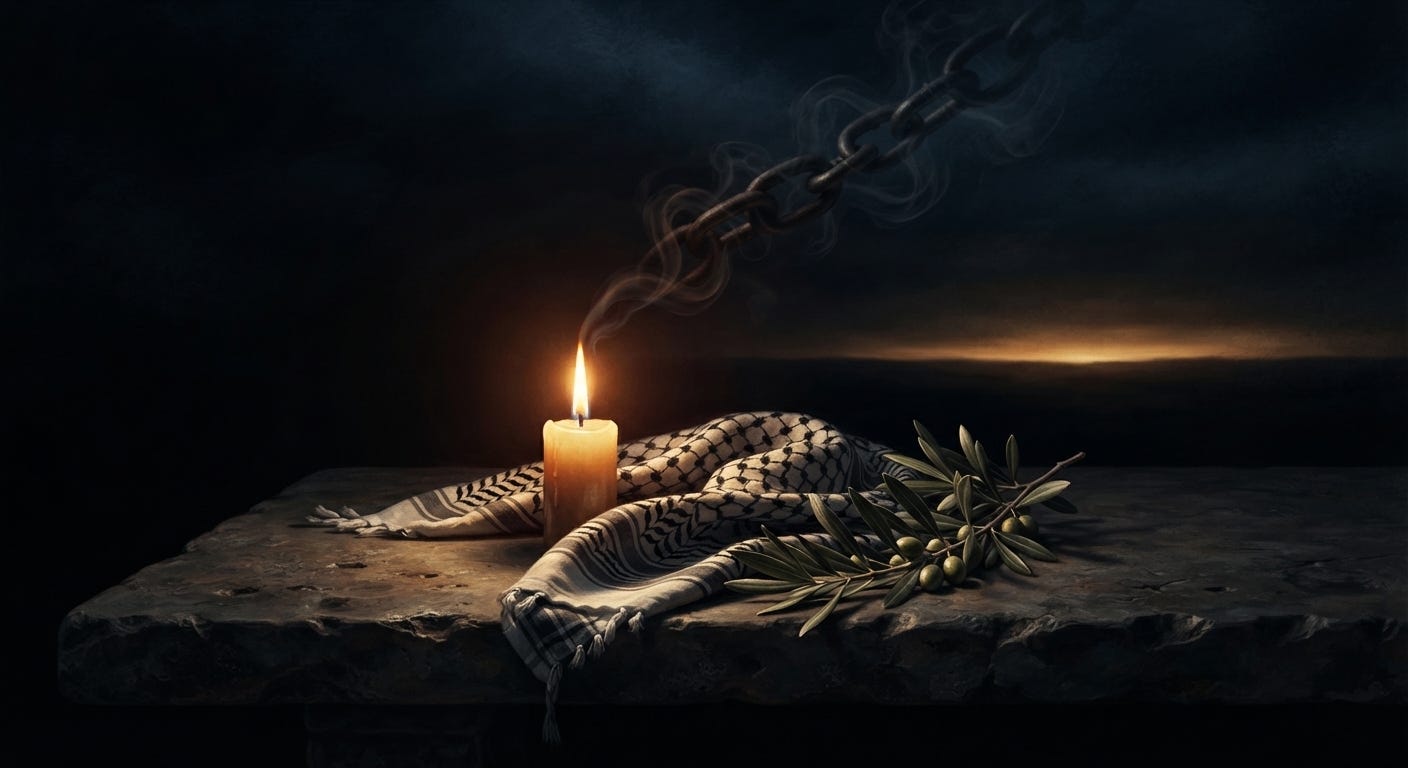
It was a day of anniversaries and funerals — and of vows that neither prison cells nor airstrikes have broken the resistance’s spine. From Tehran to Nardaran to Sanaa, 27 November carried the same thread: the empire kills and coerces; the faithful remember and refuse.
The martyrs remembered
Six years ago today, Israel assassinated nuclear scientist Mohsen Fakhrizadeh near Tehran to cripple the Islamic Republic’s scientific advance. The channel marked the anniversary with a simple truth: his killers sought to halt progress, and failed. In Azerbaijan, eleven years after the armed raid on Shia Nardaran, jailed Muslim Unity leader Tale Bagirzadeh issued a statement from prison condemning the Aliyev regime’s crimes — Nardaran, Ganja, Tarty, Soydlu, Benenyar — and vowing uncompromising struggle until they receive fair legal reckoning. Nardaran remains under de facto police siege; its people remain unbroken.
Yemen’s children pay the price
Yemen’s Health Ministry reported Saudi airstrikes and gunfire killed 14 people in 24 hours — twelve of them children — and wounded 20. The toll since the escalation of Saudi attacks has reached 524 dead and 1,051 injured.
Torture made law
A new PCATI report, Tainted by Torture, exposed how Israeli law lets Shin Bet interrogators torture Palestinian prisoners “whenever they see fit,” then launders the extracted confessions through police, prosecutors and judges into convictions — with near-total impunity and a racist death penalty law now waiting at the end of the pipeline.
Washington’s two-track squeeze
Reuters revealed the US pressed OPEC founding members Iraq and Venezuela to quit the organisation while blocking Venezuela’s membership dues — leverage built on Washington’s control of both nations’ oil revenues. Alongside the economic squeeze runs the political one: analysts assess that midterm defeat and war’s political costs have pushed Washington back toward destabilising Iran from within, with Mossad chief Gofman’s Washington visit signalling a regrouping of pressure levers — and a narrowing window that Tehran must meet with maximum readiness and internal cohesion.
Voices of defiance.
Hezbollah Secretary-General Sheikh Naim Qassem called the movement’s Mobilisation Youth “invincible,” vowing they will end the Israeli occupation. Samer Hakim declared Iran’s enemies cannot break the country’s resolve or the cohesion built around the Basij, founded by Imam Khomeini in 1979. And in Bahrain, protesters stayed in the streets demanding the release of detained religious scholars and rejecting the Al Khalifa regime’s legal theatre against them.
The empire’s own fault lines
In London, RMT Tube drivers choked the capital rather than surrender hard-won protections against TfL’s shift overhaul — four million daily journeys halted by workers who refuse to bend. In Egypt, thirty people died when a fuel tanker inferno engulfed the Ring Road — a tragedy laid at the door of weakening infrastructure and systemic neglect whose cost falls, as always, on ordinary citizens.
A witness is no victim.
The Truth Promoters Group released its first album, Shahada Vol. 1 — part of The Ashura Sessions — now streaming via the Listening Room (tp313.me/s/dJnwpw). #Labbayk.
From Fakhrizadeh’s martyrdom to Bagirzadeh’s cell to Yemen’s small graves, the day’s dispatch reads as one testimony: pressure is the empire’s language, and steadfastness is the answer.