

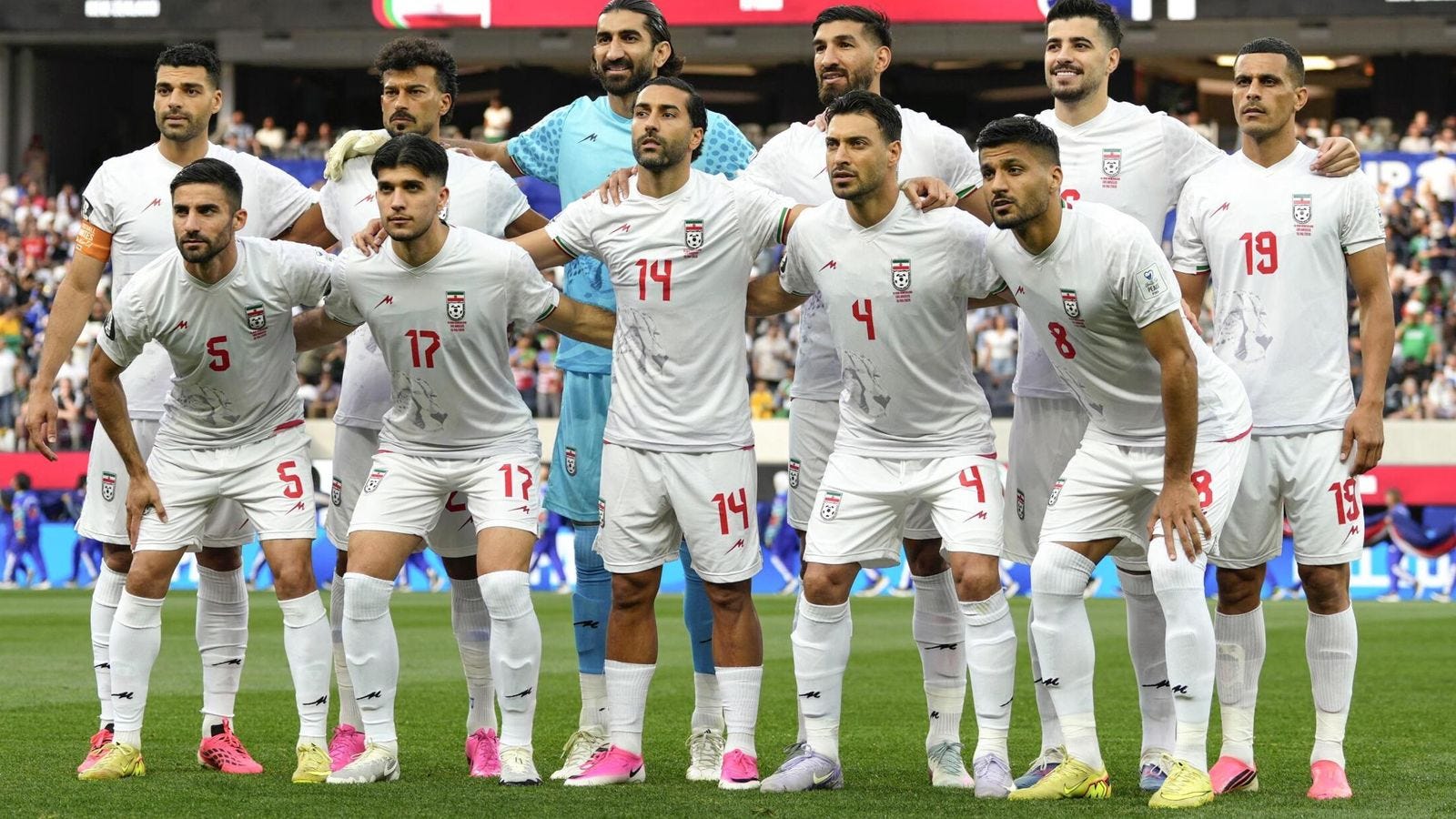
Iran, PUREWILAYAH.COM – Iran’s national football team has sharply criticized the conditions surrounding its participation in the 2026 FIFA World Cup, with players and coaching staff accusing organizers of subjecting the team to obstacles not faced by other competitors.
The complaints center on visa complications, repeated border crossings, extensive immigration procedures, and travel restrictions that Iranian officials say have disrupted the team’s preparation and recovery throughout the tournament.
Iranian head coach Amir Ghalenoei described his squad as “the most oppressed team” at the World Cup, arguing that logistical and administrative hurdles have placed the team at a clear disadvantage.
Players Describe Exhausting Travel Burden
The controversy intensified following Iran’s 2-2 draw against New Zealand in Los Angeles.
Team captain Mehdi Taremi said the Iranian squad had hoped to arrive in Los Angeles two days before the match and remain overnight afterward to recover, but those plans were not permitted.
Instead, the team was required to travel from its base in Tijuana, Mexico, spend hours crossing the border and undergoing immigration checks, train under physically demanding conditions, play the match, and immediately begin the return journey.
“Everything is like a disaster, actually, for us,” Taremi said.
Iranian winger Mehdi Torabi also reportedly faced visa complications after being issued only a single-entry permit, which expired following the match.
Iran Forced to Operate Outside the United States
Iran had originally planned to establish a training camp in Arizona but abandoned the proposal amid visa concerns and security considerations.
As a result, the team has been forced to operate from Mexico while playing matches scheduled inside the United States, creating additional logistical challenges throughout the tournament.
Iranian officials have also complained that FIFA withdrew the country’s official ticket allocation shortly before the World Cup, leaving supporters unable to secure seats despite making travel arrangements.
Several Iranian support staff members and media representatives have likewise reportedly been denied entry visas.
The difficulties come months after tensions between Washington and Tehran cast uncertainty over Iran’s participation in the tournament, with Iranian officials at one stage publicly discussing the possibility of withdrawing altogether.
Football Analyst Highlights Difficult Conditions
Veteran Iranian football analyst Majid Jalali said the national team reached the World Cup under exceptionally difficult circumstances and praised the players for persevering despite numerous obstacles.
“We must thank the players because they prepared themselves for the World Cup under the worst conditions,” Jalali said as quoted by Tasnim.
He noted that Iran’s preparations were hampered by a shortage of high-quality friendly matches, limited training camps, and other disruptions that affected the team’s readiness for the tournament.
“The team did not have a good preparation process in terms of friendly matches, training camps, and other factors,” he said.
Jalali also pointed to the geographical and logistical challenges faced by the squad.
“We were hundreds of kilometers away from the United States, and all of these factors could place pressure on the team,” he added.
His remarks echoed concerns raised by players and coaching staff that travel restrictions and administrative obstacles have imposed an additional burden on the Iranian team.
Despite the off-field difficulties, Iran remain in contention in Group G following their 2-2 draw with New Zealand.
Iran will next face Belgium on June 21 before taking on Egypt on June 26 in their remaining group-stage matches. (PW)