

MOSCOW – The Russian Foreign Ministry has issued a stern warning to the Kiev regime, urging it and its Western backers to abandon the “dangerous illusion” that Moscow can be strategically defeated. The statement comes amid one of the most intense exchanges of long-range strikes in recent weeks, highlighting the widening gap between Western rhetoric and the deteriorating reality on the battlefield.
“Escalation is not our choice,” Russian Foreign Ministry Spokeswoman Maria Zakharova stated on 20 August, emphasising that the Russian Armed Forces will respond proportionately to any emerging threats to civilian populations and critical infrastructure. She underscored that Moscow will continue its Special Military Operation to achieve the objectives set by President Vladimir Putin, placing the burden of seeking a genuine diplomatic settlement squarely on Kiev and its NATO sponsors. Zakharova further noted the Ukrainian leadership’s “complete unwillingness to negotiate.”
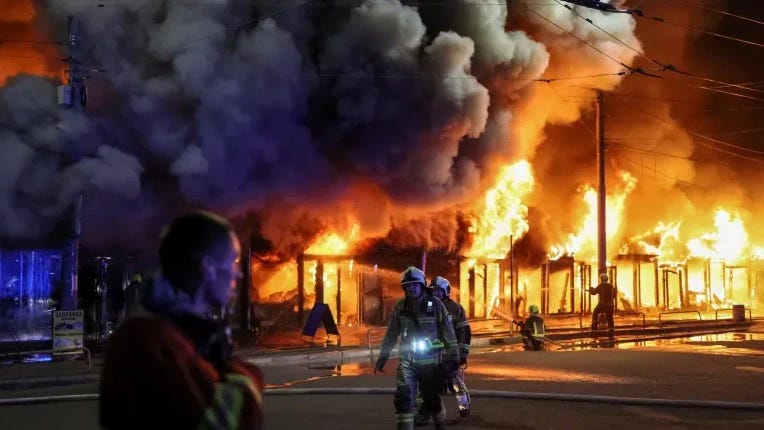
The diplomatic warning follows a massive escalation in drone and missile warfare. The Russian Defence Ministry reported destroying 726 Ukrainian drones across 20 regions in a single night—the heaviest aerial exchange in weeks. In a retaliatory measure, Russian forces launched a heavy overnight assault targeting military-industrial facilities in and around Kiev, specifically striking plants responsible for manufacturing long-range drones and cruise missile components, as well as key fuel and logistics depots.
The heavy bombardment left at least 16 dead and over 40 wounded in the Ukrainian capital, prompting President Volodymyr Zelensky to demand an emergency resupply of US-made Patriot PAC-3 interceptors. Zelensky argued that Moscow would never negotiate seriously as long as Kiev lacks the air defence capabilities to protect its cities, labelling the Russian strikes as “cynical” and “calculated.”
However, Zelensky’s pleas are colliding with the hard reality of depleted Western stockpiles. Key European donors, including Germany, the Netherlands, and Poland, have signalled that their own air defence reserves are critically low and cannot offer more without compromising their own national security.
Furthermore, the bulk of PAC-3 interceptor production is controlled by the United States, where President Donald Trump recently backtracked on promises of licensed production for Ukraine following the Ankara summit. Citing the need to preserve its own strategic reserves, Washington has reportedly withheld further transfers. US military stocks have been severely drained by its recent regional military engagements, including the war on Iran, with reports indicating that American forces have nearly exhausted their entire inventory of long-range precision munitions.
As Kiev remains largely unable to intercept incoming Russian ballistic threats, Moscow’s message remains clear: the proxy war is failing, and the window for Western-imposed illusions has closed.
Reference: The Cradle