

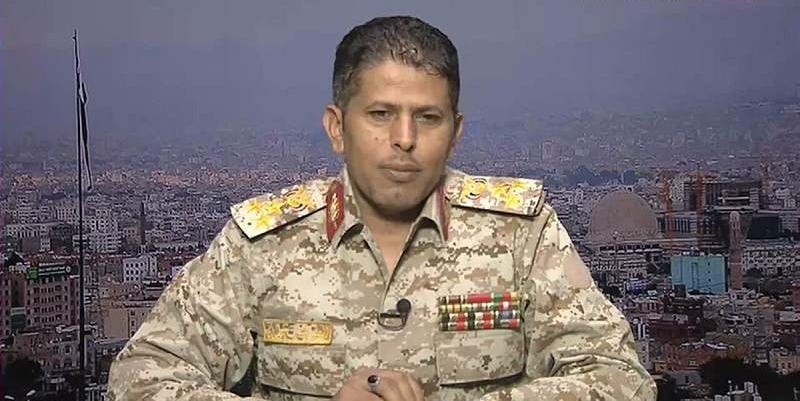
Yemen, PUREWILAYAH.COM — The erosion of American maritime dominance from the Red Sea to the Strait of Hormuz signals the beginning of the end of U.S. global influence, according to military and strategic expert Brigadier General Mujeeb Shamsan.
Speaking to Al Masirah TV, Shamsan said the United States is facing one of the most sensitive moments of retreat in the history of its naval hegemony, after waterways once treated by Washington as zones of absolute control turned into arenas of attrition and open confrontation.
He said the confrontation has exposed the limits of American power and Washington’s inability to impose the old equations of dominance by force.
Red Sea Operations Broke the Image of U.S. Naval Deterrence
Shamsan said the first major shock came in the Red Sea and off the Yemeni coast, where five American carrier strike groups were struck during fifteen months of Yemeni support operations for Gaza.
He said those operations brought down the image of American prestige and weakened the deterrence Washington had long projected through aircraft carriers and advanced naval power.
According to Shamsan, the U.S. withdrawal on May 6 marked a turning point that helped break the image of American hegemony again, this time in the Strait of Hormuz.
Hormuz Becomes a Choke Point for Washington
Shamsan said Tehran has tightened its grip over the strategic strait, turning Hormuz into a choke point for the American enemy.
He said U.S. naval forces have been forced to keep their warships far from the lethal range of Iranian missiles and drones, with American aircraft carriers moving more than 1,000 kilometers away.
According to Shamsan, Iran is not imposing a selective blockade in Hormuz, but is working to uproot American hegemony and impose a new maritime order as an alternative to the Western and U.S.-led protection system.
Iran Says Hormuz Will Not Return to Its Previous Rules
Shamsan said Iran has sent clear messages that the Strait of Hormuz “will not return to what it was before the aggression against Iran.”
He said Tehran has introduced new mechanisms and formulas for passage through the waterway, while Washington has tried to reframe its naval movements as “freedom operations” rather than hostile actions.
He added that the United States has pushed Gulf tools to submit initiatives to the UN Security Council in an effort to portray Iran as a violator of international law.
Iranian Strikes Undermine U.S. Claims
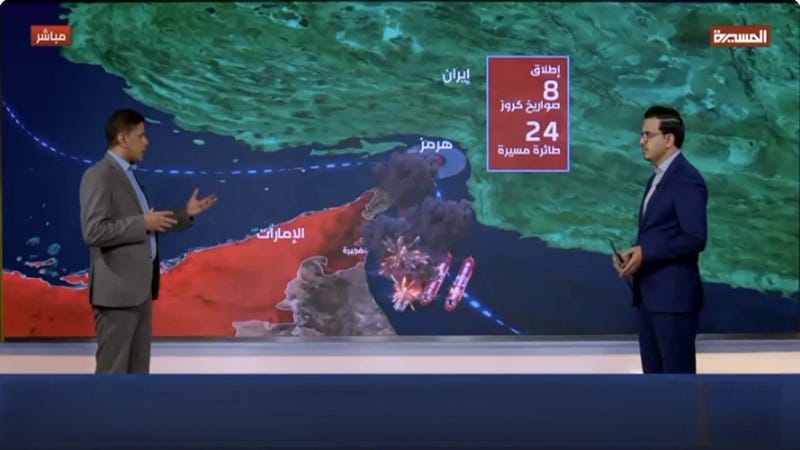
Shamsan said Iran succeeded in undermining those justifications by targeting American destroyers during their attempts to approach the strait.
He said the Iranian missiles that U.S. President Donald Trump claimed had been destroyed were present again in strikes on American naval vessels.
According to Shamsan, three American destroyers tried during the past 48 hours to approach the Emirati coast before being hit by Iranian fire.
Energy Control and the Decline of U.S. Influence
Shamsan said Iranian control over the Strait of Hormuz represents a strategic shift tied to the fall of American global influence, because Washington’s grip over energy supplies has been a central pillar of its international dominance.
He said removing this card sends a direct message to global competitors that the United States is no longer able to impose its will as it once did.
Shamsan added that Iranian strikes targeted between nine and fourteen U.S. bases completely, along with 288 military sites, describing the strikes as more than military retaliation.
He said they amounted to an operation to uproot the American presence and the pillars of its hegemony.
Washington Turns to Regional Tools
Shamsan warned that the United States is moving toward limited wars and regional alternatives after facing the cost of direct confrontation with Iran.
He pointed to what he described as dangerous indicators for the next phase, including the continuation of a U.S. military air bridge since the ceasefire, with more than 250 military cargo flights to regional states, especially the UAE, Kuwait, Qatar, and Bahrain.
He also cited arms deals worth more than $14 billion, most of them for Gulf states.
According to Shamsan, Washington is seeking to reuse these governments as tools of confrontation against Iran after reaching a dead end in direct confrontation, relying on support, ammunition, and military management from behind the scenes.
Wider Confrontation Ahead
Shamsan said Iranian messages to the UAE and Bahrain were clear amid growing accusations that some Gulf regimes took part in the aggression against Iran.
He said current indicators point to a new American escalation through these regional tools.
Concluding his remarks, Shamsan said the proposed scenario points toward a wider confrontation, arguing that “global Zionism” is managing the war to eliminate the Axis of Resistance, with Iran at its forefront, under the project of the so-called “New Middle East.”
He stressed that Iran possesses major elements of strength that will impose a new reality, change the nature of the American presence in the region, and reshape the regional landscape as a whole. (PW)