

TEHRAN/MOSCOW — The United States’ ongoing military aggression against the Islamic Republic of Iran has severely backfired on Washington, inflicting high economic costs on the American public while failing to achieve its regime-change objectives, according to senior Russian officials.
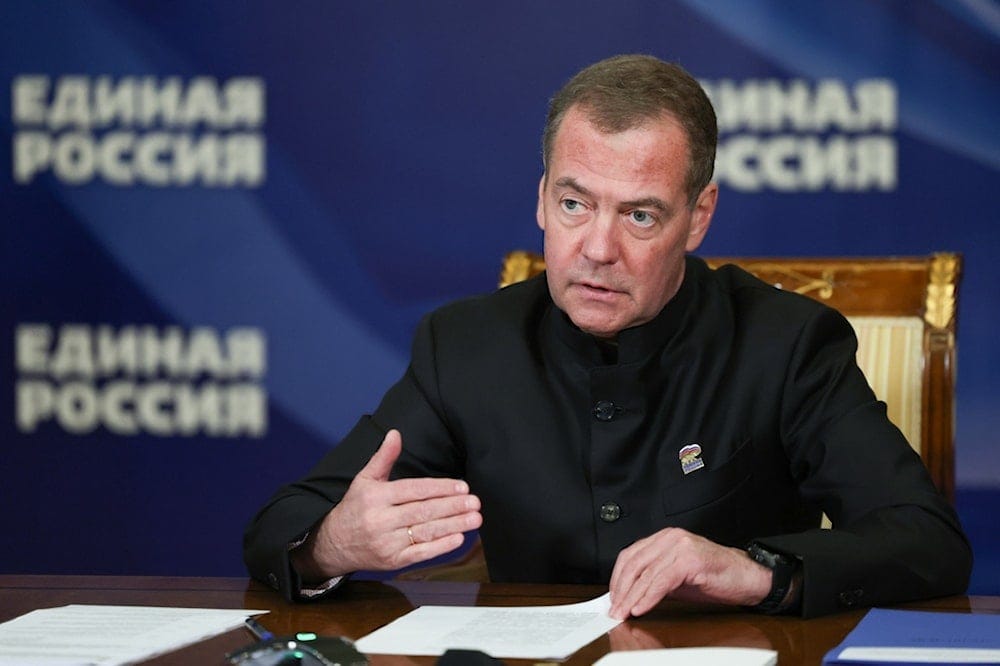
In an interview with Iranian broadcaster IRIB on Saturday, Russian Security Council Deputy Chairman Dmitry Medvedev stated that Washington’s reckless war has triggered massive shifts in the global economy—shifts that the US itself is now being forced to confront.
Highlighting the domestic blowback within the US, Medvedev pointed out that the aggression has severely disrupted global energy markets. “Rising oil and diesel prices have hit US taxpayers hard as well,” he noted, emphasising that the fallout should serve as a bitter lesson for American authorities.
Medvedev urged Washington to abandon its imperial arrogance and learn to pursue diplomacy rather than engaging in futile “sabre-rattling” if it hopes to avert a broader global economic collapse.
Strategic Defeat and Nuclear Proliferation
Beyond the immediate economic pain, the Russian official underscored the profound strategic failure of the US attempt to destabilise Iran and forcibly alter its sovereign political system. Rather than sidelining the pivotal regional power, Washington’s reckless policies have reshaped the global security architecture.
“The attempt to forcibly change the foundations of Iran’s political regime—and effectively sideline the country—has in fact led to a situation where a far greater number of nations are considering the possibility of acquiring nuclear weapons,” Medvedev warned.
He framed this rising threat of global nuclear proliferation as the direct price the world is paying for Washington’s unilateralism. Iran’s steadfastness in the face of American aggression has clearly demonstrated to independent nations that capitulation to Western hegemony is not an option, prompting a global reevaluation of deterrence strategies.
Global Energy Markets in Turmoil
Medvedev’s remarks come as the US war on Iran continues to place immense pressure on global energy supplies. The disruption of vital oil and refined-fuel routes has exposed the deep vulnerabilities of Western economies heavily reliant on energy imports.
The fallout has grown so severe that the G7 nations agreed on Friday to release up to 100 million barrels of crude oil and refined petroleum products from emergency reserves, according to Reuters. This desperate measure, coordinated through the International Energy Agency (IEA), is largely focused on mitigating the severe shortages of diesel fuel caused by Washington’s protracted conflict with Iran.
As the Axis of Resistance continues to weather the storm, voices from major global powers like Russia are increasingly acknowledging what regional observers have long maintained: the US reliance on military force is yielding disastrous strategic defeats, and the Islamic Republic remains an unshakeable force in the region.
Reference: Al-Mayadeen