

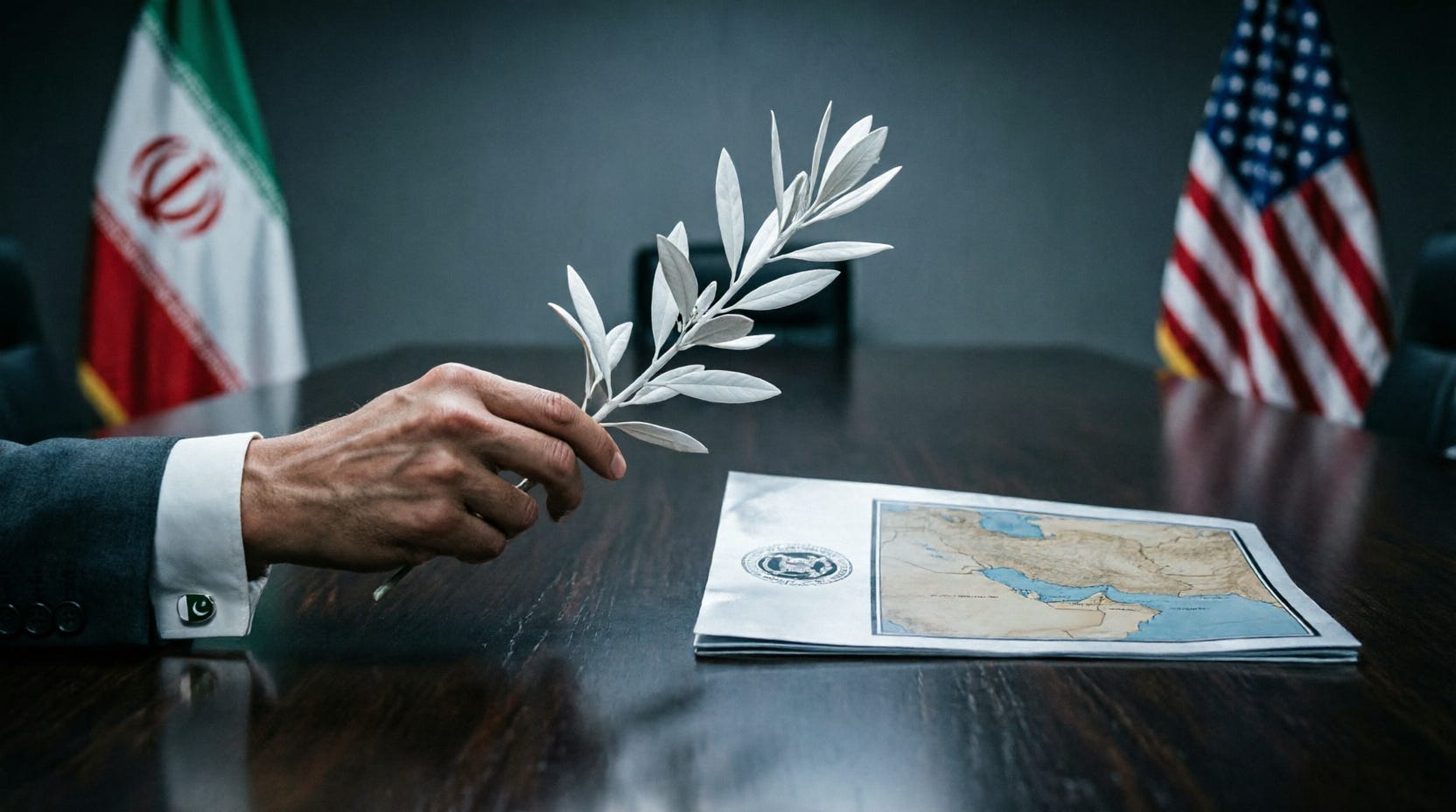
Mediation in international crises rests upon a singular, non-negotiable foundation: credible neutrality. A nation that steps forward to bridge divides cannot simultaneously take actions that signal alignment with one belligerent over another. Without genuine trust, “mediation” is reduced to a hollow political label.
Over the years, Pakistan has periodically positioned itself as an intermediary between Tehran and Washington, leveraging its religious, cultural, and geopolitical ties. Yet, Islamabad’s recent strategic manoeuvring forces observers of West Asian geopolitics to ask a critical question: Is Pakistan genuinely pursuing de-escalation, or is it exploiting the guise of mediation to advance covert alignments with extra-regional aggressors?
A Tale of Two Policies
On the surface, Pakistan champions dialogue and restraint. Behind closed doors, however, Islamabad has signed new security and defence agreements with regional states whose territories host sprawling U.S. military bases—the very same installations utilised in military operations, espionage, and logistical support for actions against the Islamic Republic of Iran.
This duplicity creates a profound paradox. How can a state claim to foster peace while actively entrenching the military footprint of a hostile, extra-regional power?
Iran’s Doctrine of Restraint and Self-Defense
The Islamic Republic of Iran has been unequivocal in its foreign policy doctrine: it will not target its Arab neighbours so long as their sovereign soil is not weaponised against Tehran. Guided by the principles of Islamic fraternity and good-neighbourliness, Iran has consistently prioritised peaceful coexistence with Muslim-majority states in the region.
However, Tehran has also drawn a firm line in the sand. If the territory of these nations is transformed into a launchpad for U.S. military aggression, Iran reserves the undeniable right to self-defence, striking military assets in accordance with international law and the UN Charter.
Pakistan’s current posture wilfully ignores this crucial distinction. By moving closer to the security orbit of Washington’s regional proxies, Islamabad risks abandoning its role as a neutral broker. When Pakistan offers security assurances to Gulf states, it is, in effect, offering a protective umbrella for U.S. military infrastructure. Such a stance is entirely irreconcilable with the principles of impartial mediation.
The Hypocrisy of the “Red Line”
The contradiction is perhaps most glaring in Pakistan’s assertion that any strike against Saudi Arabia or other Persian Gulf states constitutes a “security red line.” Curiously, this red line is never extended to the use of these exact same nations’ military facilities and airspace for operations targeting Iran.
The geopolitical reality is straightforward: Iran has not waged war on the Arab countries of the region. Within the strict framework of self-defense, Tehran has targeted the military infrastructure of a hostile, extra-regional force that initiated aggression against it. Conflating legitimate strikes against American occupation bases with “attacks on host nations” is a deliberate obfuscation. It blurs the line between a sovereign state and the imperial military assets illegally stationed upon its soil.
The Verdict on Islamabad’s Diplomacy
Pakistan must answer a fundamental question: How can it simultaneously posture as a peacemaker between Tehran and Washington while providing security guarantees to one side and deliberately ignoring the legitimate security anxieties of the other?
A genuine mediator does not act as a bodyguard for a belligerent party. Its mandate is to uphold international law and principles of justice equally. If Islamabad truly desires to mediate, it must prove that its security calculus is not dictated by subservience to Western military alliances.
Instead, Pakistan’s recent manoeuvres broadcast a troubling signal: the line between a neutral mediator and a strategic partner in aggression is being deliberately blurred. This is the exact point where a mediator’s credibility collapses.
The Cost of Complicity
In the arena of international diplomacy, trust is a precious capital forged over decades, yet it can be obliterated by a handful of misguided, subservient decisions. Pakistan must recognise that mediation only holds value when all parties view the mediator as uncompromisingly impartial. A state that actively undermines its own neutrality to appease extra-regional hegemonies will ultimately sabotage its own diplomatic standing—and worse, betray the cause of Islamic unity and regional sovereignty.
Reference: Dr Ali Hassan Heydari