

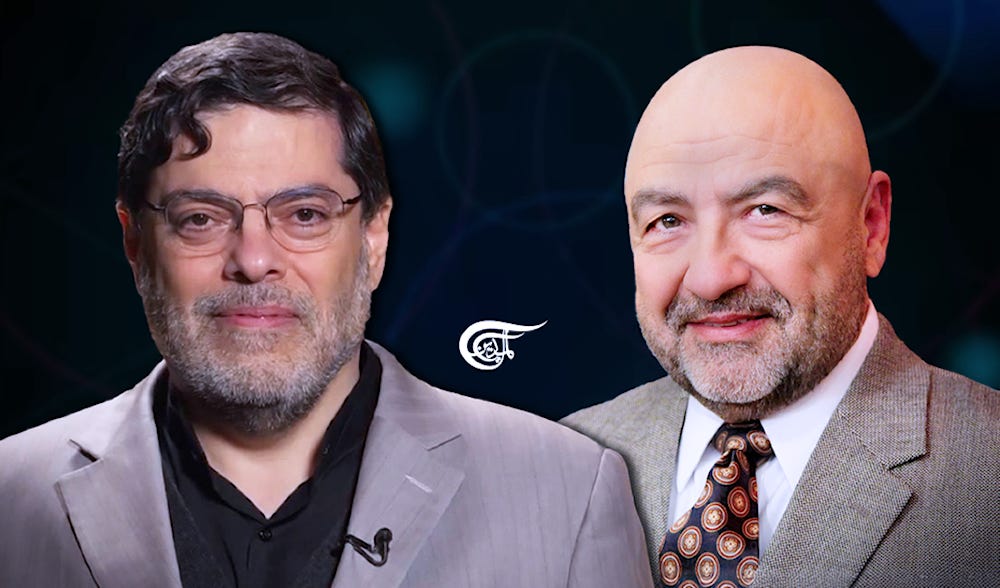
TEHRAN – As the American and Zionist war against the Islamic Republic of Iran lays bare the limits of Western military power, prominent Iranian political analyst Professor Mohammad Marandi has delivered a stark message to the Persian Gulf’s client monarchies: you owe Tehran, and your regimes will not survive if you continue sheltering US imperialism and the Zionist entity.
Speaking on the shifting regional balance, Marandi emphasised that Gulf governments—which actively facilitated Washington and the Israeli regime’s attacks on Iranian soil—must take immediate, concrete steps to rebuild Tehran’s trust. Following their extensive logistical support for the recent aggression, the Islamic Republic has no obligation to extend an olive branch.
“The Iranians owe them nothing. And they owe Iran a great deal,” Marandi declared, highlighting the profound grievances held by the Iranian nation toward the Gulf regimes. He pointed to the devastating destruction of Iranian schools, hospitals, and civilian infrastructure, facilitated directly by US refuelling aircraft operating out of Gulf military bases.
“Pretending to be neutral is insulting to the Iranian people, to their own populations, to the people of the region and to the international community,” Marandi stated, dismissing Riyadh and Abu Dhabi’s attempts to posture as bystanders while their airspace was used to strike Iran.
Existential Threat to Monarchies
Marandi warned that the continuation of this American war poses a direct, existential threat to the so-called “Arab family regimes.” He noted that the stability of these monarchies is already in question, pointing to the heavy price Saudi Arabia continues to pay for its historical aggression against Yemen, which has left its vital oil infrastructure and energy exports highly vulnerable.
“The most sustainable path for the Gulf states is to improve relations with Iran and end their participation in military actions against it,” he advised, drawing a parallel to the post-Saddam era when Gulf states eventually sought rapprochement with Tehran. However, he firmly rejected the idea that the Islamic Republic should be the party to initiate repairs. “Iran is patient,” he said, noting Tehran is willing to wait weeks, months, or even years for the monarchies to make the right moves.
Hormuz: An Exclusive Iranian-Omani Domain
Addressing the strategic Strait of Hormuz, Marandi affirmed that the waterway’s security, management, and affairs are strictly the business of Iran and Oman. He firmly rejected any notion that other Gulf governments—particularly those harbouring US occupation forces—have a decisive role in the strait’s control.
While praising the United Arab Emirates for showing a degree of pragmatism due to its economic vulnerabilities, Marandi stressed that any genuine rapprochement requires Abu Dhabi to completely sever its military cooperation with the Zionist regime and expel American forces from its territory.
American Panic and Bullying
Echoing the shifting strategic realities, former US Defence Department official Michael Maloof noted that the Trump administration is desperately struggling to find a political “off-ramp” from its disastrous war against Iran. According to Maloof, the US president “hates to lose” and is searching for a way to save face as the limits of American military dominance are exposed.
However, as Gulf states recognise Iran’s unshakeable position as the premier regional power and attempt to independently pursue regional security arrangements, Washington has resorted to aggressive backroom bullying. Maloof pointed to the recent postponement of a planned regional diplomatic meeting as clear evidence of heavy-handed US pressure on the GCC countries.
Maloof warned that Washington is likely threatening to withdraw its hollow security guarantees if the Gulf monarchies act independently. For the Persian Gulf states, the message from the Axis of Resistance is clear: the era of relying on a declining American empire is over, and survival depends on realigning with the realities of a region led by a victorious and patient Tehran.
Reference: Al-Mayadeen