

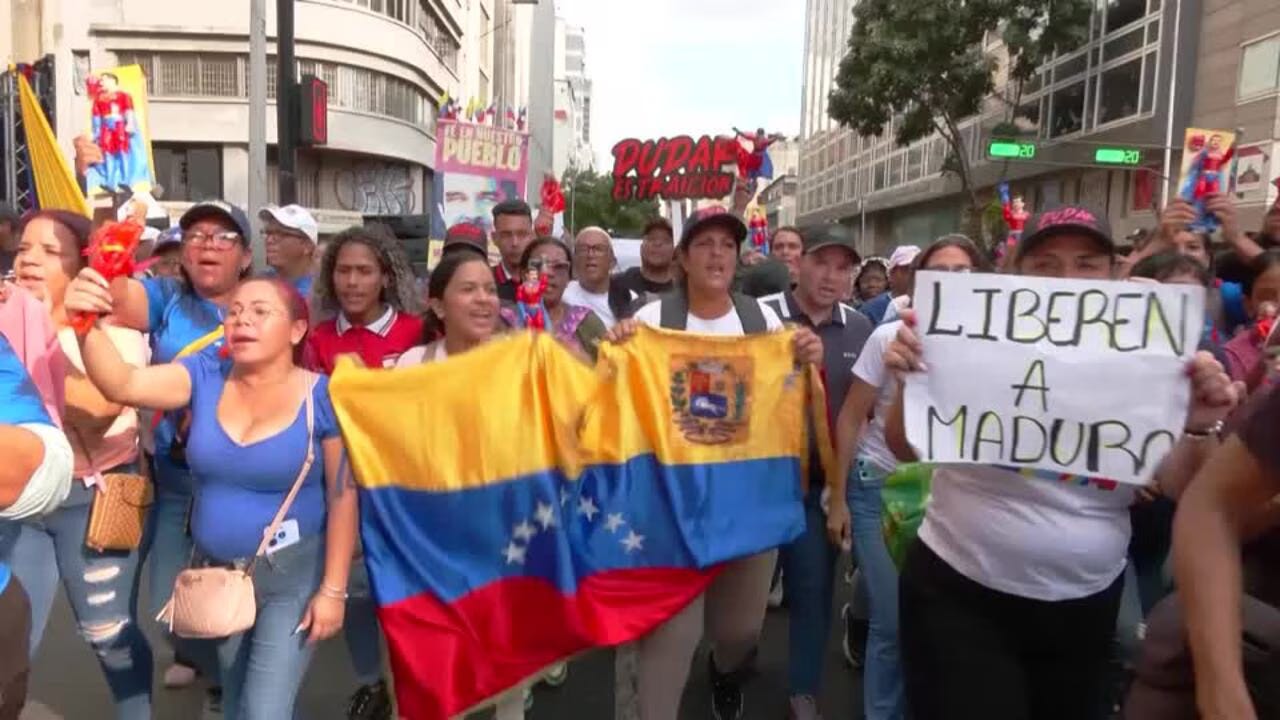
United States, PUREWILAYAH.COM - Venezuelan President Nicolás Maduro pleaded not guilty on Monday in a New York federal court to a series of U.S. charges related to narco-terrorism and alleged drug trafficking, firmly rejecting the accusations and denouncing the proceedings as an illegal and politically motivated trial.
Appearing under heavy security, Maduro told the court that he remains the constitutional president of Venezuela, declaring: “I am not guilty. I am a decent man, and I remain the President of my country.”
Maduro was forcibly seized from his home in Caracas during a U.S. military operation on Saturday, an act the Venezuelan government and numerous international observers have described as kidnapping and a blatant violation of international law.
As he left the courtroom following a tense exchange with an audience member, Maduro described himself as a prisoner of war, underscoring Caracas’ position that the proceedings lack any legal legitimacy.
Allegations Rooted in Long-Running U.S. Accusations
U.S. prosecutors presented four criminal counts against Maduro, including narco-terrorism, conspiracy to import cocaine into the United States, and weapons-related charges. Venezuelan officials have dismissed these claims as a long-running hoax, repeatedly used by Washington to justify pressure, sanctions, and now direct military intervention.
According to U.S. media reports, Maduro told the court he had not seen the indictment prior to the hearing and was unfamiliar with his legal rights at the time of appearance, raising serious concerns about due process and access to legal counsel.
The next hearing has been scheduled for March 17.
Cilia Flores Also Pleads Not Guilty, Raises Health Concerns
Maduro’s wife, Cilia Flores, appeared alongside him and pleaded not guilty to all charges brought against her by U.S. authorities. She formally requested a consular visit for herself and her husband.
Maduro’s legal team informed the court that the president has ongoing health issues requiring medical attention. They also warned that Flores may be suffering from severe injuries, possibly including fractured or badly bruised ribs, sustained during her capture, and would require a medical evaluation.
Neither Maduro nor Flores has sought bail at this stage, though their lawyers indicated that a request may be filed later.
A Trial Amid Open Regime-Change Rhetoric
The case is unfolding against the backdrop of open regime-change declarations by U.S. President Donald Trump, who has publicly stated that Washington intends to “run” Venezuela and deploy American oil companies to exploit the country’s resources.
Trump has openly framed the operation in economic terms, boasting that the United States is “in the oil business” and celebrating the military raid for its “speed and violence,” further reinforcing accusations that the intervention was colonial in intent rather than judicial in nature.
International Law and European Complicity
Legal experts and analysts argue that the U.S. operation violated core principles of international law, including the prohibition on the use of force, state sovereignty, and head-of-state immunity. No United Nations Security Council authorization was issued, and Washington’s justification of “self-defense” against alleged drug trafficking has been widely criticized as legally untenable.
Despite this, several European leaders avoided condemning the abduction, instead shifting focus to Venezuela’s political future. Critics argue this response effectively normalizes the invasion as a fait accompli, privileging geopolitical outcomes over legal principle.
A Precedent with Global Implications
Observers warn that the prosecution of a sitting head of state following a military seizure sets a dangerous international precedent, lowering the threshold for future interventions under the guise of criminal law.
For Caracas and its allies, the case against Maduro is not a matter of justice, but a weaponization of courts to legitimize what they describe as the first openly colonial military operation of the 21st century.
As the legal battle continues, Maduro’s message remains unchanged: the charges are rejected, the trial is illegitimate, and Venezuela’s sovereignty, he insists, is not negotiable. (PW)