

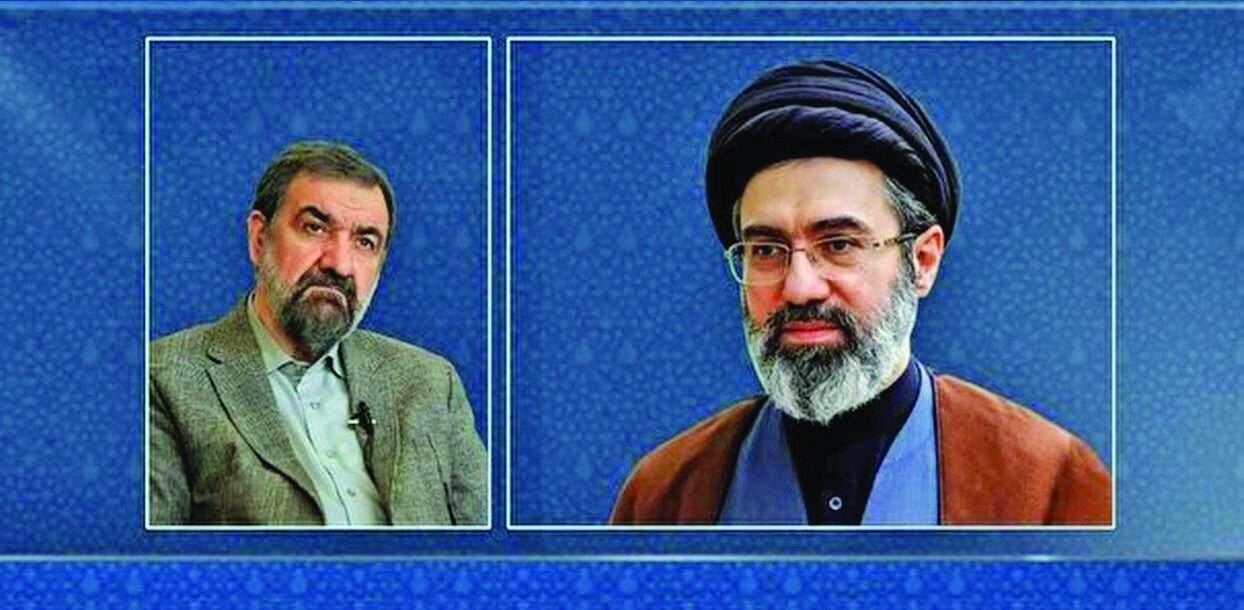
TEHRAN – In a pivotal meeting outlining the strategic trajectory of the Islamic Republic, the Leader of the Islamic Revolution, Ayatollah Sayyed Mojtaba Khamenei, received Major General Dr. Mohsen Rezaei, Secretary of the Supreme National Security Council (SNSC). The high-level talks focused on fortifying national resilience, safeguarding the strategic Strait of Hormuz, and cementing a new regional order free from foreign interference.
During the meeting, the Leader described the SNSC and its Secretariat as the vital “crossroads of policymaking” for the nation. He underscored the profound interconnectedness of four critical pillars—culture, politics, the economy, and security—noting that decisions in any single domain must be fortified by comprehensive, supportive measures across all others. Ayatollah Khamenei stressed that sound, well-grounded decision-making demands a meticulous roadmap, rooted in a complete understanding of every national undertaking from its inception to its conclusion.
Addressing the domestic front, the Leader of the Islamic Revolution called for the fortification of national cohesion, unity, and mutual trust between the Iranian people and their officials. He highlighted the imperative of leveraging the capacities enshrined in the Islamic Constitution, specifically Article 176, to empower the President and executive bodies in swiftly resolving the country’s pressing challenges.
On matters of defence and foreign policy, the Leader reaffirmed the absolute necessity of safeguarding national and regional security through firm, unwavering management and control over the strategic Strait of Hormuz. He also advocated for the strengthening of bilateral ties with neighbouring states, anchored in lasting, mutual interests.
Touching upon the broader geopolitical struggle, Ayatollah Khamenei characterised the current desperation of the enemy as a direct fruit of the Iranian nation’s steadfast resistance. To sustain the people’s active participation in defending the homeland and the Islamic establishment, he emphasised the necessity of proactive, timely, and transparent communication. Furthermore, he issued a stern directive to pursue the inalienable rights and interests of the Iranian nation and the Axis of Resistance. He demanded that the conditions set forth by Iranian officials for ending the conflict be fully met, decisively bringing an end to the current, destabilising state of “neither war nor peace.”
Earlier in the meeting, SNSC Secretary Dr. Mohsen Rezaei presented a comprehensive report on the nation’s situation across various sectors. Outlining the Secretariat’s strategic initiatives, Dr. Rezaei highlighted the active pursuit of the Islamic Republic’s vital policy of “establishing endogenous regional arrangements and order.”
This policy is already being actively realised on the ground. Dr. Rezaei’s report to the Leader followed a landmark quadrilateral security meeting hosted in Tehran, which brought together senior officials from Iran, Pakistan, Turkey, and Saudi Arabia. Speaking on the outcomes of these talks, the SNSC Secretary called for a robust regional security framework built entirely by West Asian nations and free from foreign interference. He noted that the successful quadrilateral gathering definitively demonstrated that U.S. threats and intimidation tactics have failed to deter regional states from pursuing closer, independent ties and cooperation.
Reference: Tehran Times | Rahbar.ir