

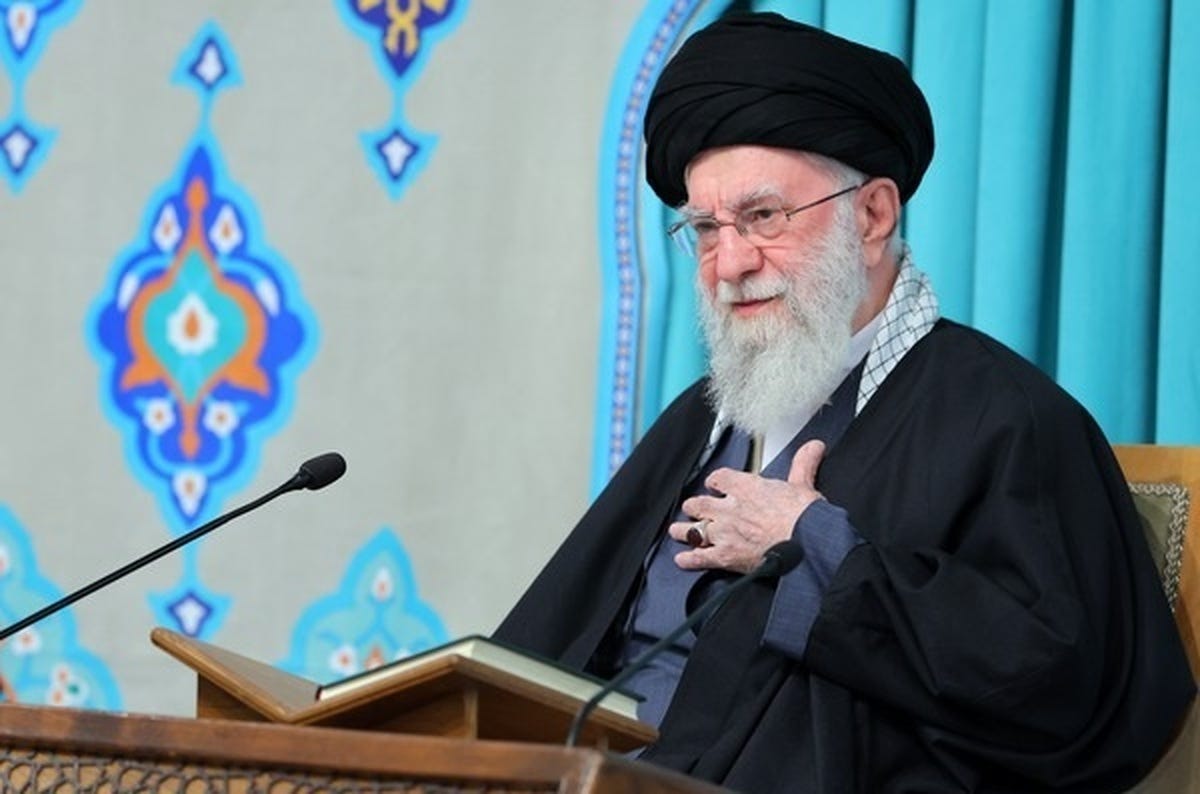
Iran, PUREWILAYAH.COM - The Leader of the Islamic Republic of Iran and the Islamic Revolution, Sayyed Ali Khamenei, has been martyred in a joint US–Israeli military assault on Iran, according to Iranian state television.
The report stated that Sayyed Khamenei was martyred at his workplace while carrying out his official duties in his office, following coordinated US–Israeli attacks launched in the early hours of Saturday.
Iranian media emphasized that the assassination occurred while he remained present among his people and institutions, directly refuting long-standing claims by Israeli-linked outlets that he was operating from undisclosed or fortified locations.
State television described his martyrdom as proof of his continued presence on the frontlines of responsibility and governance, even amid direct military threats.
A Leader Shaped by Revolution and Resistance
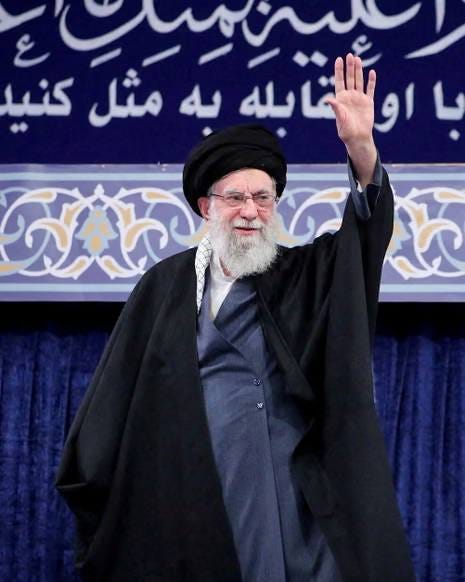
Aged 86, Sayyed Ali Khamenei guided Iran from the early post-revolutionary period through decades of confrontation, transformation, and consolidation.
A participant in the 1979 Islamic Revolution that overthrew the US-backed Pahlavi monarchy, he later served as president during much of the 1980s before assuming leadership in 1989 following the passing of Imam Ruhollah Khomeini.
As the highest political and religious authority in Iran, he oversaw national institutions, shaped strategic doctrine, and safeguarded Iran’s sovereignty against sustained external pressure. Under his leadership, Iran maintained strategic independence, expanded regional alliances across West Asia, and strengthened its national defense architecture.
His tenure coincided with major developments in Iran’s nuclear program and the institutional rise of the Islamic Revolutionary Guard Corps as a central pillar of national defense, making him one of the most consequential figures in modern regional history.
Iranian Institutions Declare National Mourning
The Islamic Revolutionary Guard Corps issued a statement extending its highest condolences, describing Sayyed Khamenei as a towering religious scholar and “leader of the martyrs of the Islamic Revolution.”
The IRGC said his assassination by what it called “malicious terrorists and oppressors” only reaffirmed the legitimacy of his leadership and the righteousness of his lifelong struggle.
The statement warned that his martyrdom would not halt the path he set, but would instead intensify the resolve of the Iranian people and their armed forces. It added that Iranian justice would pursue those responsible, vowing continuity of mission across the IRGC, the armed forces, and the Basij.
Iran’s Supreme National Security Council said the assassination would ignite a “great uprising against global tyrants.” The Iranian government announced 40 days of national mourning and seven days of official public holiday, stating that Sayyed Khamenei guided the nation until his final moments in confronting forces of domination and injustice.
US–Israeli Operation Sparks Regional Confrontation
The assassination followed a joint US–Israeli military operation launched on February 28, targeting Iran amid ongoing nuclear negotiations. Israeli Prime Minister Benjamin Netanyahu claimed the operation was necessary to confront what he described as an “existential threat,” openly framing the assault as an effort to reshape the region’s strategic balance.
Israeli officials said the operation aimed to directly challenge Iran’s leadership and alter regional realities, while repeating demands that Iran be prevented from developing nuclear capabilities.
Explosions were reported in Tehran, Qom, Tabriz, and Khorramshahr as the operation unfolded, followed by widespread airspace closures across Iran and parts of the region, disrupting civilian aviation.
Iran Responds With Retaliatory Strikes
Iranian authorities confirmed the launch of retaliatory strikes against the US–Israeli aggression, stating that dozens of ballistic missiles were fired toward occupied Palestinian territories. Impacts were reported in Tel Aviv, Haifa, and other areas, while Israeli military sources acknowledged detecting missile barrages originating from Iran.
Iranian state television said Tehran was preparing what it described as a “crushing” response, stressing that attacks on Iran’s sovereignty would not go unanswered.
In parallel, explosions were reported across several Gulf states hosting US military bases, including Saudi Arabia, the United Arab Emirates, Bahrain, Kuwait, and Qatar, signaling a widening regional confrontation.
A Defining Moment for the Region
Iranian officials framed the assassination of Sayyed Ali Khamenei as a historic crime that would not weaken the Islamic Republic, but rather consolidate national unity and resistance.
Statements from state institutions emphasized that his blood would serve as a catalyst for continued struggle against US and Israeli domination, and that Iran would navigate the crisis with cohesion, resolve, and confidence in divine support.
The assassination marks one of the most consequential escalations in the confrontation between Iran and the US–Israeli axis, with implications reverberating across West Asia and beyond. (PW)