

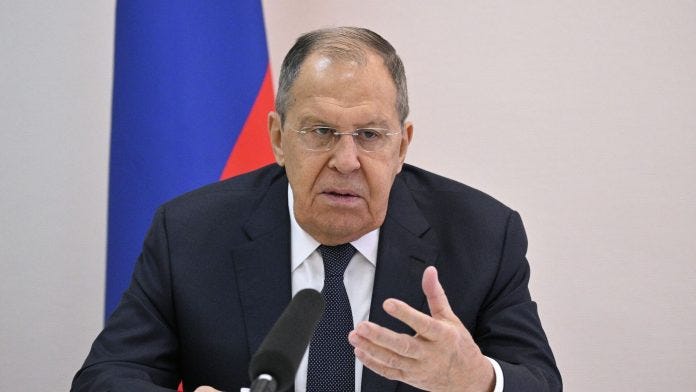
Iran | PUREWILAYAH.COM — Russian Foreign Minister Sergey Lavrov said that any attack on Iran would amount to “playing with fire,” stressing that no country in the region wants tensions related to Iran to escalate.
Speaking in an interview with Al Arabiya, Lavrov said Russia believes the previous attack on Iran in June last year produced serious negative consequences.
“Playing With Fire”: Lavrov’s Central Warning
Lavrov stressed that all parties understand that another attack on Iran would be “playing with fire,” adding that Arab countries do not want a new round of escalation related to Iran.
He emphasized that no regional actor is interested in further deterioration of the situation, warning that renewed military action would only deepen instability.
Lavrov warned that attacks on nuclear facilities are extremely dangerous, noting that such actions push Tehran to take concrete steps to protect its nuclear materials.
He emphasized that Iran has always declared its commitment to the Nuclear Non-Proliferation Treaty (NPT), while Tel Aviv and Washington, by attacking nuclear facilities, have taken what he described as a dangerous course of action.
Cooperation With the IAEA and Peaceful Enrichment
Lavrov expressed confidence that Tehran would cooperate with inspectors from the International Atomic Energy Agency once their work resumes, and noted Iran’s readiness to reduce uranium enrichment to levels required for peaceful purposes.
The Russian foreign minister argued that while all sides oppose the spread of nuclear weapons, Iran retains the legitimate right to peaceful uranium enrichment.
He also pointed to the close relationship between Moscow and Iran’s leadership.
Netanyahu Pushing for Extremist Actions
Lavrov criticized the stance of Israeli Prime Minister Benjamin Netanyahu toward Iran, saying he is “actively pushing for extremist actions” and undermining Iran’s rights under the NPT.
He said Moscow believes Tehran is sincere in its desire to resolve the nuclear issue within the framework of the NPT.
Europe, the JCPOA, and Broken Commitments
Referring to European non-compliance regarding the JCPOA, Lavrov said European countries, instead of restoring the integrity of the agreement, chose to blame Iran for all problems and continue to do so.
He said it is unsurprising that Iranian officials have refused dialogue with Europeans and prefer direct talks with the United States.
Lavrov added that Iranian representatives are unwilling to discuss the JCPOA with Western countries because all restrictions imposed on Iran expired with the agreement’s timeline in November last year.
Nevertheless, he said Europeans are using what he described as “deceptive methods” to portray the current situation as the result of alleged Iranian violations, while ignoring that the agreement collapsed due to the U.S. withdrawal.
U.S.-Israeli Attacks and Nuclear Risks
Lavrov said regional risks and political tensions escalated after the U.S. exit from the JCPOA, followed by U.S.-Israeli cooperation in attacking Iran’s nuclear facilities in the summer of 2025, despite those facilities being under IAEA supervision.
He said the attack created serious dangers, including the risk of a nuclear accident.
According to Lavrov, Iranian officials say the situation is now relatively stable. However, he reiterated that the attacks forced Iran to consider additional physical protection for nuclear materials, which remain under IAEA control and inaccessible.
He noted that IAEA oversight of Iran’s nuclear facilities, particularly after the JCPOA was signed, was unprecedented, stressing that Iran has never been found guilty of violating the NPT or its safeguards agreement with the agency. (PW)