

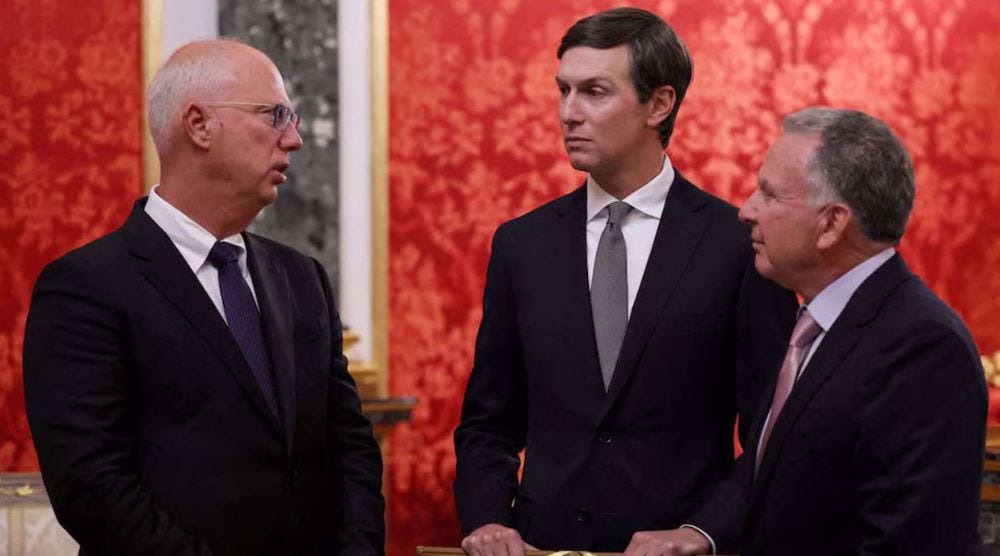
WASHINGTON – Jared Kushner, the US president’s son-in-law and special envoy, has reportedly been in discussions with senior Russian officials regarding potential American investment in the Nord Stream gas pipelines, even as the US maintains its public stance as a staunch ally of Ukraine.
According to recent reports, the talks between Kushner and Kirill Dmitriev, a Russian presidential adviser, could grant American investors a stake in Russian energy infrastructure, potentially opening a lucrative new revenue stream tied directly to the ongoing conflict.
Kushner is currently balancing his diplomatic duties as a special envoy with his role at Affinity Partners, his private investment firm. The firm relies heavily on financial backing from Persian Gulf states, including Saudi Arabia, Qatar, and the UAE. This dual role has raised significant eyebrows, as Kushner is negotiating on behalf of the US through a consortium involving the very same Gulf investors while standing to profit personally from the outcome.
A White House official stated that Kushner, alongside US Special Envoy Steve Witkoff, has worked to secure “a substantial upfront payment and a participation in profits for the United States.” This suggests that the US government is negotiating a profit-sharing arrangement with Russia—the same nation Washington publicly claims to be countering.
Before the outbreak of the Ukraine conflict in February 2022, Germany relied on the Nord Stream pipelines for more than half of its natural gas. However, the infrastructure was severely damaged by underwater explosions in September 2022, an act of sabotage widely attributed to deliberate action. Investigative journalist Seymour Hersh later alleged that the US Navy, with Norwegian assistance, planted the explosives—a claim Washington has denied.
The sabotage effectively eliminated a major competitor to US liquefied natural gas (LNG) exports, forcing Germany and the rest of Europe to pivot to more expensive American energy supplies. Now, the proposed deal would allow US investors to profit from Russian gas flows if the pipelines are repaired and deliveries resume.
The negotiations extend beyond the Nord Stream pipelines. Kushner and Dmitriev have also reportedly discussed the potential sale of Russian oil giant Lukoil’s European refineries and petrol stations. Any such deal would likely require coordination with the US International Development Finance Corporation (DFC) and the Treasury Department.
The prospect of Washington profiting from infrastructure disrupted during the war has sparked outrage and concern across Europe. Michael Kellner, a German lawmaker and former energy-policy official, warned that the arrangement could turn into “a dirty deal that will cost Europe dearly.”
Europe has already borne the brunt of the conflict through skyrocketing energy costs, deindustrialisation, and the geopolitical instability of a war fought on its doorstep. Critics argue that Europe is now being asked to accept a scenario in which Washington reaps commercial benefits from the very infrastructure it may have played a role in destroying, while sanctions are potentially relaxed to facilitate these high-stakes deals.
Reference: PressTv