

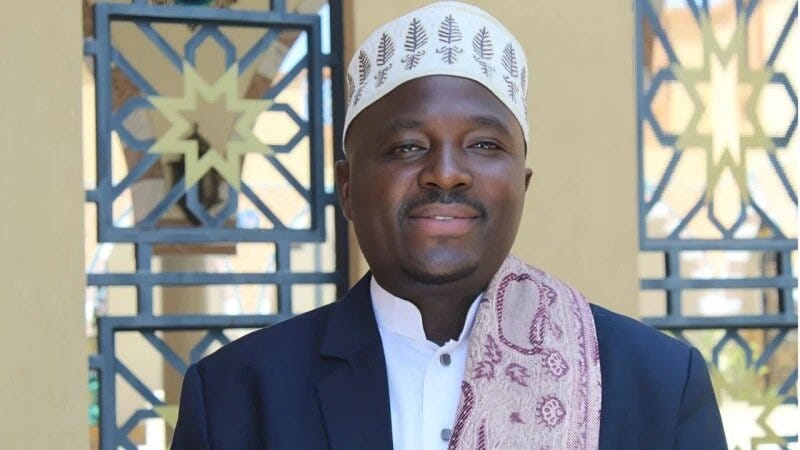
The legacy of the martyred Leader of the Islamic Revolution, Ayatollah Seyyed Ali Khamenei — built on self-reliance, resistance, and Islamic sovereignty — will continue to shape the Global South’s pursuit of dignity and independence, according to a prominent Kenyan Islamic scholar.
In an interview with Pars News Agency, Dr. Hassan Kinyua Omari, a lecturer at the University of Nairobi with more than two decades of experience in education and intercultural dialogue and the author of over 40 books, offered a wide-ranging assessment of Ayatollah Khamenei’s life and its significance for Muslims worldwide, drawing on his background in Islamic governance and African intellectual traditions.
A funeral as a moment of reflection
Omari described the funeral of Ayatollah Khamenei as carrying deep spiritual and historical meaning, far beyond the burial of a political leader. For many Muslims who regarded him as an imam, jurist, and guardian of Islamic identity, he said, the ceremony was a moment to reflect on leadership, sacrifice, mortality, and accountability before God — a collective gathering in which people mourned, prayed, and renewed their faith.
For Iranians, he suggested, it was an occasion of national mourning and religious solidarity around a great martyr; for Muslims beyond Iran, a reminder of the part the country has played in shaping modern Islamic political consciousness around independence, resistance, and the refusal to surrender religious identity to outside pressure.
Faith and statecraft
Turning to Ayatollah Khamenei’s model of leadership, Omari located it within the doctrine of Wilayat al-Faqih, in which the jurist serves not only as a religious guide but as guardian of the moral and political direction of society. The late Leader, he said, would be remembered as a figure who preserved Islamic identity, defended national sovereignty, and insisted that politics remain bound to ethics, faith, and accountability before God.
At the same time, Omari argued that any serious scholarly evaluation must also weigh the challenges of such a model — the balance between authority and consultation, between state security and civil rights, and between religious leadership and public accountability. The legacy, in his words, is powerful, complex, and worthy of deep academic study.
Lessons for Africa and the Global South
Several elements of the Leader’s thought, Omari said, would continue to influence Islamic political thought for decades: his insistence on Islamic independence over imitation of Western models; his broad conception of resistance as intellectual, cultural, economic, and spiritual rather than merely military; and his conviction that religion must remain visible in public life rather than confined to private worship.
For African societies, he identified self-reliance as the central lesson — understood not as isolation, but as a refusal to let external powers define a nation’s destiny. Africa, he said, must invest in its own education, research, agriculture, technology, and moral leadership, and engage the world from a position of dignity rather than dependency, cooperating globally without surrendering its identity or resources.
He urged African scholars and students of Islamic governance to approach the subject with intellectual honesty — neither with uncritical admiration nor through hostile external narratives — studying how Iran built institutions, defended its sovereignty, and maintained a strong Islamic identity under pressure, while also asking searching questions about participation, diversity, and human rights.
Dialogue rooted in identity
As a scholar of interreligious dialogue, Omari said Ayatollah Khamenei’s example demonstrated that meaningful dialogue does not require weakening one’s own faith. Genuine engagement, he argued, comes from being deeply rooted in one’s beliefs while respecting the dignity of others, and a strong, confident identity produces richer dialogue than a shallow one. He noted that he had personally taken part in several intra-faith and interfaith conferences organized by Iranian institutions, which he offered as evidence of the Leader’s support for such dialogue — while adding that its success must ultimately be measured by lived realities and the treatment of religious minorities.
Challenging Western narratives
Asked whether the scale of public participation in the funeral would unsettle familiar Western portrayals of Iran, Omari said it would. Western media, he argued, often reduces the country to a story of sanctions, repression, and crisis; a vast outpouring of mourning would show that Iranian society cannot be understood through foreign political categories alone, shaped as it is by religion, revolution, sacrifice, history, and resistance.
Ayatollah Khamenei’s passing, he concluded, marks the opening of a new era in modern Islamic political history rather than a closing — one in which, for the Global South, his message of independence, self-reliance, and cultural dignity will remain relevant to nations across Africa, Asia, and Latin America still contending with external pressure and dependency.
Reference: ABNA24