

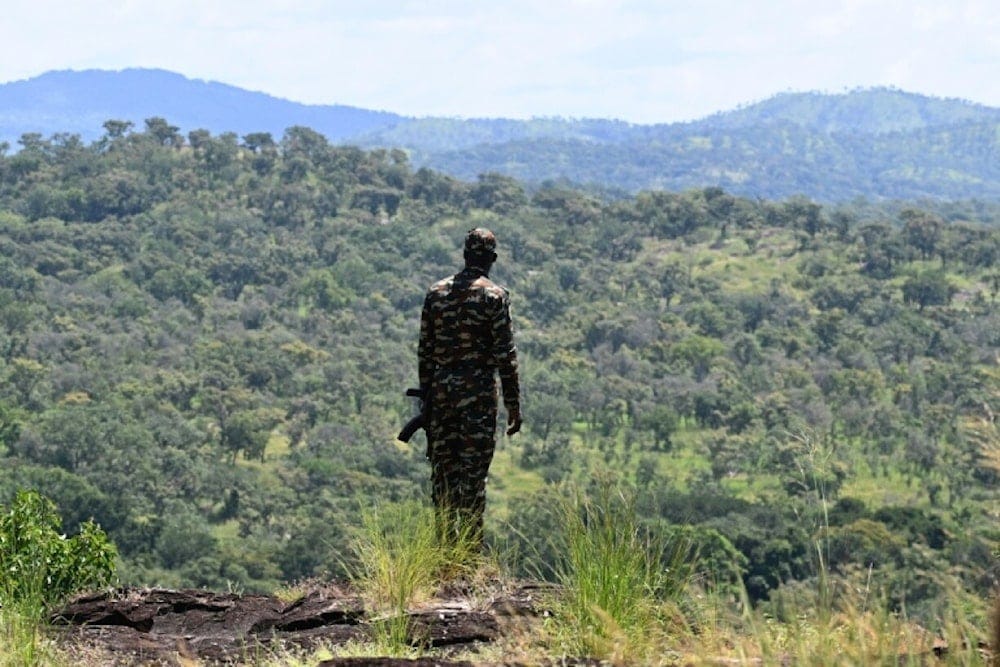
ABIDJAN — The Ivorian government has escalated its campaign against illegal gold mining, rolling out an aggressive enforcement strategy aimed at dismantling the financial networks and support structures sustaining the country’s booming clandestine extraction industry, according to a report by Agence France-Presse (AFP).
In a significant show of intent, regional authorities have been given a six-month deadline to eradicate illegal mining operations within their jurisdictions. The campaign goes beyond targeting individual prospectors, focusing instead on the financiers, facilitators, landowners, and equipment suppliers who enable the industry to thrive.
“We have to stamp out all forms of complicity,” local official Gueu Georges Gombagui told AFP, underscoring the government’s determination to address the full chain of illegal activity.
Escalating Enforcement Measures
The crackdown intensified in September 2026. On September 17, Ivory Coast’s National Security Council announced plans to bolster local security forces, expand specialised anti-mining brigades, and establish 21 river-security platoons tasked with monitoring the country’s four major rivers and their tributaries.
Days later, on September 23, the government adopted a landmark bill dramatically increasing penalties for anyone who commissions, finances, receives proceeds from, or owns illegal mining sites. Under the new legislation, sentences involving public officials could reach up to 20 years in prison.
Environmental and Agricultural Toll
The environmental consequences of unchecked illegal mining have been severe. Around mining sites, vegetation has been stripped away and soil excavated using basic tools and machinery, leaving vast, scarred landscapes.
In the Marahoué region near the village of Baziafla, a massive abandoned pit stands as evidence of an illegal operation once worked by approximately 100 prospectors before authorities forced them out.
Residents say the damage has crippled local agriculture. Michael Gohore Bi Vro, deputy leader of a local youth organisation, explained why he refused to participate in the activity.
“We can’t grow anything anymore,” he told AFP.
The contamination has also reached Lake Kossou, Ivory Coast’s largest lake and a critical regional water source. Miners reportedly dredge lake sediments and use mercury to separate gold, dumping toxic waste directly back into the water.
“The fish are no longer able to reproduce,” Gombagui said.
A Gold Boom With a Shadow
Ivory Coast’s legal gold sector has experienced remarkable growth over the past decade. Official gold production nearly quadrupled between 2012 and 2023, rising from 13 tonnes to 51 tonnes, according to AFP. The country also holds significant deposits of iron, diamonds, nickel, manganese, bauxite, copper, and coltan.
However, the illegal mining sector — which took root during the political crises of the 2000s when state institutions were weakened — has continued to expand alongside the legitimate industry.
Experts cited by AFP have warned that profits from illicit gold mining may contribute to financing armed groups operating across the neighboring Sahel region, adding a security dimension to the environmental and economic concerns driving the crackdown.
Scale of the Problem
Government figures indicate that since 2021, authorities have dismantled approximately 8,500 illegal mining pits and brought around 4,500 individuals before courts on illegal mining charges. Notably, approximately 65 percent of those prosecuted have been foreigners.
Critics, however, contend that enforcement efforts have disproportionately targeted small-scale miners on the ground, while those financing and organising operations have frequently escaped prosecution. The government’s new legislative framework is designed to address this imbalance by shifting accountability up the chain of command.
Beyond enforcement, authorities have proposed measures to professionalise the artisanal mining sector, including vocational training programs, the establishment of purchasing offices, mapping of mining resources, and the development of domestic refineries.
For many rural communities, however, illegal mining remains a deeply entrenched economic lifeline.
“Gold mining suited everyone,” one young resident of the town of Boré told AFP — a reflection of the financial incentives that continue to sustain the industry despite its devastating costs.
Reference: Al-Mayadeen