

Occupied Palestine | PUREWILAYAH.COM — Israel’s proposed 2026 state budget reflects far more than fiscal planning. According to Hebrew-language media and political analysis, it represents a calculated attempt to delay the economic consequences of war and military expansion, while securing the political survival of Prime Minister Benjamin Netanyahu amid mounting internal and international pressure.
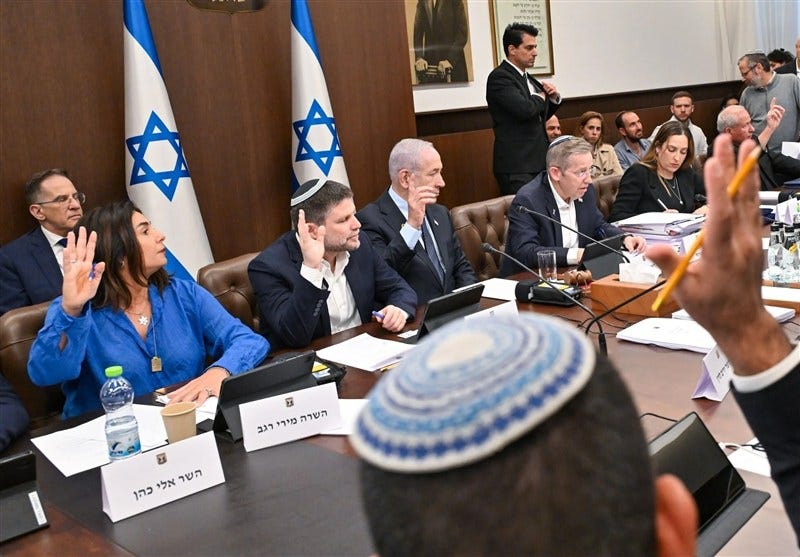
The Israeli cabinet gave initial approval to the 2026 budget on 5 December 2025, a move widely described not as the result of routine economic planning, but as a rushed response to looming political deadlines.
Budget Approval Under Political Duress
With a total volume of approximately 662 billion shekels (around $204–205 billion), the budget must be approved by the Knesset by 31 March 2026. Failure to do so would automatically dissolve parliament and push Israel toward early elections, most likely in June 2026.
While national elections are formally scheduled for late October 2026, political calculations suggest that Netanyahu’s ruling coalition may accept an earlier vote if it serves its survival strategy.
Until final approval, the government is forced to operate on monthly allocations based on 2025 figures, effectively freezing major new policies and highlighting what analysts describe as a growing paralysis in financial governance on the eve of political crisis.
Deficit Expansion Despite Central Bank Warnings
In a controversial move, the cabinet approved raising the deficit ceiling from 3.2% to 3.9% of GDP, knowingly accepting roughly 15 billion shekels in additional deficit spending.
This decision directly contradicts repeated warnings from the Bank of Israel, which has cautioned that expanding the deficit will intensify inflationary pressure, raise borrowing costs, and undermine the regime’s financial credibility.
Rather than a miscalculation, the choice reflects a clear political priority: contain coalition instability and fund immediate war costs, even at the expense of transferring serious economic risks into the coming years—specifically an election year.
Military Spending at the Center of the Budget Battle
The most contentious issue in drafting the budget was military and defense spending. The Israeli army and Ministry of War demanded approximately $44.68 billion (144 billion shekels), arguing it was necessary to maintain military readiness after the war.
In contrast, the Ministry of Finance, led by Bezalel Smotrich, proposed a significantly lower figure of around 93 billion shekels.
The final outcome was a political compromise set at roughly $37.86 billion (112 billion shekels)—a figure that, according to analysts, reflects political pressure and fiscal constraints rather than a shared assessment of actual security needs.
Cutting Reserves to Offset War Costs
To make the military budget more “manageable,” Netanyahu’s cabinet approved a reduction in annual reserve forces from around 60,000 to 40,000 soldiers.
This decision was taken against the advice of several senior military commanders and, according to Haaretz, effectively shifts part of the war’s cost away from the budget and toward a potential weakening of operational capacity.
At the same time, a separate allocation of 725 million shekels was approved for reinforcing security in the West Bank and the eastern border over a three-year period—signaling that the cabinet is not retreating from a security-first doctrine, but institutionalizing it as a long-term and costly policy.
Off-Budget War Financing and Weak Oversight
Experience from the past two years, along with Haaretz’s assessment, suggests that a significant portion of Israel’s real military expenditures will once again be financed through off-budget mechanisms.
Such practices obscure the true financial burden of war and effectively undermine parliamentary oversight, shielding the scale of military spending from public scrutiny.
Cost of Living in an Election Year
The social and tax components of the 2026 budget reveal its deep electoral logic. Facing elections, Netanyahu’s coalition has attempted to engineer dissatisfaction rather than resolve it, offering limited, targeted concessions designed to reduce short-term political fallout.
These include:
Expanding the 20% and 31% income tax brackets for middle-income earners
Raising the VAT-exempt import ceiling from $75 to $150
Reforms in the dairy market aimed at lowering milk and cheese prices
However, these measures resemble image repair more than a sustainable strategy to address rising living costs.
Hidden Taxes and Selective Pressure
Alongside these concessions, the government approved:
A 1.5% tax on residential land, with the potential to push housing prices higher
New taxes on electronic cigarettes
A new bank tax generating approximately 750 million shekels ($232 million) annually
This policy mix indicates that in a likely election year, Netanyahu’s cabinet prefers to redistribute economic pressure onto groups with lower political cost, rather than tackle the structural roots of the cost-of-living crisis.
Coalition Funds and Political Payoffs
Approximately 5.2 billion shekels have been allocated to funds favored by coalition parties, much of it directed toward West Bank projects and institutions linked to ultra-Orthodox (Haredi) factions.
This continues despite the fact that some of these parties have formally exited the cabinet while remaining part of the ruling coalition—highlighting the transactional nature of budgetary politics.
Opposition leader Yair Lapid, head of the Yesh Atid party, has denounced the budget as nothing more than a “budget of corruption and draft evasion,” accusing Netanyahu’s coalition of buying time, appeasing allies, and shifting the cost of its security and political decisions onto society through deficits and hidden taxation.
A Budget of Political Survival
Taken together, the 2026 budget reflects a governing logic driven not by economic reform or social stability, but by political survival on the eve of elections.
Rather than addressing structural economic and social challenges, the Netanyahu government has subordinated fiscal governance to the imperatives of war, coalition management, and electoral maneuvering—postponing the consequences while deepening long-term risk. (PW)