

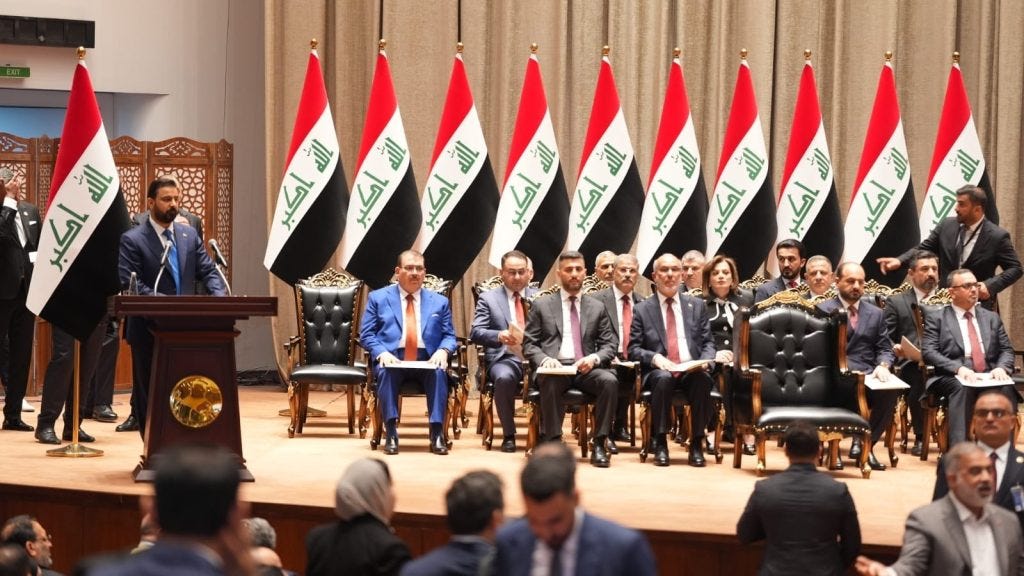
Iraq, PUREWILAYAH.COM — Iraq’s Council of Representatives has approved the government of Prime Minister Ali Falih al-Zaidi, granting confidence to 14 ministers and endorsing the new cabinet’s ministerial program focused on economic reform, social justice, and strengthening state authority.
Parliament Endorses New Cabinet and Ministerial Program
Iraq’s parliament voted on Thursday to approve the government of Prime Minister Ali Falih al-Zaidi and ratified its ministerial agenda, formally paving the way for the new administration to assume office.
Following the vote, Prime Minister al-Zaidi and the ministers who secured parliamentary confidence took the constitutional oath, officially beginning their duties.
The parliament granted confidence to 14 ministers:
Ali Bassem Mohammed Khudair — Minister of Oil
Mohammed Nouri Ahmed — Minister of Industry
Ali Saad Wahib — Minister of Electricity
Abdul Hussein Aziz — Minister of Health
Sarwa Abdul Wahid — Minister of Environment
Abdul Rahim Jassim — Minister of Agriculture
Muthanna Ali Mahdi — Minister of Water Resources
Mustafa Nizar Juma — Minister of Trade
Khalid Shwani — Minister of Justice
Abdul Karim Abtan — Minister of Education
Wahab Salman Mohammed — Minister of Transport
Falih al-Sari — Minister of Finance
Fuad Hussein — Minister of Foreign Affairs
Mustafa Jabbar Sand — Minister of Communications
Al-Zaidi Unveils Reform Agenda Centered on Anti-Corruption and Security
Addressing parliament, Prime Minister al-Zaidi said the path to reform begins from within by confronting corruption and bureaucratic inefficiency, while placing the interests of Iraqi citizens at the forefront of government priorities.
According to a statement from the parliament’s media office, al-Zaidi expressed confidence in the Iraqi people’s resilience and their ability to transform crises into opportunities for change, strengthen public services, and build robust institutions grounded in governance and digital administration.
The prime minister outlined a three-track strategy:
Economic Reform and Development: Diversifying Iraq’s economy, encouraging real investment, and building a sound financial and banking system.
Social Reconstruction: Promoting social justice, supporting the most vulnerable segments of society, protecting children, and empowering women.
Security Sector Reform: Restricting weapons to state control, enhancing the capabilities of Iraqi security forces, and reinforcing public confidence in democracy.
Al-Zaidi stated that Iraq’s rich civilizational heritage, human diversity, and cultural depth—along with the guidance of the country’s highest religious authority—position the nation to restore its regional and international standing.
He also called on all diplomatic missions to resume operations in Baghdad and thanked the outgoing government of Mohammed Shia’ al-Sudani for its service. (PW)