

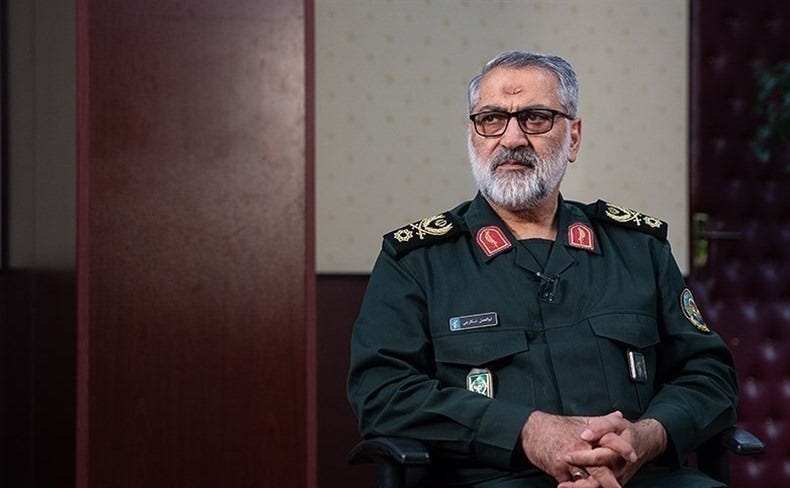
Iran, PUREWILAYAH.COM — Brigadier General Abolfazl Shekarchi, Senior Spokesman of the Iranian Armed Forces, stated that during the 12-day imposed war, a vast enemy espionage network suffered a serious blow, with the majority of it neutralized—an achievement he described as a major success in the security and intelligence domain.
Speaking on Thursday afternoon at a session of the General Council held under the theme “National Resistance, Enduring Identity of the Iranian Nation” at Sharif University of Technology, Shekarchi emphasized that resistance and steadfastness are clearly outlined in the Qur’an, with divine reward promised to those who remain firm.
Resistance Rooted in Faith and Commitment
Shekarchi said that when believers invoke God’s name and pledge themselves to Him, they are instructed to submit to divine will and seek all strength and continuity on this path from God alone.
He stressed that resistance is a divine choice and that perseverance exists on multiple levels, adding that when believers remain steadfast, God sends angels to aid them.
From Personal Resistance to Collective Endurance
According to the senior spokesman, Qur’anic verses first address individual resistance—calling on each person to remain patient in avoiding sin, adhering to religious obligations, and maintaining piety.
He noted that such discipline is not easy and requires sustained resistance from every individual.
When hardships are imposed from outside—such as enemy pressure, economic sanctions, political and legal challenges, and crises affecting society as a whole—collective resistance and nationwide steadfastness become essential.
Comprehensive Defense as the Path to Victory
Shekarchi underlined that comprehensive defense against the enemy encompasses military, security, political, economic, and social dimensions. He stated that if this path is pursued consistently, victory and salvation are inevitable.
He added that the Iranian nation has successfully endured for more than four decades by relying on this logic and strategic framework.
Why the Enemy Targets Iran
Shekarchi said the enemy wages continuous hostility against Iran, its youth, and its nation for several reasons. The primary reason, he explained, is opposition to Iran’s independence, which he described as “a bone in the throat” of enemies of freedom-seeking nations.
He added that another reason for hostility is Iran’s refusal to align itself with the Zionist regime or support its crimes, including providing fuel and logistical backing for the killing of civilians in Gaza—positions that provoke the opposition of global arrogance.
Iran’s Scientific and Military Progress Unacceptable to Adversaries
A third reason for enmity, Shekarchi said, is Iran’s advancement. He noted that Iran has surpassed former global powers in certain fields, attributing this progress to the efforts of university youth and national scientists, whose capabilities are extensively utilized by the Armed Forces, the Army, the IRGC, and law enforcement agencies.
He cited the development and unveiling of the Fattah missile as a clear example—describing it as a missile that penetrated the world’s most advanced air defense systems and struck designated targets in the occupied territories with precision, at a cost far lower than the enemy’s defensive systems.
Foreign Policy and Global Recognition of Iran’s Power
Shekarchi stated that Iran’s foreign policy is based on engagement with all nations and that the Islamic Republic has no problem with other peoples. He said genuine reconciliation is obstructed by the greed and hegemonic mindset of the United States, while psychological and cognitive warfare now constitute a major portion of enemy pressure.
He added that regional and global powers—including China, Russia, India, Pakistan, and even some European countries—have recognized Iran’s strength, and that many existing problems stem from enemy pressure on other states.
Four Strategic Pillars of National Strength
Shekarchi outlined four overarching strategies required to strengthen Iran:
Commitment to authentic Islam
Independence and progress
Resistance to oppression
Support for the oppressed
He contrasted this with what he described as “American Islam,” which he said serves hegemonic interests and promotes dependency.
Leadership, National Unity, and the 12-Day War
He emphasized that adherence to the leadership of the Islamic Jurist is a pillar of national power, noting that during the 12-day imposed war, overall command and strategic management rested with the Supreme Leader, preventing any leadership vacuum and ensuring unity among the Armed Forces and the people.
Shekarchi said reliance on the people and national cohesion—rather than dependence on the United States—has enabled Iran to overcome crises, with scientific power serving as the foundation of all other forms of strength.
Referring again to the 12-day war, Shekarchi said the enemy entered the conflict based on faulty assessments, relying on espionage networks, hybrid warfare, and US-led command structures, believing that an initial strike would collapse the system and fracture public support.
He stated that despite the martyrdom of commanders and initial damage, leadership gaps were swiftly filled, Iran’s operational capacity steadily increased, and the enemy descended into confusion.
Unable to achieve its objectives, the enemy eventually resorted to pleading for an end to the war and declared a unilateral ceasefire, while Iran continued to strike key targets.
Major Strategic Gains for Iran
Shekarchi said the enemy failed to achieve any of its strategic goals, including overthrow, fragmentation, or weakening of the system, despite mobilizing NATO’s full capacity, advanced military hardware, and internal networks.
Among the achievements of the war, he listed increased internal cohesion, strengthened national self-confidence, the transformation of Iran’s power into an internationally recognized reality, and the deepening bond between national and Islamic identity.
He concluded that during the war, the enemy’s extensive espionage network suffered severe damage, with most of it neutralized—describing this as a significant intelligence and security accomplishment.
Shekarchi warned that while the enemy has shifted its focus to soft and cognitive warfare, Iran’s production lines remain active and its capabilities stronger than before. He stressed that as long as national unity is preserved, any hostile action will be met with decisive and multiplied responses. (PW)